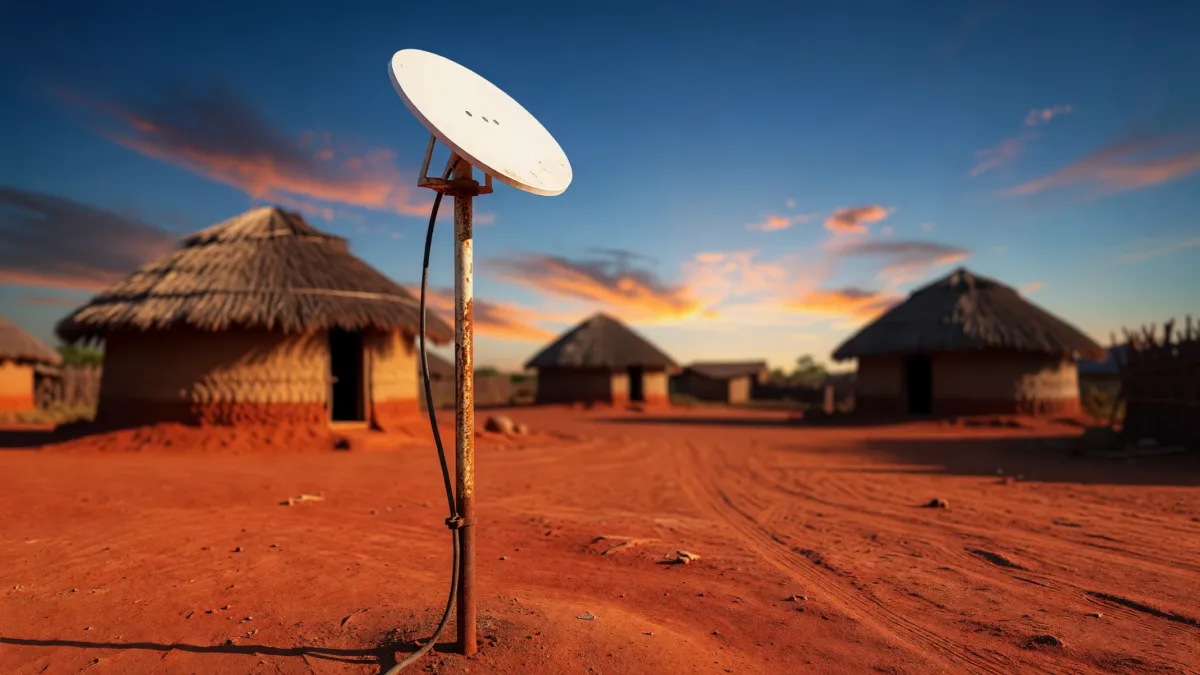
Starlink granted green light to launch in Côte d’Ivoire
A historic milestone has been reached. Starlink, the satellite internet service developed by Elon Musk’s company, is now officially authorized to operate in Côte d’Ivoire. The announcement was made on July 16 during an official visit by Frank R. Garcia, U.S. Deputy Assistant Secretary of State for African Affairs, at the U.S. Embassy in Abidjan. The visit also coincided with the signing of multiple economic agreements.
Bridging the digital divide in rural areas
Starlink will leverage its low-orbit satellite technology to provide high-speed internet access to rural and remote regions of Côte d’Ivoire, as confirmed by the Ivorian Press Agency. The local subsidiary secured a provisional 12-month license from the Ivorian Telecommunications Regulatory Authority (ARTCI), ensuring compliance with national telecom standards.
This initiative arrives at a critical moment for Côte d’Ivoire, where urban centers like Abidjan and Bouaké enjoy robust connectivity, but many rural areas—particularly in the north and west—remain underserved. Unlike traditional internet infrastructure, Starlink’s satellite-based solution eliminates the need for extensive ground installations, offering a viable alternative for hard-to-reach communities.
170 million USD investment for a national data center
The authorization of Starlink is part of a broader U.S. financial commitment to Côte d’Ivoire’s digital infrastructure. American firm Cybastion has secured a $170 million financing guarantee from the U.S. Export-Import Bank to develop the country’s first sovereign national data center. This project, named Cybastion, will not only store sensitive government data but also support the modernization of public services across the nation.
Three major agreements signed in one day
The meeting at the U.S. Embassy facilitated the formalization of three distinct partnerships. In addition to Starlink and Cybastion, a $293 million agreement was finalized with ABD Group to fund critical infrastructure projects in health and education sectors. Another contract was signed with NTELX to optimize truck coordination at the Port of Abidjan, enhancing the country’s logistical efficiency—a key driver of economic growth.
Côte d’Ivoire’s digital ambitions
As West Africa’s leading Francophone economy with a population of over 29 million, Côte d’Ivoire has set ambitious goals for digital transformation. Recent years have seen significant strides, including the digitization of administrative services and the expansion of e-government initiatives. However, internet penetration remains uneven, with rural communities lagging behind urban hubs.
Starlink’s entry into the market could help bridge this gap, offering a lifeline to regions where traditional broadband deployment is logistically and economically challenging. The U.S. has long been a key economic partner for Côte d’Ivoire, particularly in energy, infrastructure, and agriculture, and these new agreements further cement technological collaboration.
Meeting with the Vice President
Later that same day, Frank R. Garcia was received by Ivorian Vice President Tiémoko Meyliet Koné to discuss the economic partnership between Washington and Abidjan. The discussions focused on maximizing the impact of these new initiatives and exploring further avenues for cooperation.
The timing of these announcements is significant, as global powers increasingly vie for influence in West Africa. While China, France, and the U.S. compete through infrastructure deals, Côte d’Ivoire stands to benefit from diversifying its partnerships. The next phases—Starlink’s full deployment and the completion of the Cybastion data center—will be closely watched as indicators of the country’s digital future.
