Sensitizing children in Dakar to biodiversity through whale songs
In Senegal’s vibrant capital, a groundbreaking initiative is blending science and tradition to instill environmental stewardship in young minds. The Germes d’Écocitoyens à travers les sciences et les traditions dans les univers d’apprentissage (Gestu) association has launched a unique program in primary schools across Dakar, using whale songs as a gateway to marine conservation education.
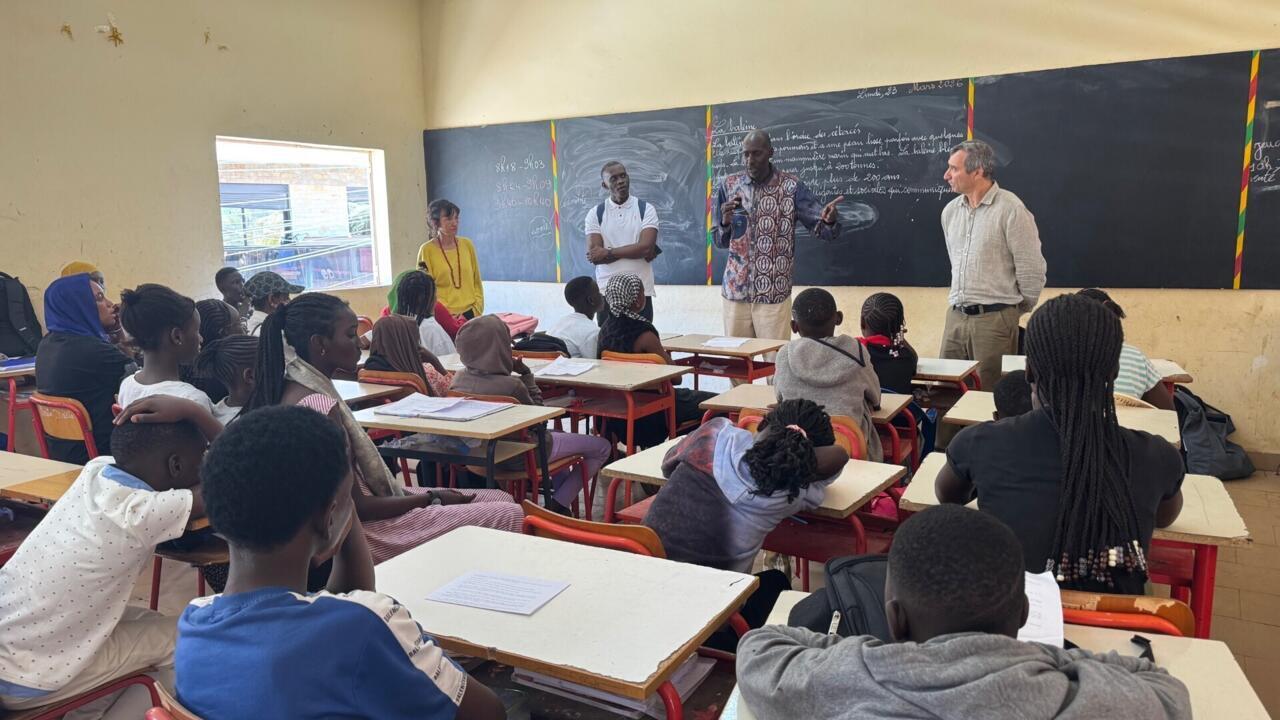
The project, which recently reached its third session, brought together students from the Alieu Samb primary school in Ngor with Olivier Adam, a renowned cetacean specialist and professor at Sorbonne University. The classroom transformed into an immersive learning environment as students listened to recordings of humpback whales gathered off the coast of Ouakam between 2018 and 2022.

Connecting young minds to the ocean’s voice
With wide-eyed wonder, the 30 students in the CM2 class at Alieu Samb school sat perfectly still, absorbing the hauntingly beautiful melodies of humpback whales. The recordings transported them beyond the classroom walls to the shores of Ouakam, where these magnificent creatures come to give birth.
“These sounds you’re hearing are humpback whales,” explained Olivier Adam. “They migrate to Dakar to give birth, making their calves true Dakar locals.” His revelation sparked immediate curiosity. The children’s questions poured in: “How many stomachs does a whale have? How many whale species exist? How do they give birth? What do they eat?”
For Fanta, 12, the whales’ songs and communication methods left the deepest impression. Meanwhile, teacher Thierry reflected on how this learning experience shattered previously held misconceptions: “Without this knowledge, you wouldn’t realize that a whale can only have one calf per pregnancy. This makes their conservation absolutely critical.”
From local knowledge to global action
The workshop was enriched by the presence of Babacar Sy, a local diver with over 30 years of experience. His firsthand accounts of declining fish populations off Dakar’s coast brought the conservation message to life. “I’ve witnessed nature change dramatically,” he shared. “Last year, I caught just five groupers all year. If this continues, our children will ask what a grouper is because it will be extinct.”
Babacar’s alarm underscores the urgency of programs like this one. By integrating traditional ecological knowledge with scientific insights, Gestu is cultivating a new generation of environmentally conscious citizens. The initiative extends beyond whale education, incorporating waste collection awareness sessions in two additional Dakar schools.
Why whale conservation matters
Olivier Adam emphasized the broader implications of understanding whale communication: “I was amazed to discover that whales produce structured sounds with intentional meaning. Recognizing them as sentient beings with complex societies is the first step toward protecting our oceans.”
As these children return home, they carry more than just textbook knowledge. They now understand that marine biodiversity is not just about distant ecosystems but about their own city’s ecological health. The whale songs they’ve heard are becoming a call to action—one that starts in classrooms and must echo through communities.
