
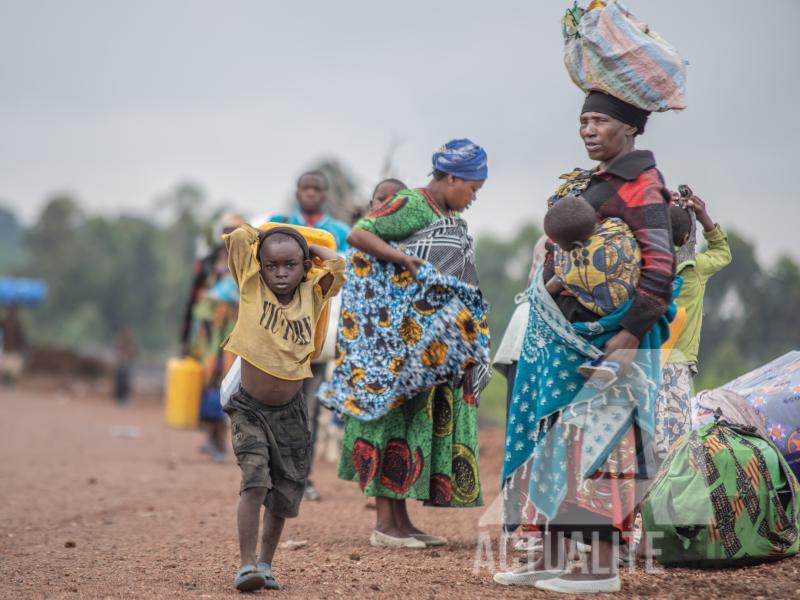
UN calls out mass violence against children in DRC
The United States has sharply criticized the escalating violence targeting millions of children in the Democratic Republic of Congo (DRC), emphasizing that no child should ever be deprived of safety. The condemnation was delivered during a United Nations Security Council session dedicated to the protection of children in conflict zones worldwide.
The statement was made by Jennifer Locetta, the U.S. Acting Deputy Representative for Special Political Affairs at the U.S. Mission to the United Nations. She highlighted that children continue to bear the heaviest burden in global conflicts, facing displacement, violence, and systematic abuse.
“No child should be denied security,” Locetta declared, echoing remarks previously made by former U.S. First Lady Melania Trump during a March UN Security Council meeting. The diplomat stressed that such violations not only destroy lives but also perpetuate cycles of poverty and instability across generations.
DRC’s children: victims of relentless conflict
Locetta specifically pointed to the DRC as one of the most critical situations for child protection. She condemned ongoing atrocities committed by armed groups in the country’s eastern regions, where children face forced displacement, sexual violence, and recruitment into militias. The U.S. representative emphasized that these acts are deliberate violations of international humanitarian law.
“In the Democratic Republic of Congo, millions of children live under the constant threat of violence, displacement, and sexual abuse perpetrated by armed factions,” she stated. “These crimes are unacceptable and demand immediate action.”
Global patterns of child endangerment
The U.S. delegation also raised concerns about child protection failures in Sudan, Ukraine, and Haiti, calling for urgent measures to shield minors from conflict-related violence and forced conscription. Locetta argued that education disruptions—often a direct consequence of war—further trap children in cycles of deprivation.
“When children are denied access to safe schooling, their futures are stolen,” she warned. “This not only fuels instability but also undermines global peace and economic prosperity.”
Critique of UN reporting mechanisms
Locetta criticized the UN’s latest Children and Armed Conflict (CAAC) report, asserting that it fails to accurately reflect the scale of civilian harm in war zones. She argued that the report unfairly equates accidental civilian casualties caused by state forces with intentional attacks by militant groups like the Houthis.
“The CAAC report misrepresents the realities of war,” she said. “Deliberate attacks on children by terrorist groups must be condemned unequivocally. However, conflating lawful military actions with terrorism only weakens the credibility of international protection mechanisms.”
The U.S. has since withdrawn from the UN’s Office of the Special Representative for Children and Armed Conflict, citing the report’s politicized framing. Washington maintains its commitment to child protection but insists that accurate, actionable data is essential to addressing these crises effectively.
Six grave violations against Congolese children
The U.S. delegation outlined six severe violations affecting children in the DRC:
- Recruitment and use of child soldiers
- Murder and maiming
- Sexual violence
- Attacks on schools and hospitals
- Abduction of minors
- Denial of humanitarian access
These violations have intensified amid the resurgence of the M23 rebel group—backed by Rwanda—which has seized large territories in North Kivu and South Kivu despite diplomatic efforts by the U.S., Qatar, and the African Union.
International appeals for urgent action
Locetta concluded by urging the international community to prioritize child protection in conflict-resolution strategies. “Protecting children is not just a moral obligation—it is a strategic imperative for global stability,” she affirmed. “We must translate condemnation into concrete protection on the ground.”
The DRC’s ongoing crisis underscores the urgent need for coordinated efforts to safeguard the next generation from the devastating impacts of war.