Senegal’s political landscape reshaped: diomaye and sonko’s fractured alliance and the road to 2029
Crédit photo, Getty Images
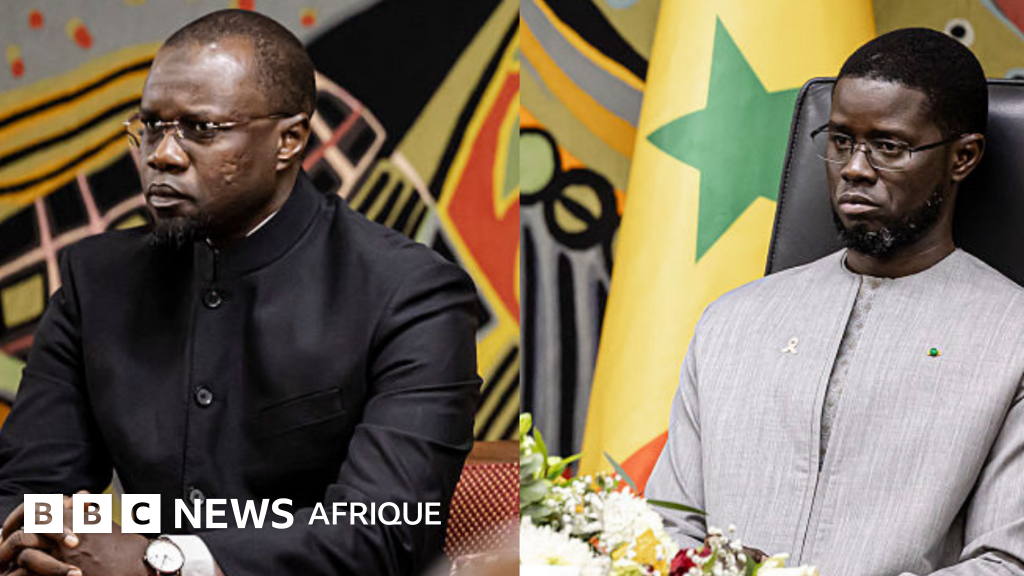
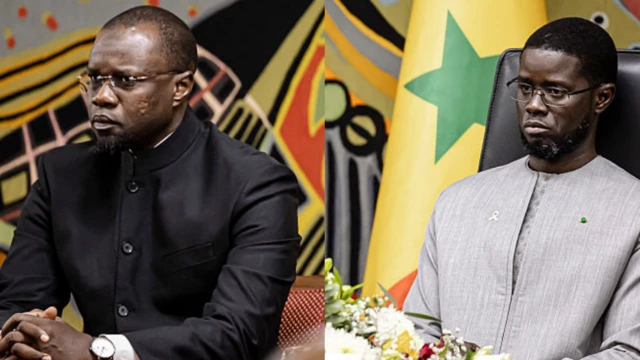
The recent dismissal of Prime Minister Ousmane Sonko officially concludes the powerful political partnership that propelled Bassirou Diomaye Faye into the presidency in 2024. The rallying cry, “Diomaye mooy Sonko” (Diomaye is Sonko), which symbolized an almost complete political merger between two leaders, two distinct paths, and a unified PASTEF agenda, is now a relic of the past. This pivotal shift occurred on May 22, 2026, with the decree removing Sonko from his role as Senegal’s Prime Minister.
This electoral slogan had been instrumental in mobilizing support during Senegal’s third political transition in 2024. However, President Bassirou Diomaye Faye’s decision to relieve Ousmane Sonko of his duties has irrevocably shattered this political equation. For several months leading up to this event, growing tensions between the two prominent figures were evident, particularly concerning issues of national governance, economic policy, and control over the PASTEF party.
Sonko’s dismissal brings to light the deep-seated contradictions inherent in a dual leadership structure, a system that proved unsustainable within Senegal’s established institutional framework. This political rupture ushers in an unprecedented era of political uncertainty, marking the first time since PASTEF’s rise to power that the sitting president and the party’s charismatic leader find themselves in direct confrontation.
A dual power dynamic at the nation’s helm
Maurice Soudieck Dione, an esteemed professor of political science, observed that this rupture had been increasingly foreseeable for many months. He noted the escalating, visible contradictions between the Prime Minister and the President, describing Senegal’s unique political configuration: a Prime Minister who also served as the head of state’s political mentor.
According to Dione, the genesis of this crisis traces back to the 2024 presidential election. Ousmane Sonko, prevented from running due to legal challenges, had championed Bassirou Diomaye Faye’s candidacy, positioning him as his direct political extension. Yet, what began as an electoral strategy gradually evolved into an institutional contradiction.
Dione emphasized that President Bassirou Diomaye Faye’s election occurred under extraordinary circumstances following the invalidation of Ousmane Sonko’s candidacy. This situation, from its very inception, fostered a dual power dynamic at the highest echelons of the state.
Despite this, Senegal’s constitutional framework clearly vests the majority of executive power in the president. The Senegalese Constitution firmly establishes the President’s political and institutional preeminence, designating the head of state as the Prime Minister’s hierarchical superior. However, the President faced a Prime Minister who commanded significant popular and partisan legitimacy.
The presence of a Prime Minister with such a strong political foundation, immense popularity, and considerable influence within the ruling power inevitably led to tensions. Maurice Soudieck Dione suggested that an alternative institutional arrangement might have averted this crisis. He had posited, following the November 2024 legislative elections, that Ousmane Sonko might have been better placed to preside over the National Assembly, while a technocratic Prime Minister could have managed daily governmental affairs. Such a division, he argued, would have provided clearer roles.
However, this option was never pursued, making a confrontation at the apex of the state almost unavoidable.
2029 ambitions fuel the rivalry
Crédit photo, Getty Images
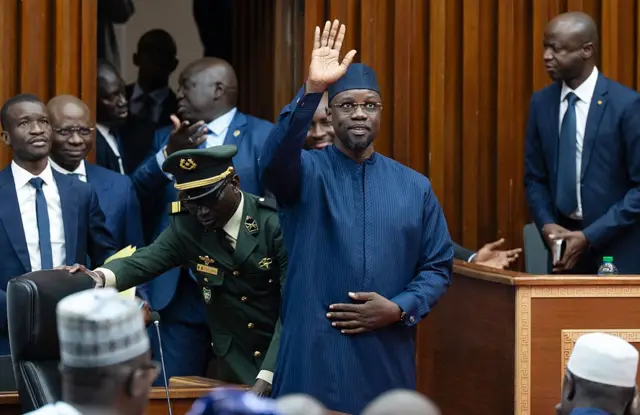
Over time, the differences between the two leaders became increasingly apparent through sometimes conflicting statements on political, economic, and diplomatic matters. President Diomaye Faye had previously cautioned against the “personification” of the party, a remark widely interpreted as an indirect criticism of Sonko.
In reality, the conflict was almost inevitable due to underlying political and institutional factors. It was widely known that a legitimacy contradiction existed between the President and his Prime Minister. While Diomaye Faye held the institutional legitimacy derived from the presidential suffrage, Sonko retained a crucial portion of the popular and militant legitimacy associated with the PASTEF project.
Maurice Soudieck Dione attributes this deterioration of the partnership to longer-term political calculations. He believes that positioning for the 2029 presidential election, alongside a form of internal competition within the executive branch, fueled the diarchy at the top of the state and progressively led to this rupture.
Far-reaching consequences of the split
According to Babacar Ndiaye, Research Director at the think tank WATHI, both leaders are likely to suffer a blow to their public image. He stated that in terms of image, both will undoubtedly lose credibility, especially among those who had invested hope in their campaign slogan, “Diomaye is Sonko and Sonko is Diomaye.” This will inevitably lead to disappointment among their supporters.
This rupture undeniably signifies the collapse of a carefully constructed political narrative since the 2024 presidential election: that of a two-headed governance designed to combine Sonko’s popular charisma with Diomaye Faye’s more institutional profile. Sonko’s dismissal, therefore, represents a strategic decision by Diomaye Faye to fully reclaim control of the executive power and step out of his political mentor’s shadow.
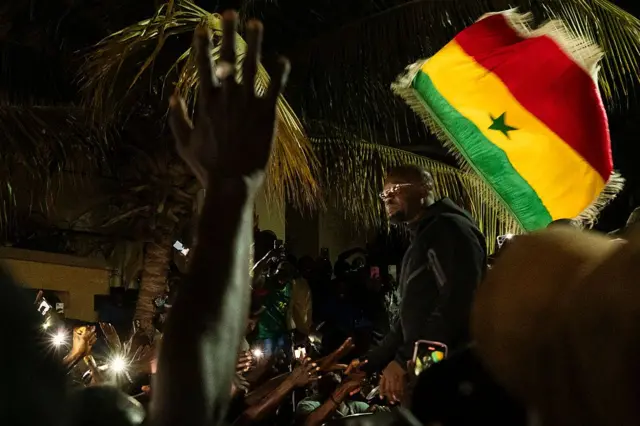
However, this decision is not without significant risks. While the President retains the institutional levers of power, Ousmane Sonko appears to possess a crucial advantage: the political machinery of the party. Sonko, as the leader of PASTEF and the head of its victorious list in the legislative elections, clearly holds a more assertive political stance.
The primary danger for Bassirou Diomaye Faye now lies within the National Assembly. PASTEF holds a parliamentary majority there, largely loyal to Ousmane Sonko. President Faye risks facing a hostile, vengeful PASTEF parliamentary majority, dedicated to Sonko’s cause. In essence, Sonko’s dismissal could transform the President into an institutionally powerful but politically isolated leader.
Crédit photo, Getty Images
Towards an institutional showdown?
The first political test for the new administration could materialize swiftly with pending legislative proposals in the National Assembly. Babacar Ndiaye anticipates significant institutional repercussions from this rupture. He warns that the primary political consequence will be the impact of Sonko’s dismissal on the National Assembly, where PASTEF holds the majority, potentially leading to a confrontational situation should a clear separation occur.
In this evolving landscape, the appointment of a new Prime Minister will be closely watched as a decisive political signal. The President will not only need to form a new government but also articulate a clear political direction after months of subtle disagreements with Sonko. Maurice Soudieck Dione now raises the prospect of an unprecedented scenario: internal opposition emerging from within the ruling power itself.
We might witness a form of “PASTEF opposition within PASTEF.” It is crucial to remember that Ousmane Sonko led the PASTEF list during the legislative elections, securing a substantial majority of 130 out of 165 deputies. He therefore wields considerable influence within the National Assembly. Dione further analyzes that if the cohesion between the presidential majority, embodied by President Bassirou Diomaye Faye, and the parliamentary majority were to dissolve, it could precipitate serious institutional challenges. Government bills might face obstruction in the National Assembly, paving the way for a political crisis.
Such a fracture could significantly impede the passage of governmental legislation. Dione reiterates his warning: “Government bills could be blocked in the National Assembly, which would open the door to a political crisis.”
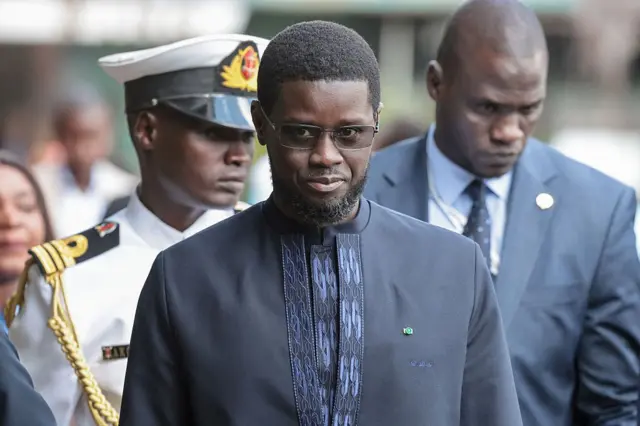
Diomaye faces the solitude of power
Crédit photo, AFP via Getty Images
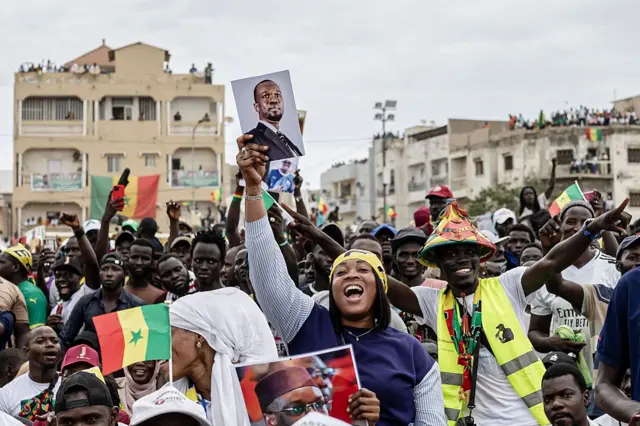
Since assuming office, Bassirou Diomaye Faye had benefited from a unique political equilibrium: he held presidential legitimacy, while Sonko maintained a strong capacity for militant and popular mobilization. By severing ties with his Prime Minister, the President risks alienating a segment of his original political base.
The primary danger for Diomaye Faye now is political isolation. As long as Sonko occupied the premiership, he absorbed some criticism, acted as a militant shield, and kept PASTEF’s core mobilized. Now, all popular expectations will converge directly on the President. Crucially, Diomaye Faye loses the political narrative that initially forged his legitimacy: being Sonko’s extension. He must now forge his own distinct political identity.
While Diomaye Faye can rely on the coalition that has supported him in recent months, Babacar Ndiaye notes that this force remains insufficiently structured. He explains that in the event of an established political separation, given that President Diomaye is still a member of PASTEF, he can lean on his revitalized coalition from recent months. However, this coalition lacks robust structure.
The political calendar could swiftly exacerbate this fragility. Local elections are on the horizon, and another possibility is already being discussed: the dissolution of the National Assembly. However, the President can only legally dissolve Parliament starting in November. In such a scenario, the balance of power could become particularly precarious for the head of state.
For Ousmane Sonko, this rupture paradoxically opens a new chapter. By leaving the government, he regains a political freedom that had been partially constrained by the demands of state office. Several scenarios are now emerging. The first involves repositioning himself as an internal opposition figure within the ruling power, while retaining control of PASTEF’s militant apparatus. This would be a risky strategy, potentially fracturing the party in the long term.
The second scenario envisions a methodical preparation for the 2029 presidential election. Many observers already believe Sonko has been contemplating this deadline for months. Ndiaye observes that politically, Sonko clearly maintains a more assertive posture as the leader of PASTEF, having led the party’s victorious list in the legislative elections.
The third scenario suggests a complete recomposition of the Senegalese political landscape, leading to the emergence of two distinct blocs from the same political camp: an institutional current embodied by Diomaye Faye and a populist-sovereignist current championed by Sonko.
Crédit photo, Getty Images
For many observers, Ousmane Sonko’s dismissal might merely be the prelude to a more profound political realignment in Senegal. The central question now revolves around Bassirou Diomaye Faye’s ability to assert his political presence independently, free from the shadow of his former mentor. Should he face political or electoral setbacks, the consequences could be severe for the remainder of his five-year term.
Ndiaye warns that if the National Assembly were to be dissolved in the coming months, we would enter a new electoral configuration and a moment of clarification, and in the event of a defeat, this could weaken the remainder of the presidential mandate. Babacar Ndiaye emphasizes that the decision regarding Ousmane Sonko’s dismissal initiates a period of political uncertainty for the President, particularly as Senegalese citizens grapple with the economic repercussions of the current situation.
The campaign slogan has vanished. Sonko must now demonstrate his capacity to advance his political agenda outside of executive power and successfully contend for the highest office. As for Bassirou Diomaye Faye, he faces the challenge of governing independently. For him, the stakes involve consolidating his own political base and securing its loyalty. Failure to effectively structure his coalition and maintain a parliamentary majority could see his mandate significantly weakened even before 2029.
