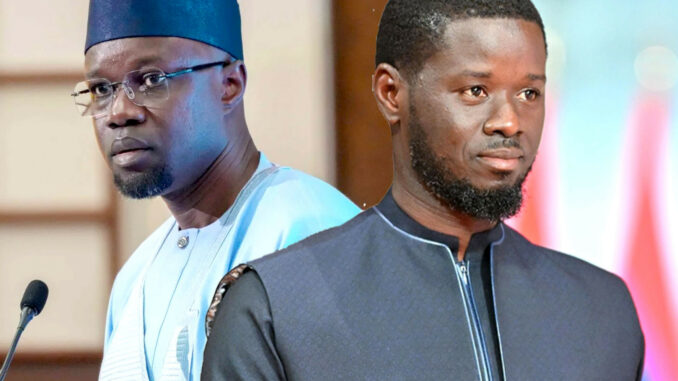
Senegal’s political landscape: Faye and Sonko’s competing visions
This week, Senegal’s political stage takes center stage once again as President Bassirou Diomaye Faye and Prime Minister Ousmane Sonko navigate the complexities of shared governance. The delicate balance of power within the executive branch has become a focal point of national discourse.
Starting May 21, the President embarks on an extensive series of consultations with the nation’s key stakeholders. Over ten days, political parties, civil society groups, religious leaders, and traditional authorities will be invited to participate in a national dialogue designed to foster unity and collective decision-making. This initiative replaces the previous annual dialogue day established during Macky Sall’s presidency.
Many analysts view this move as an effort by President Faye to reinforce his reputation as a unifying leader. However, opposition voices argue that the reforms currently underway—particularly those related to electoral and institutional changes—lack sufficient input from diverse segments of society.
At the same time, Prime Minister Sonko is set to address lawmakers during a parliamentary session focused on current affairs. While this appearance is part of the established legislative calendar, its timing has sparked discussions about the potential friction between the two leaders as they each stake their claim in the political and media arenas.
Analysts weigh in on the dynamics between the two leaders. Political scientist Maurice Soundieck Dione suggests that both figures are vying for political and media prominence, while commentator Assane Samb highlights the need for better coordination to prevent perceptions of conflicting messaging within the government.
The relationship between Faye and Sonko has been a recurring topic since their ascent to power, with ongoing debates about how responsibilities are truly distributed within the new Senegalese executive.
