Senegal’s evolving democracy: parliament’s new role and checks on power
Senegal’s evolving democracy: parliament’s new role and checks on power
The current political landscape in Senegal, reshaped by a redefined legislative role, is prompting a critical examination of our democratic foundations. As debates intensify, the nation stands at a crossroads: is this a moment of institutional crisis or a transformative leap toward democratic renewal?
For weeks, Senegal’s public discourse has been dominated by stark interpretations of its institutional dynamics. Some warn of an impending crisis, others frame it as a power struggle, while a few sound alarms about democratic backsliding. Yet beneath these narratives lies a deeper truth: what’s unfolding is not merely about personalities or temporary circumstances—it’s about the very architecture of our democracy being recalibrated in real time.
The analysis by Abdou Fall, Nasser Niane, and El Hadj Kasse deserves credit for exposing a glaring reality: since 1963, Senegal’s political system has revolved around an overbearing Executive, the sole epicenter of public policymaking. This excessive centralization has, over decades, generated recurring tensions whenever rival factions emerged at the state’s highest levels.
While their diagnosis hits the mark, it overlooks a pivotal development: for the first time in over two decades, Senegal’s Parliament is no longer subordinate to the presidency. During the presidencies of Wade and Sall, the legislature was systematically reduced to a rubber-stamp institution, enabling deep institutional dysfunction. The Constitution became a malleable tool, amended or reinterpreted to serve executive interests. Successive revisions, opportunistic adjustments, and circumstantial readings eroded the country’s normative stability.
Senegal had become a system where power flowed downward from the summit, turning any alternation or cohabitation into a potential powder keg. Today’s circumstances cannot be dismissed as mere crisis—they represent a democratic renaissance, a moment when Parliament reclaims its constitutional mandate. This isn’t dysfunction; it’s the natural breathing rhythm of a maturing democracy. Compare it to mature systems like France, where the National Assembly routinely rejects presidential bills and cohabitation is commonplace. These tensions aren’t crises—they’re mechanisms of balance, essential to prevent power concentration.
From subordination to equilibrium
What some label a “crisis” in Senegal may actually signal the birth of a culture of checks and balances, where the Executive no longer dominates and the Legislature asserts its independence. This is historic. For the first time, our democracy is testing its institutional resilience not in submission, but in equilibrium.
It’s discovering what long-standing democracies take for granted: perpetual negotiation, de facto cohabitation, executive restraint by the legislature, and shared accountability. Far from chaos, this is an unprecedented opportunity to rebuild stronger institutions, foster parliamentary culture, and solidify constitutional norms. It’s how democracies like Cape Verde, Ghana, Botswana, and South Africa earned their reputations—by absorbing tensions, regulating conflict, and converting it into sustainable balance.
Senegal now has the chance to join their ranks. We must not only acknowledge this evolution but actively support and reinforce it. A robust democracy isn’t defined by the absence of conflict, but by the strength of its counter-powers, the maturity of its institutions, and the Legislature’s ability to fulfill its constitutional role. This moment isn’t a crisis—it’s a renaissance. It may well be the most promising institutional development Senegal has seen in two decades.
Building a resilient democratic future
This transformation demands a collective commitment: rethinking our institutional model, strengthening parliamentary traditions, stabilizing constitutional rules, amplifying civic participation, and reinforcing checks on power. These are the pillars of lasting democratic systems.
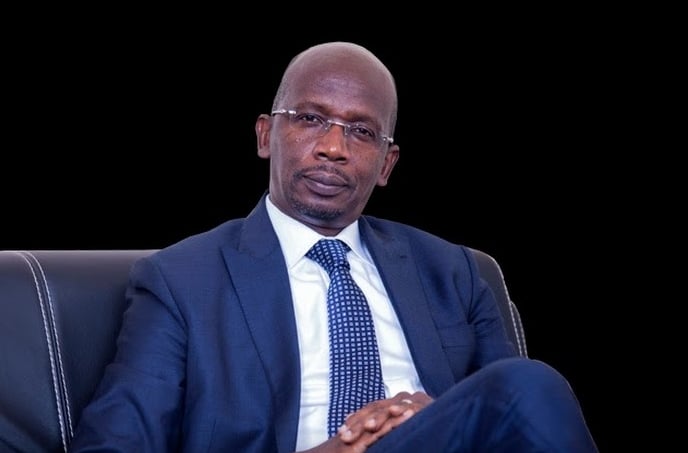
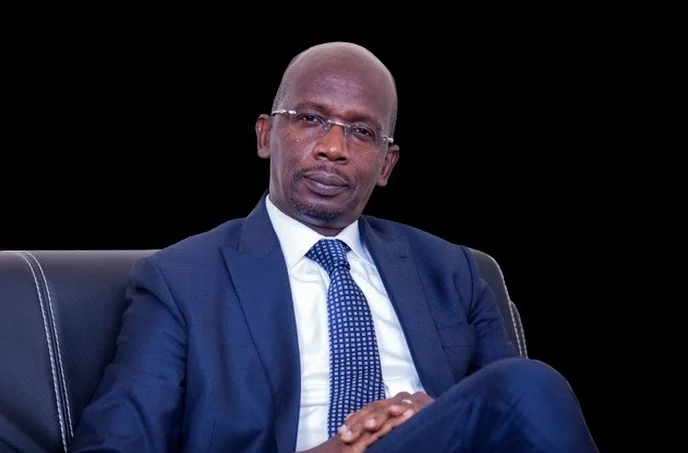
As Lansana Gagny Sakho, President of the Circle of Public Administrators, notes, this isn’t about collapse—it’s about adjustment. The nation isn’t crumbling; it’s finding its balance. And in doing so, it’s stepping into the light of a more balanced, accountable, and resilient democracy.
