Senegal’s economic crossroads: the deep divide between sonko and faye
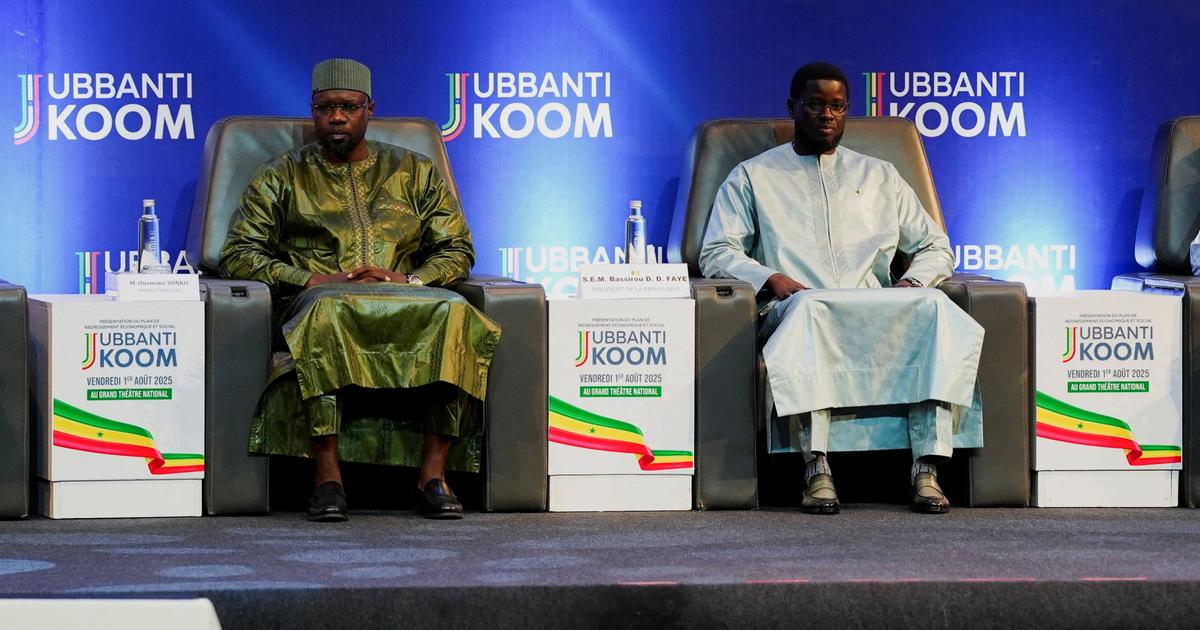
The dismissal of Ousmane Sonko by Bassirou Diomaye Faye on May 23, 2026, did not stem from a clash of personalities. Instead, it marked the inevitable end of a cohabitation between two fundamentally opposing economic philosophies, which had long operated under the same political banner. Two years after the April 2024 presidential transition, which saw Faye’s election and Sonko’s appointment as Prime Minister, the governing alliance fractured over three critical issues shaping Senegal’s economic destiny: national debt, hydrocarbon resource management, and the nature of political funding.
National debt: a primary point of contention
The most evident point of divergence centered on the nation’s debt. In September 2024, Ousmane Sonko publicly exposed the alarming scale of undeclared debt accumulated under the previous Macky Sall administration. By March 2025, an International Monetary Fund (IMF) mission estimated approximately 7 billion euros in unrecorded commitments. This meant Senegal’s true debt burden exceeded 100% of its Gross Domestic Product (GDP). The annual debt service alone required 5,500 billion CFA francs (8.4 billion euros), with annual refinancing needs approaching 6,000 billion CFA francs (9.1 billion euros). The country’s sovereign credit rating suffered three downgrades within a year.
Against this backdrop, two distinct strategies emerged. Sonko adamantly rejected any debt restructuring, making public denunciation of the former regime a central pillar of his communication. He spoke directly to the public, the diaspora, and his militant base, refusing to be perceived as someone who would compromise his legitimacy through a negotiated agreement with Washington. Faye, however, pursued a different path. He opened multiple channels with the IMF, hosting their delegation in November 2025 and initiating a national dialogue in May 2026.
With a 1.55 billion euro program suspended, international financial markets closed, and the looming prospect of a sovereign default by 2028, Sonko’s economic stance became increasingly untenable. Paradoxically, this very position proved politically invaluable for mobilizing Pastef, the majority party he founded in 2014.
Oil and gas: contrasting approaches, differing methods
A second, even more striking, point of contention revolved around the nation’s oil and gas contracts. The Sangomar oil field began producing its first barrels in June 2024, with Australia’s Woodside holding an 82% operating stake. The Greater Tortue Ahmeyim (GTA) gas field, operated by BP at the Senegalese-Mauritanian border, commenced operations in early 2025, boasting estimated reserves of 500 billion cubic meters. Both leaders ostensibly shared a common goal of renegotiating these contracts. Sonko had projected potential gains of 940 billion CFA francs (1.4 billion euros) in savings and an additional 1,090 billion CFA francs (1.6 billion euros) in tax revenues from GTA between 2025 and 2040.
However, their methods diverged sharply. Sonko frequently issued public accusations, brandished ultimatums against BP, and characterized the agreements as “unbalanced and unjust.” Faye, since April 2025, described the negotiation process as “more than satisfactory” and progressing along its “normal course.”
Meanwhile, the major energy companies remained unperturbed. Faye engaged in negotiations, while Sonko voiced his discontent. The companies simply waited.
This wasn’t merely a tactical disagreement; it was a doctrinal one, reflecting two distinct philosophies of economic sovereignty. Sonko embodied an absolute sovereignist line, believing that a rhetorical break with multinationals and Bretton Woods institutions alone generates negotiating leverage. Faye, conversely, represented a pragmatic approach, understanding that the anticipated tax revenues from GTA and Sangomar would only materialize if operators continued to invest and produce. This production of gas and oil constituted the state’s sole genuine economic lever.
Institutional stability over militant rupture
The third fault line concerned the very nature of political capital, specifically how each faction funded its operations. Sonko pioneered a unique funding model within Senegalese politics. Pastef relied on massive micro-contributions, support from the diaspora, and emerging entrepreneurs, often from the digital and commercial sectors. This grassroots financing base explained the unwavering parliamentary loyalty he commanded: 130 out of 165 deputies owed their seats to him, with many pledging allegiance to his person rather than to the presidential office.
Faye, however, orchestrated a gradual shift. The “Diomaye President” coalition, reactivated during a general assembly on March 7, 2026, brought together supporters of a different caliber: former administrative executives, technocrats with ties to previous regimes, and business networks that prioritized institutional stability over militant disruption.
Sonko’s dismissal on May 23 solidified this strategic pivot. When a state carries a debt-to-GDP ratio exceeding 100% and must refinance 9 billion euros annually, the luxury of a confrontational stance translates into monthly basis point costs on the bond market. Senegalese bonds denominated in euros and dollars plummeted with the public emergence of these tensions. This illustrates the high cost of dual leadership when each head communicates a different message to financial markets.
Two lines: contradictory yet complementary
Does this imply that Faye’s approach was correct and Sonko’s was flawed? The question is perhaps misguided. Sonko’s strategy, by exposing the hidden debt, achieved a level of transparency that no regime had dared to risk since independence. Without this revelation, the country would have continued borrowing based on manipulated figures.
Faye’s approach, conversely, accepts continued negotiation within the global financial system, which entails painful budgetary discipline. The former revealed truth but eroded trust. The latter rebuilds trust but accepts the social costs of economic recovery. Neither approach is complete without the other.
The tragedy for Senegal lies in the inability of this political duo to reconcile these two essential demands. It would have required an institutional framework capable of accommodating both the radicalism of truth-telling and the patience of recovery within two coordinated entities. The Senegalese political system, structured around a vertical presidency, proved incapable of achieving this.
Economic realism ultimately prevailed
Another, perhaps more unsettling, interpretation merits consideration. The multinational companies that remained composed during two years of public confrontation with Sonko might have been right to simply wait. They were betting on the institutional victory of the long-term over the rhetorical disruption of the short-term. Their gamble paid off.
May 23, 2026, thus marked, in its own way, their victory. This does not mean they orchestrated it. Rather, it signifies that real economic power dynamics invariably assert themselves over displayed political postures. This is what I refer to as the real state, as opposed to the fictitious state of proclamations.
The political horizon until 2029 is now wide open. Sonko reverts to a mobile political actor, capable of transforming Pastef into an opposition force, campaigning vigorously, and mobilizing the diaspora.
Faye, now unburdened by Sonko, can finalize an agreement with the IMF, refinance the national debt, and present a record of stability. Each leader will now openly play their hand. In 2029, Senegalese citizens will face a choice between an asserted sovereignty and a managed sovereignty. Neither option is entirely satisfactory, and neither is entirely straightforward.
