
The unfolding political drama in Senegal is more than a personal clash between two figures—it represents a collision between two distinct forms of legitimacy: institutional authority and charismatic leadership. This age-old tension in political science often leads to a phenomenon known as hubris, where power becomes concentrated in ways that challenge democratic balance.
Ousmane Sonko’s political journey is a study in contrasts. He rose to prominence by channeling the frustrations of Senegal’s disenfranchised youth and challenging a political establishment widely seen as closed and unresponsive. His message—rooted in sovereignty, dignity, and the empowerment of ordinary citizens—reshaped the national discourse and redefined political engagement.
From partnership to opposition: a rapid political shift
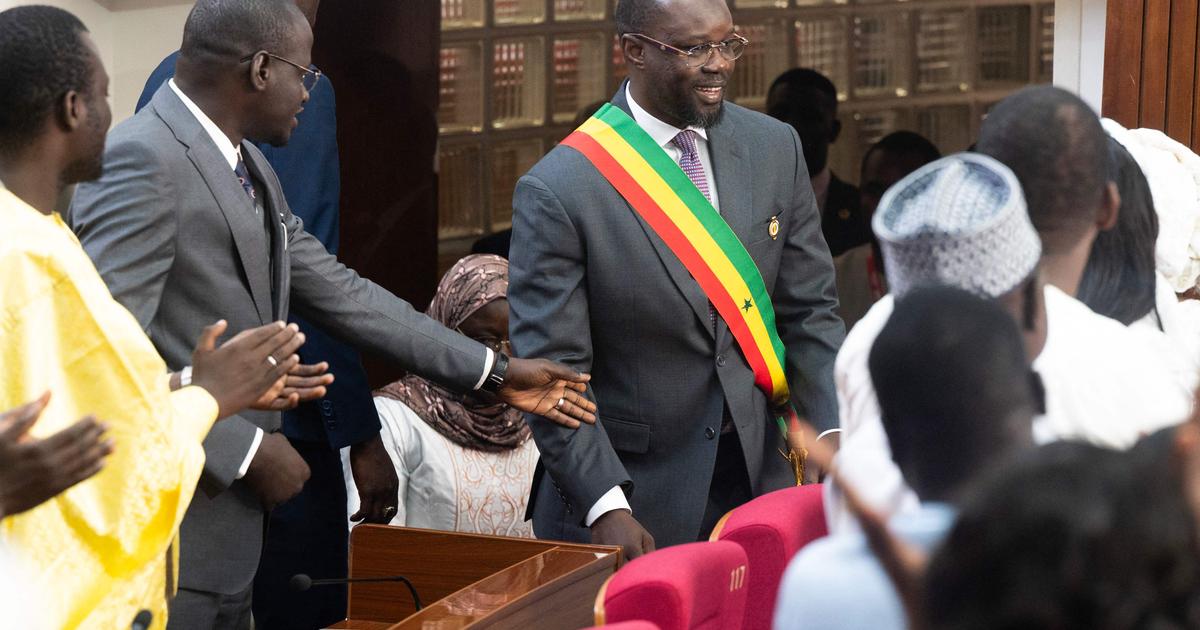
The political landscape shifted dramatically in late May. On May 22, President Bassirou Diomaye Faye dismissed Sonko as Prime Minister. Just one day later, the Speaker of the National Assembly resigned, a move widely interpreted as strategic. By May 25, a new Prime Minister, Ahmadou Alhaminou Mohamed Lô, was appointed. Then, on May 26, Sonko was elected President of the National Assembly with 132 out of 165 votes—a landslide victory that confirmed his continued influence as leader of the ruling Pastef party, which he founded.
Reactions to his election were sharply divided. Some hailed it as a historical moment, while others labeled it an institutional coup. Regardless of perspective, the outcome positioned Sonko as the principal opposition figure to President Faye, with whom he had previously shared a tense co-leadership. The Pastef party, acting with near-unanimity, now faces a critical decision: will it support the new government led by the technocratic Prime Minister, or will it assert its own agenda?
Party officials have already set conditions, insisting on “fidelity to the 2024 victory program”—a program authored by Sonko himself. He has alternated between signals of institutional cooperation and sharp criticism, warning that the National Assembly will fully exercise its constitutional powers. He also expressed frustration over the lack of consultation in the Prime Minister’s appointment. Amidst this institutional turbulence, the country’s sovereign credit rating was downgraded from “stable” to “negative.”
Legitimacy in conflict: charisma versus constitutional order
Charismatic leadership has undeniably reshaped Senegal’s political scene. Yet this form of leadership carries a built-in contradiction: it thrives on personal connection and emotional resonance, but often undermines the impersonal structures that sustain democratic institutions. When a leader becomes both the voice of the people and the face of the state, the boundaries between movement, party, and government blur dangerously.
For months, Senegal has operated in a state of political ambiguity. Who truly held power: the elected president or the movement leader? The authority of the ballot box or the authority of mass mobilization? Constitutional mandate or personal charisma? Such duality cannot persist indefinitely. A functioning state requires a single center of command. Sonko’s strength was never just his role as Prime Minister—it was his ability to embody, simultaneously, the leader of a movement, the head of government, and the symbolic figurehead of a generation.
This is where the risk of hubris emerges—not through overt authoritarianism, but through the gradual erosion of institutional autonomy. Political parties remain centered on individuals. Parliament struggles to assert itself as an independent counterbalance. And while institutions resist, they often cede ground to the emotional pull of a dominant political figure.
An institutional trial ahead
The central question now is not moral, but structural. Can Ousmane Sonko accept that institutional legitimacy must now take precedence over charismatic influence? Can he allow the project he helped create to evolve beyond his personal leadership? Can he transition from being the driving force of a revolution to becoming one voice among many in a durable institutional order?
History shows that African liberation movements often succeed in opposition but stumble when tasked with governance. Ruling requires compromise, hierarchy, and the acceptance that power will be shared and limited. The true test of leadership lies not only in seizing power, but in respecting the boundaries that democracy imposes.
Senegal may now be entering this defining moment. How this tension is resolved will determine not only the future of the Pastef movement, but the long-term health of the country’s democratic stability.