
The unfolding political drama in Dakar isn’t merely a clash between two individuals—it’s a collision between institutional legitimacy and charismatic leadership that could redefine Senegal’s democratic future. This tension, familiar in political theory, often leads to what scholars call hubris—a dangerous overreach where personal influence eclipses institutional frameworks.
Ousmane Sonko’s political rise has been nothing short of extraordinary. He has channeled the pent-up frustration of a generation that feels abandoned by traditional politics, crafting a narrative centered on sovereignty, dignity, and the restoration of popular agency. His ability to mobilize masses, particularly among Senegal’s youth, has reshaped the nation’s political landscape in ways few imagined possible.
From alliance to opposition: a rapid political reversal
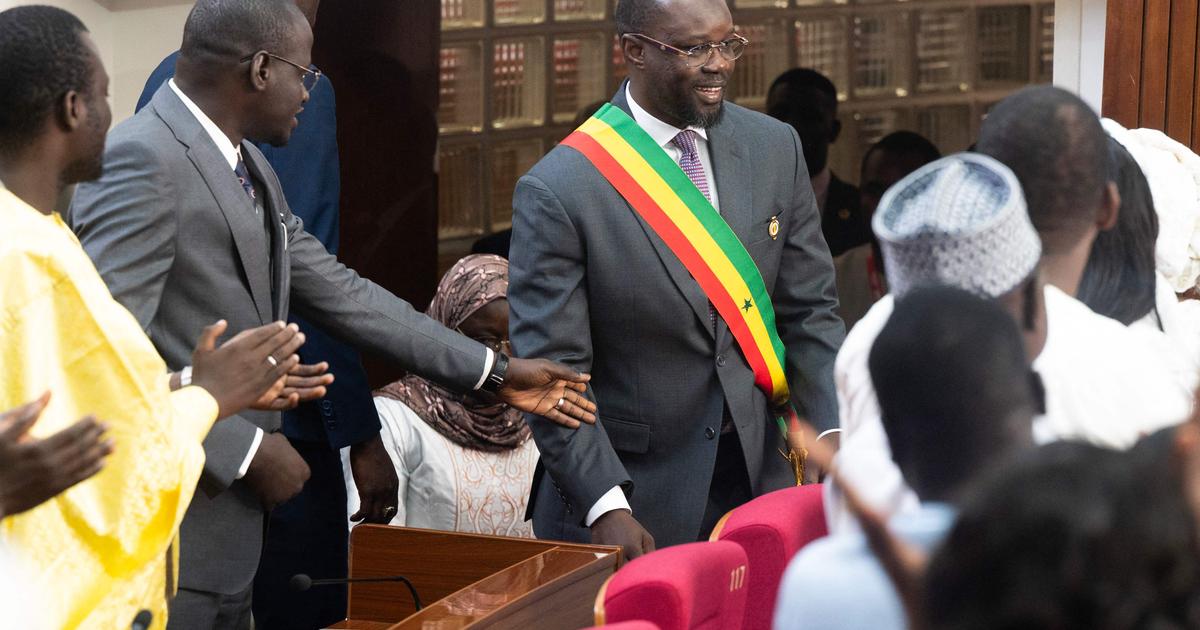
The shift from partnership to rivalry between Sonko and Bassirou Diomaye Faye has been breathtaking in its speed. On May 22, the president removed Sonko from his prime ministerial post. By May 23, the Assembly President resigned, strategically clearing the way. Two days later, a new technocratic prime minister was appointed, and on May 26, Sonko—now former PM—was elected Assembly President with an overwhelming 132 votes out of 165. This rapid succession of events has left observers divided: some call it a historic election, others a institutional coup.
Sonko’s election instantly transforms him from government insider to principal opposition leader, creating a delicate cohabitation scenario. His party, Pastef, voted in lockstep for his Assembly presidency, raising immediate questions about their stance toward the new technocratic government. Will they support it, or will they demand a greater share of power?
The president’s party has already set conditions: strict adherence to the 2024 campaign program—one written by Sonko himself. Meanwhile, the Assembly President has warned that the legislative body will fully exercise its constitutional prerogatives, while expressing frustration over being excluded from the prime minister’s selection process.
Amid this institutional turbulence, the country’s sovereign credit rating has slipped from stable to negative, signaling growing uncertainty about the political climate.
The paradox of charismatic leadership
Charismatic leaders like Sonko excel at mobilizing people through emotional connection and visionary leadership. Yet this very strength contains a fundamental contradiction: it thrives on personalization while undermining the impersonal, institutional mechanisms that sustain democratic governance.
Senegal has been caught in a peculiar ambiguity for months: who truly held power—the elected president or the charismatic opposition leader who founded the ruling party? Was authority derived from ballots or from the streets? The answer could no longer remain suspended in time. Democracies ultimately demand clarity: one center of power, not two.
The danger lies not in overt authoritarianism, but in the gradual erosion of institutions when they must defer to an overwhelming personality. Senegal’s Parliament remains weak as a counterbalance, and political parties still revolve around individual figures rather than collective governance. When citizens begin to see a single leader as the sole source of salvation, democracy’s structural foundations begin to crack.
The institutional litmus test
This is Senegal’s moment of truth. Can a leader who built his reputation on rupture and mobilization now accept that institutional legitimacy must prevail over personal charisma? Can he step back from the role of sole revolutionary architect and become one actor among many in a system designed to outlast individuals?
History shows that many African movements triumph in opposition only to struggle when confronted with the realities of governance. Ruling requires compromise, institutional hierarchy, and sometimes the painful acceptance that collective projects must evolve beyond their founders’ vision. True leadership isn’t measured solely by the conquest of power, but by the capacity to submit to democracy’s institutional limits.
The resolution of this tension will determine not just the future of the Pastef movement, but the very stability of Senegal’s democratic experiment. How this chapter concludes may well set the tone for whether charismatic leadership can coexist with—or ultimately undermine—institutional democracy in West Africa’s most stable nation.