Senegal’s debt strategy: exploring alternatives to IMF support
Senegal’s debt management: new financing solutions beyond IMF programs
The debate over Senegal’s public debt has resurfaced with intensity in Dakar’s economic circles. Government officials, financial analysts, and development specialists are now examining alternative financing and restructuring avenues to reduce reliance on traditional International Monetary Fund (IMF) programs. This reassessment comes amid severe budgetary constraints and the urgent need for economic recovery.
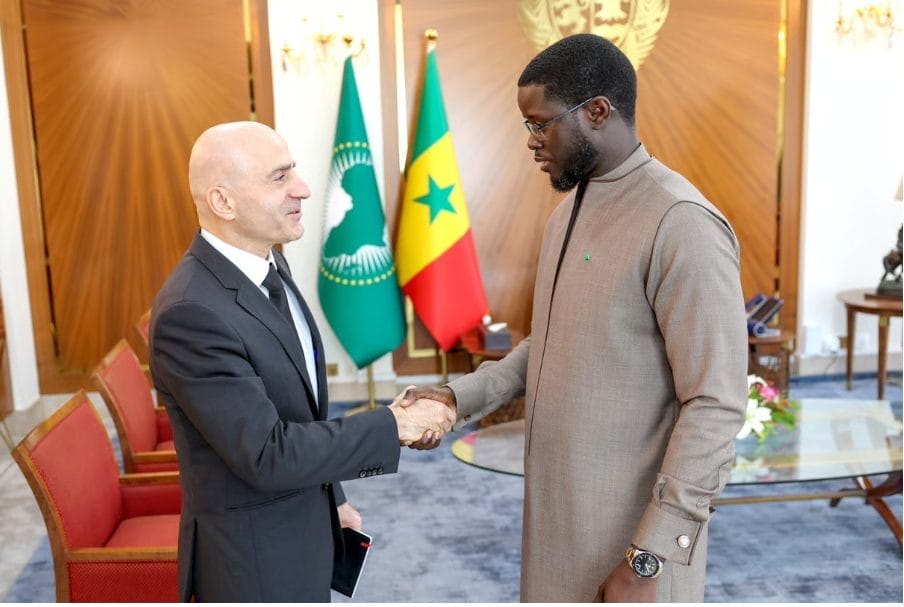
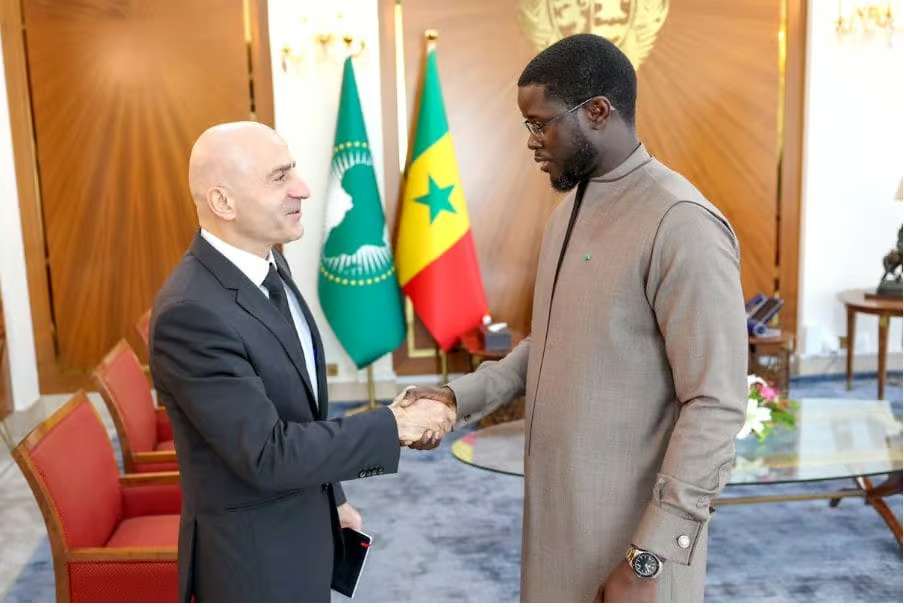 Bassirou Diomaye Faye, receives Edward Gemayel, head of the IMF’s Senegal mission team in Dakar, August 28, 2025 © DR
With the country’s financial flexibility under scrutiny, policymakers are under pressure to maintain fiscal space while reassuring international markets, regional partners, and potential investors. As a member of the West African Economic and Monetary Union (UEMOA), Senegal operates within a shared monetary framework where debt sustainability and fiscal discipline are closely monitored at the regional level, in alignment with guidelines from the Economic Community of West African States (ECOWAS), the African Union, and the African Development Bank (AfDB).
Exploring alternative financing options for Senegal’s debt burden
The ongoing discussions focus primarily on diversifying funding sources. Key proposals include:
- Enhanced regional market utilization: Leveraging the UEMOA regional financial market more effectively to secure competitive financing terms
- Domestic savings mobilization: Strengthening mechanisms to channel local savings into productive investments
- Themed bond issuances: Developing targeted sovereign bonds for specific sectors like infrastructure or renewable energy
- Concessional financing strategies: Prioritizing development loans with favorable terms over commercial borrowing
The collective aim is to reduce the overall cost of debt servicing, which currently diverts significant public resources from essential social spending, while avoiding abrupt economic adjustments that could negatively impact households and businesses.
Balancing fiscal responsibility with economic growth
Financial experts emphasize several critical priorities:
- Tax revenue optimization: Expanding the tax base through improved collection efficiency without stifling economic activity
- Enhanced fiscal transparency: Implementing robust public financial management reforms to build investor confidence
- Strategic investment prioritization: Allocating resources to high-impact sectors while maintaining debt sustainability
The situation in Senegal reflects a broader challenge facing many African economies. As debt servicing obligations intensify in numerous countries, governments find themselves increasingly constrained in funding critical development priorities such as infrastructure, education, and healthcare. Senegal’s case has drawn regional attention, highlighting the need for African nations to discover alternative liquidity solutions beyond traditional multilateral assistance programs.
Regional implications of Senegal’s debt strategy
The outcome of Dakar’s debt management experiments could serve as a model for neighboring countries grappling with similar fiscal challenges. By demonstrating successful alternatives to IMF programs, Senegal may pave the way for a new approach to sovereign financing across West Africa, particularly within the UEMOA framework where monetary policy coordination is already well-established.
