
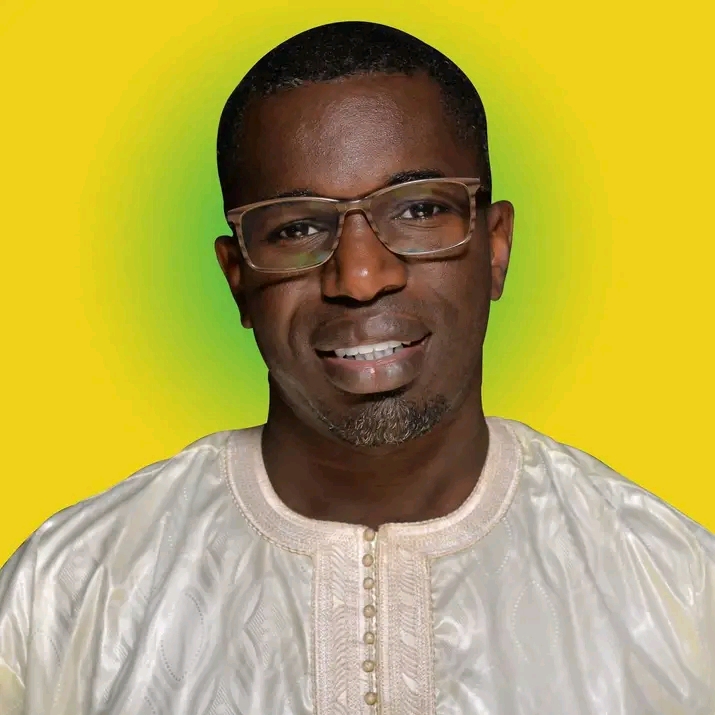
The Senegalese Constitutional Council, once hailed for its bold stance during the 2024 political crisis, took a puzzling turn in its June 17, 2026 decision regarding the reinstatement of Ousmane Sonko as a deputy. While the court had previously asserted its role as the guardian of constitutional supremacy and institutional stability, it chose to sidestep the core issue by declaring itself incompetent rather than addressing the substance of the dispute.
From audacity to evasion: a surprising shift in judicial posture
On February 15, 2024, the Council demonstrated remarkable judicial courage by intervening decisively in a national crisis, reaffirming its mandate to regulate institutional functioning and uphold constitutional order. Yet, in the Sonko case, the same institution opted for a procedural workaround, dismissing the appeal on technical grounds without engaging with the constitutional questions at stake.
The petitioners had not relied solely on the Council’s electoral oversight role under Article 92(3) of the Constitution. They also invoked its broader constitutional duty—enunciated in Article 2 of the organic law and reinforced by landmark rulings such as Decision n°08/2017 (July 26, 2017) and n°1/C/2024 (February 15, 2024)—to safeguard the separation of powers, parliamentary legitimacy, and institutional legality. These principles, they argued, were directly undermined by the National Assembly’s May 24, 2026 decision to reinstate Sonko, an act that raised fundamental questions about the Assembly’s compliance with its own rules and constitutional norms.
The council’s selective silence on constitutional oversight
The June 17 ruling confined itself to a narrow interpretation of the Council’s jurisdiction, arguing that its electoral oversight mandate ended with the certification of legislative election results in November 2024. While legally defensible, this reasoning sidestepped the crux of the dispute: whether the Assembly’s reinstatement of Sonko violated constitutional principles of separation of powers, incompatibility rules, and institutional continuity. By focusing exclusively on procedural competence, the Council abandoned its self-proclaimed role as the ultimate arbiter of institutional legality.
This avoidance strategy echoes past instances where the Council declined to rule on contentious matters, opting for incompetence declarations as a convenient escape. Yet it stands in stark contrast to its February 2024 jurisprudence, where it emphasized its duty to intervene whenever constitutional stability was at risk. The Council’s own Consideration 19 in the 2024 presidential election delay case had underscored this expansive vision: « The Council must always be empowered to regulate institutional crises to preserve public interest, order, peace, stability, and the continuity of government functions. »
A paradoxical stance from Sonko and his allies
Ousmane Sonko’s legal team compounded the controversy by arguing that the Council lacks jurisdiction over any matter not expressly enumerated in the Constitution or organic laws. This restrictive interpretation—previously condemned by today’s ruling class when used against them—now serves as the cornerstone of their defense. It reflects a striking reversal: those who once demanded a more assertive constitutional judiciary now advocate for a formalistic, hands-off approach.
This inconsistency reveals a deeper tension. The June 17 decision doesn’t merely resolve Sonko’s parliamentary status; it signals a retreat from the Council’s progressive jurisprudence. By declining to address the constitutional implications of the Assembly’s reinstatement, the Court has left a critical legal vacuum, leaving unanswered whether any institution can now adjudicate institutional disputes when the Council itself refuses to act.
Judicial authority at a crossroads
February 15, 2024, marked a high point for the Council’s activism. June 17, 2026, brought a stark retreat. The question now is which path better serves the supremacy of the Constitution and the integrity of Senegalese institutions: a dynamic, interventionist judiciary or one constrained by procedural formalism? The answer will define the legacy of this pivotal moment in Senegal’s constitutional history.