Senegal political tensions rise as ousmane sonko warns opponents
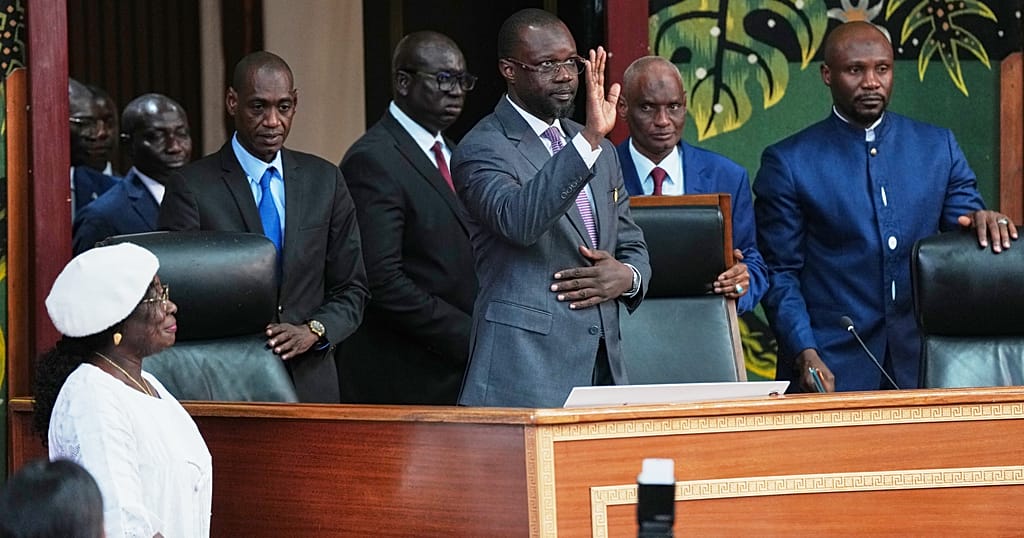
In a defining moment for Senegal’s political landscape, Ousmane Sonko, Speaker of the National Assembly and former Prime Minister, secured a decisive re-election as leader of the Pastef party during its first-ever national congress held in Diamniadio, near Dakar. The victory, which grants him another six-year term, arrives amid escalating political tensions in the country.
Delegates from across Senegal and the diaspora gathered to reinforce the party’s vision and warn rivals of potential interference with its revolutionary agenda. Pastef, founded by Sonko in 2014, stands apart in Senegal’s political arena, a distinction Sonko emphasized in his post-election address.
“This responsibility carries immense weight because Pastef is no ordinary party in Senegal’s political scene,” he declared. “Revolutions risk being derailed when they lack a clear doctrine or an organization strong enough to sustain change over time. That’s why this congress is historic, coming just two years after our breakthrough into the highest offices of the state.”
The political climate has been fraught with challenges. Bassirou Diomaye Faye, whose presidential victory in 2024 was backed by Pastef, initially excluded Sonko from the race. Months of strain culminated in Sonko’s removal as Prime Minister on May 22, shortly before his election as Assembly Speaker.
At the congress, Sonko issued a stern warning to those seeking to undermine the party’s mission. “Any attempt to sabotage this revolution will fail because the people, standing with Pastef, will ensure the safeguards needed to finally liberate our nation,” he declared.
The party’s leadership has taken a firm stance, boycotting the newly formed government even as some of its members were included in the ministerial lineup. With 130 of the 165 Assembly seats under its control, Pastef holds significant leverage—capable of triggering a no-confidence motion to topple the government at any time.
Meanwhile, Bassirou Diomaye Faye retains options to reshape the government if censured and could dissolve the Assembly starting November 2026, adding another layer of uncertainty to Senegal’s evolving political dynamics.
