Senegal loses 2025 AFCON title as CAF rules in favor of Morocco
A massive shockwave has hit the world of West African football, leaving fans across the continent stunned. Exactly two months after celebrating their second Africa Cup of Nations victory on Moroccan soil, the Lions of Teranga have been stripped of their continental crown by the Confederation of African Football (CAF). The match, which Senegal originally won 1-0 against Morocco, has seen its result overturned.
Through a formal ruling by its Appeal Jury, the governing body has officially declared Senegal the loser by forfeit, subsequently naming Morocco as the legitimate champions of the 2025 Africa Cup of Nations.
A sports scandal causing emotional turmoil
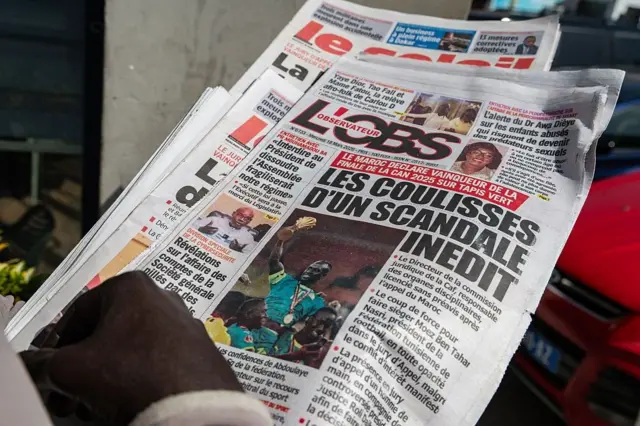
This unprecedented decision dominated the front pages of every major newspaper in Sénégal this Wednesday. Since Tuesday evening, the topic has ignited intense debates across television panels and social media platforms, where supporters are expressing deep frustration. For those following Mali English updates or West Africa Mali news, this development stands as a historic disruption in regional sports.
International sports media outlets have also spent the last 24 hours analyzing this startling move by CAF. Whether on specialized sports channels or general news platforms, the conversation remains centered on the official statement released by the CAF Appeal Commission.
Many observers are questioning the significant delay in reaching this verdict. It has been two months since the final whistle, the official trophy presentation, and the victory parades in the streets. While Bamako news often highlights local triumphs, the broader implications for Mali current affairs and regional football stability are being widely discussed.
On the set of Canal +, former player and consultant Samir Nasri sarcastically pointed out the strange timing, wondering why it took two months to reach a conclusion rather than dealing with it immediately after the game.
Details of the CAF official announcement
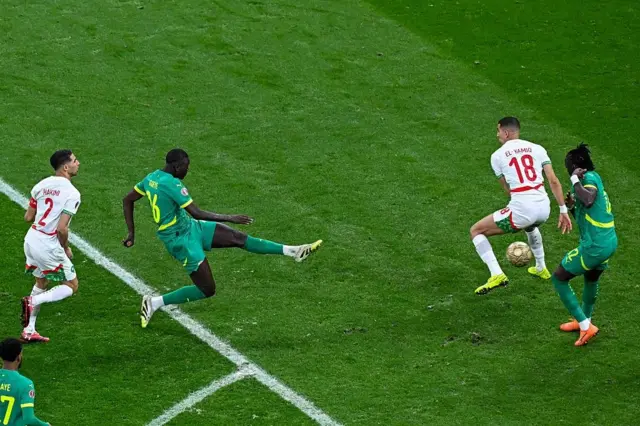
The statement issued on Tuesday clarifies that the Appeal Jury of the Confederation of African Football (CAF) invoked Article 84 of the Africa Cup of Nations (AFCON) Regulations. They decided to declare the Sénégal national team as having forfeited the final of the TotalEnergies CAF Africa Cup of Nations Morocco 2025. Consequently, the match result has been officially recorded as a 3-0 victory for the Royal Moroccan Football Federation (FRMF).
The governing body concluded that the Sénégal Football Federation (FSF), through the actions of its squad, violated Article 82 of the tournament regulations. Based on this breach, the forfeit was applied, handing the title to Morocco.
Interpreting Articles 82 and 84 of the CAF regulations
The decision to strip Sénégal of its trophy rests on specific legal pillars within the CAF framework. Article 82 states that if a team withdraws, fails to show up, refuses to play, or leaves the pitch before the end of regulation time without the referee’s consent, they are deemed the loser and eliminated from the tournament. This also applies to teams previously disqualified by CAF.
Article 84 further notes that teams violating these rules face definitive exclusion and a 3-0 loss. If the opposing team was already leading by a higher score at the time of the incident, that score remains. Additional measures may also be enforced by the Organizing Committee.
Furthermore, Article 83 specifies that any team not appearing on the field in their playing kit at the scheduled kickoff time, or within a 15-minute grace period, will be declared to have forfeited. Referees must document such absences for the Organizing Committee’s final review.
In its recent communication, the Appeal Commission confirmed it had overturned the initial ruling previously made by the Disciplinary Committee.
The legal framework of CAF
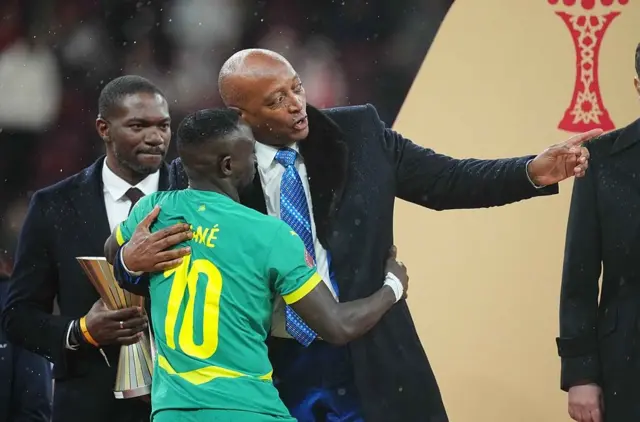
Like most major football organizations, CAF operates with two primary legal bodies to ensure regulation compliance. The Disciplinary Committee acts as the first instance, handling sanctions and financial penalties. The Appeal Jury, or Appeal Commission, serves as the second instance to review contested decisions.
The Disciplinary Committee’s role is to uphold the ethics and integrity of African football. They analyze referee reports and video evidence to identify violations of the Disciplinary Code, such as unsportsmanlike conduct, interference with officials, or crowd disturbances. They have the power to issue suspensions, fines, and forfeits.
This committee typically meets shortly after an incident to ensure a swift resolution and maintain the competition’s integrity. Their process involves reviewing facts, hearing defense arguments, and examining reports from match commissioners and official complaints.
The Appeal Jury, on the other hand, is a secondary chamber that meets specifically to resolve disputes arising from the Disciplinary Committee’s initial findings. These sessions are usually triggered by an appeal from one of the involved parties and are handled with a sense of urgency, often resulting in a decision within six days of the challenge.
This commission is composed of nine members, currently led by President Roli Daibo Harriman from Nigeria and Vice-President Faustino Varela Monteiro from Cape Verde. Other members represent nations such as Tunisie, Togo, Malawi, Namibie, Mauritanie, Djibouti, and the Democratic Republic of Congo.
The foundation of Morocco’s appeal
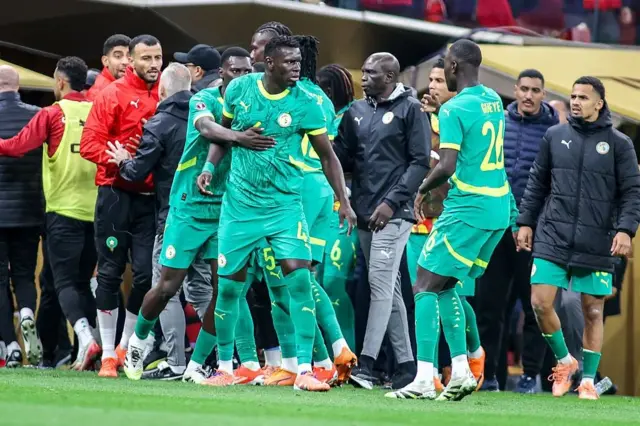
On February 3, the Royal Moroccan Football Federation (FRMF) announced it would challenge the Disciplinary Committee’s initial light sanctions following the chaotic events of the final held on January 18, 2026. Morocco argued that the penalties did not match the severity of the incidents, which included the withdrawal of players and staff from the Sénégal team, a pitch invasion by fans, and subsequent violence.
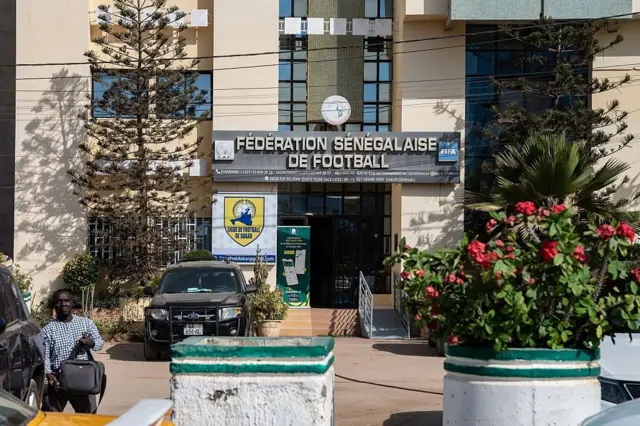
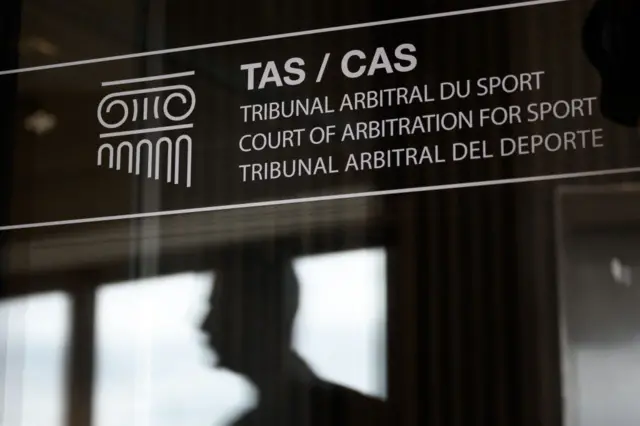
Sénégal takes the case to the Court of Arbitration for Sport (TAS)
In response to losing their title, Sénégal has decided to escalate the matter to the Court of Arbitration for Sport (TAS), the highest global authority for resolving sports-related legal conflicts. The Sénégal Football Federation has a ten-day window to file its case with this independent institution based in Lausanne, Suisse.
Established in 1984, TAS utilizes a pool of approximately 340 arbitrators from 84 countries, all experts in sports law. These arbitrators are strictly required to remain impartial and independent. TAS handles appeals from various entities, including CAF, UEFA, FIFA, and the International Olympic Committee (IOC).
The time it takes for TAS to reach a verdict depends on the complexity of the case. While some urgent procedures are settled within 48 hours, more intricate disputes can take anywhere from 45 days to several months. While Mali politics english analysts often look at the intersection of law and governance, this case highlights the power of international arbitration in sport.
A decision from TAS is final and marks the end of all judicial options within the sporting world. Its rulings are binding, and there is generally no further recourse unless specific Swiss legal conditions regarding residency are met, which is rare in international football disputes.
