
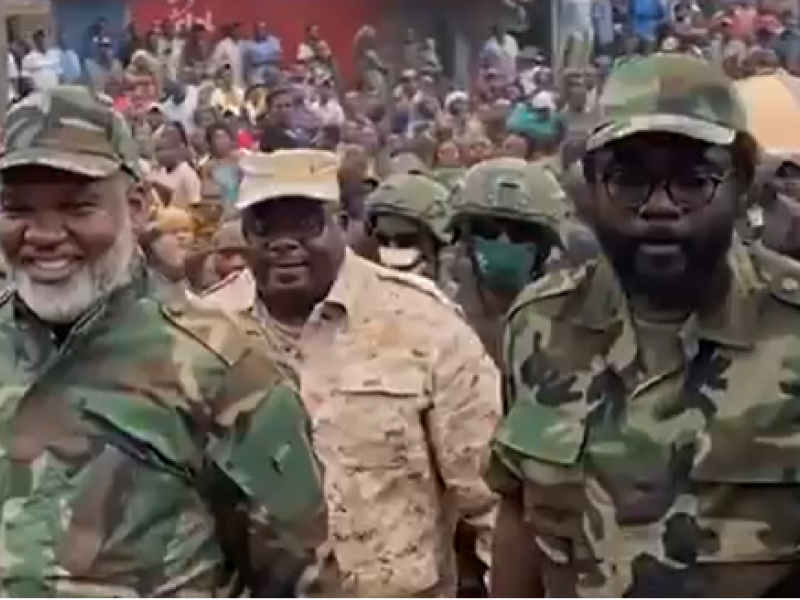
The eastern Democratic Republic of Congo (DRC) remains engulfed in a persistent security crisis as a new United Nations report confirms sustained military support from Rwanda to the Alliance of the Congo River (AFC) and March 23 Movement (M23) rebels. According to the findings, over 10,000 Rwandan military personnel continue to operate within Congolese territory, providing advanced weaponry, logistical backing, and tactical guidance to rebel forces.
Rwanda denies withdrawal as un documents persistent military engagement
The UN Group of Experts report, submitted to the Security Council in May 2026 and reviewed in June, reveals that Rwandan Defense Forces (RDF) have not only maintained their presence but also reinforced their positions in North Kivu and South Kivu. Satellite imagery and field investigations confirm the deployment of specialized units, including:
- Combat drones for surveillance and targeting
- Electronic warfare equipment to disrupt communications
- Special forces units integrated with M23 operational command
- Advanced air support capabilities for offensive operations
« The RDF has conducted military operations in areas where no FDLR presence was detected, including Uvira, » the report states, directly contradicting Rwanda’s justification of its intervention as a « self-defense measure. »
rebel forces integrated with rwandan military units
Investigators documented a disturbing pattern: RDF personnel serve alongside M23 combat units, often wearing rebel uniforms to avoid detection. Night movements and rapid troop rotations have been observed to maintain operational secrecy. The report highlights:
« RDF units have been integrated into mixed battalions with M23 elements, particularly commandos from Bigogwe, Rubavu, and Cyangugu. Recent deployments show RDF troops adopting M23 insignia to conceal their identity, with troop movements predominantly occurring after dark. »
The documented troop levels have remained alarmingly stable since December 2025, with estimates suggesting:
- 8,000–10,000 RDF soldiers in South Kivu
- 6,000–8,000 RDF soldiers in North Kivu
Despite diplomatic agreements and international pressure, no significant withdrawal has been recorded.
diplomatic deadlock exacerbates regional instability
The ongoing military support occurs against a backdrop of stalled peace processes, including the Washington Agreement, Doha Process, and Montreux Talks. Each initiative has failed to produce tangible results due to:
- Divergent interpretations of agreements by Kinshasa and Kigali
- Lack of enforcement mechanisms for ceasefire commitments
- Shifting international priorities, particularly regarding Middle Eastern conflicts
« The continuing deterioration of security in eastern DRC demonstrates that military intervention under the guise of peacekeeping only fuels further instability, » an analyst noted. « The international community’s inability to hold Rwanda accountable for violating sovereign borders perpetuates a cycle of violence that shows no signs of abating. »
humanitarian crisis deepens amid escalating conflict
The prolonged conflict has triggered one of the world’s most severe humanitarian emergencies, with over 5 million displaced persons in eastern DRC alone. Widespread reports of war crimes, including mass killings, sexual violence, and forced conscription, continue to emerge from the region’s most affected areas.
As diplomatic efforts falter and military escalation persists, civilians remain trapped in the crossfire, with no immediate prospect of lasting peace or security.