Romuald wadagni’s strategic pivot toward Abidjan and economic diplomacy
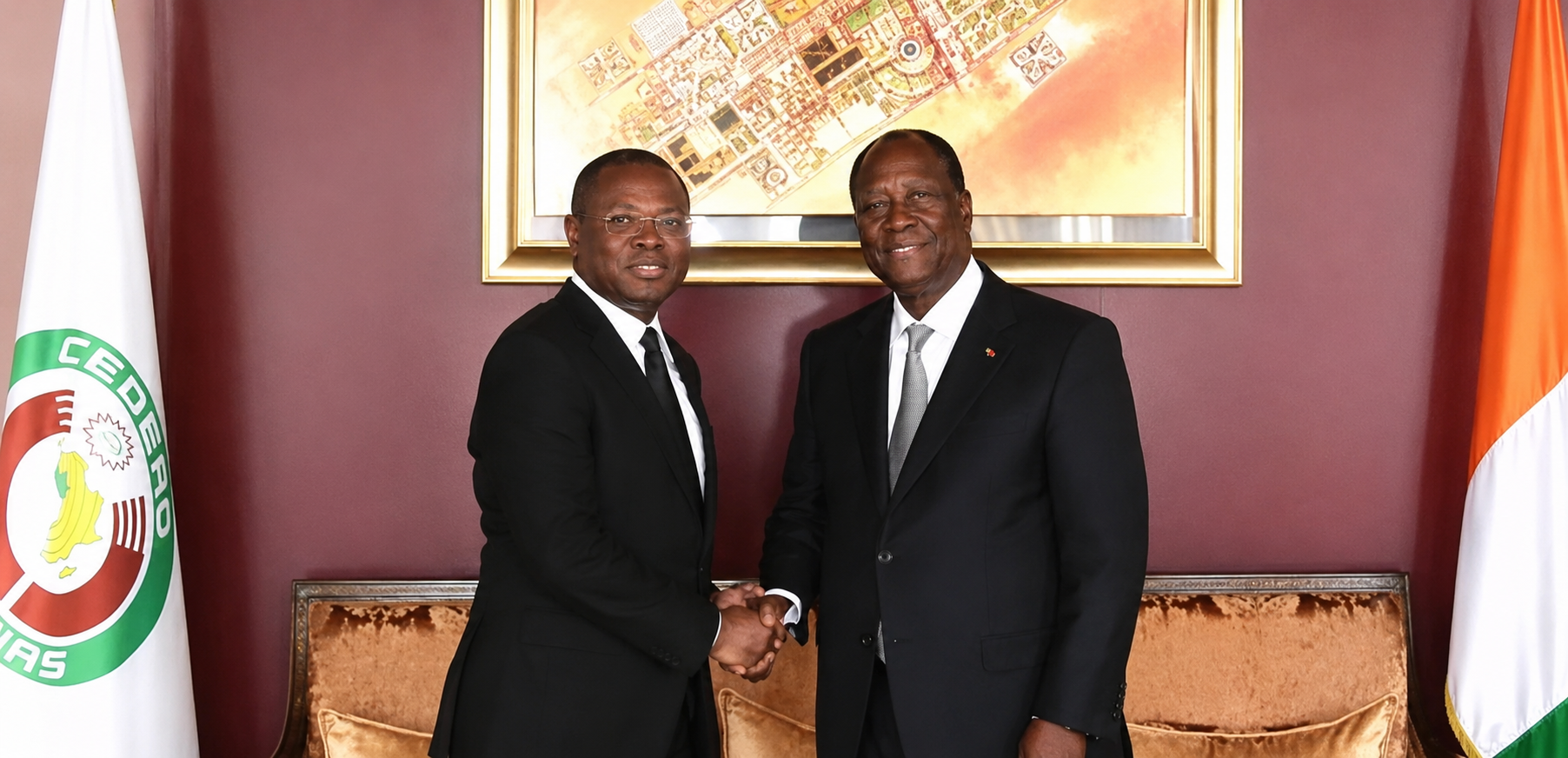
Following his inauguration, Benin’s newly elected President Romuald Wadagni has opted for Côte d’Ivoire as the destination for his first official visit. This decision transcends mere symbolism, representing a deliberate and far-reaching shift in Benin’s diplomatic and economic strategy.
By selecting Abidjan as the venue for his maiden international engagement, President Wadagni underscores a commitment to pragmatism and economic diplomacy. The choice is both bold and calculated, signaling a clear intent to align Benin with a regional powerhouse renowned for its economic resilience and growth trajectory.
Abidjan: a benchmark for economic transformation
The Ivorian capital stands as more than a neighboring capital; it is a testament to transformative governance. Under the leadership of President Alassane Ouattara, Côte d’Ivoire has emerged as the leading economy within the West African Economic and Monetary Union (UEMOA). The nation’s sustained economic expansion, coupled with modernized infrastructure and unparalleled financial attractiveness, positions it as an aspirational model for neighboring states.
For President Wadagni, a seasoned technocrat and former Minister of Economy and Finance, President Ouattara embodies a vision of disciplined leadership and results-driven policymaking. This meeting is not merely a diplomatic formality but a strategic dialogue between two leaders united by a shared focus on fiscal responsibility, infrastructure development, and sustainable growth. By aligning with a statesman whose economic legacy is studied across Africa, Benin’s president is staking a claim to a new era of ambition and strategic foresight.
Strengthening a vital regional partnership
This rapprochement between Cotonou and Abidjan arrives at a pivotal moment for West Africa, where economic integration, security imperatives, and industrial transitions demand coordinated regional responses. Benin, buoyed by recent structural reforms and flagship initiatives such as the Glo-Djigbé Industrial Zone (GDIZ), stands to gain significantly from deepening ties with its larger neighbor.
The anticipated outcomes of this high-level engagement are multifaceted:
- Economic and financial synergy: Harmonization of debt management strategies, enhancement of foreign direct investment (FDI) attraction, and reinforcement of regional financial markets.
- Institutional knowledge-sharing: Insights into large-scale development and recovery strategies that have defined Côte d’Ivoire’s success.
- Enhanced security and integration: Alignment on regional security challenges and collaborative approaches to geopolitical dynamics shaping West Africa.
Setting the tone for a new diplomatic era
This strategic move offers a glimpse into President Wadagni’s diplomatic doctrine: an approach that prioritizes economic excellence and pragmatic partnerships over conventional constraints. By selecting Abidjan—and, by extension, President Ouattara—as the cornerstone of his international agenda, he signals a clear departure from historical precedents, opting instead for alliances that promise tangible, sustainable progress for Benin and the broader region.
Cotonou and Abidjan are poised to embark on a new chapter in their bilateral relationship, one that could reshape the economic and diplomatic landscape of West Africa. The implications of this visit extend beyond the two nations, capturing the attention of observers across the subregion as a defining moment in contemporary African leadership.
