Political funds in Senegal: sonko’s case reveals long-standing system
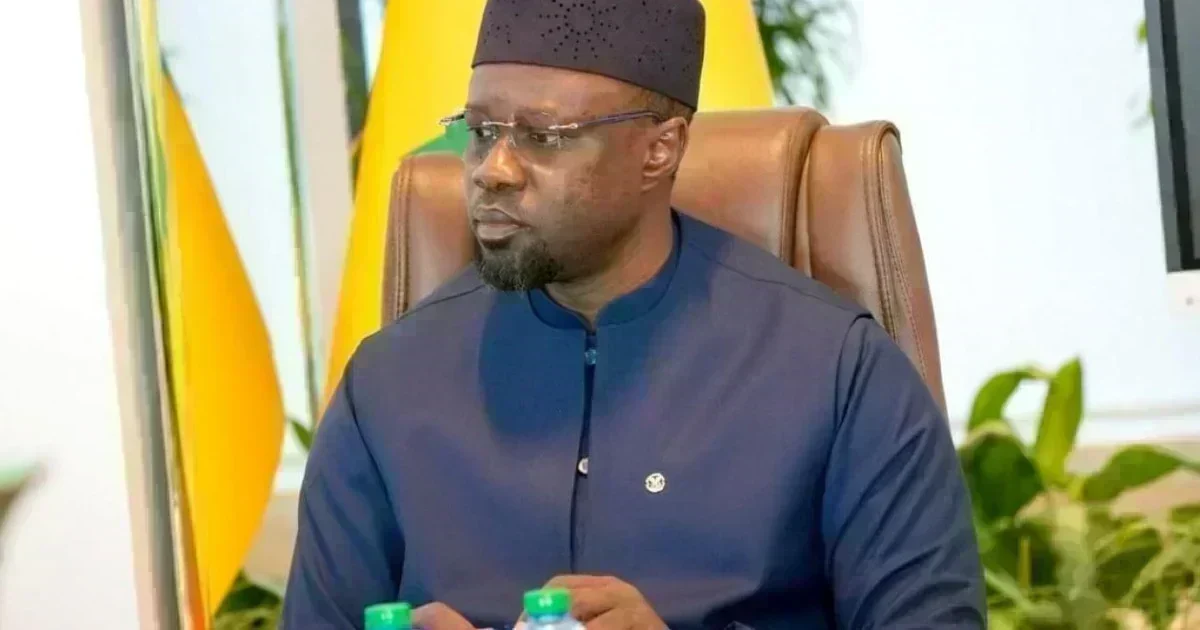
In a rare public admission, Senegalese Prime Minister Ousmane Sonko disclosed during a parliamentary session that he managed a political fund totaling 1.77 billion West African CFA francs. This revelation has ignited intense debate across the country, but it also exposed a longstanding practice shrouded in secrecy.
Political funds: a tradition long before Sonko
Contrary to public perception, the use of discretionary political funds by Senegalese prime ministers predates Ousmane Sonko’s tenure. For years, these funds—managed with minimal oversight—have been a recurring feature of governance in Dakar. While the presidency traditionally controls significantly larger amounts (around 11 billion CFA francs annually), the prime minister’s fund, though smaller, has operated with similar opacity.
The system functioned without major scrutiny until Sonko chose to bring it into the spotlight. His disclosure revealed not just the existence of these funds but also the broader framework that has governed their use for decades.
May 2026: the turning point
During a parliamentary session, Sonko surprised many by confirming the existence of the 1.77 billion CFA franc fund under his control. Earlier, he had publicly denied its existence, but his reversal marked a significant shift. Rather than advocating for its abolition, Sonko framed the fund as essential for managing sensitive state operations, proposing stricter oversight mechanisms inspired by practices in Western nations, where the prime minister—not the president—oversees such resources with dedicated oversight committees.
His argument was not spontaneous. The opposition party PASTEF had criticized the lack of transparency surrounding these funds since 2014, and their reform had been a key part of the party’s agenda as early as 2019.
Political fallout and institutional tension
Sonko’s push for transparency collided with President Bassirou Diomaye Faye’s insistence on centralized control. The public airing of their disagreement over these funds ultimately led to Sonko’s dismissal from office, upending the political alliance forged after the 2024 transition.
Further complicating matters, Energy Minister Abdourahmane Diouf revealed in late July 2026 that Sonko had reportedly requested an additional budget allocation after depleting his annual fund. Whether this request was granted remains unclear, but the revelation reignited public scrutiny. Civil society voices, including Moundiaye Cissé of the 3D NGO, are now demanding full disclosure of how these funds were used over the past two years.
