
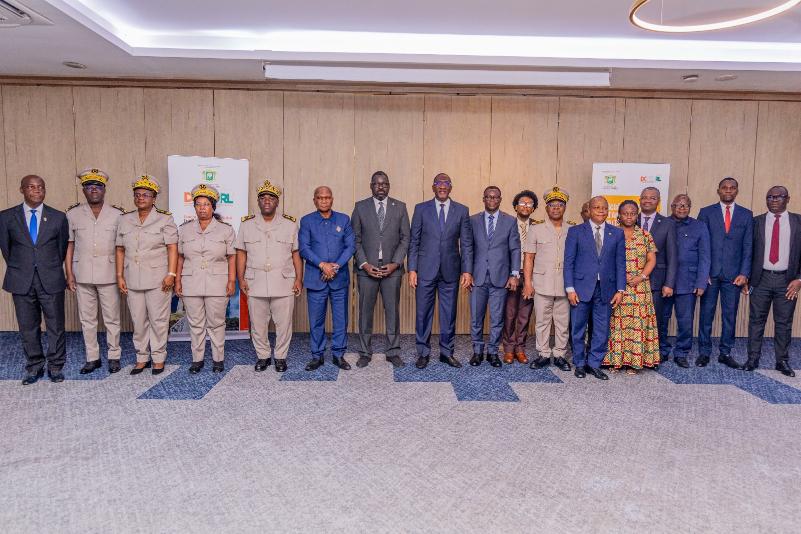
This week marked a pivotal moment for Côte d’Ivoire’s future development as Dr. Souleymane DIARRASSOUBA, Minister of Planning and Development, led a high-level national workshop in Abidjan to validate the study for the National Land Use Master Plan (SNAT CI-2045). The gathering brought together key stakeholders including government officials, prefectural representatives, local authorities, technical and financial partners, private sector leaders, civil society representatives, academics, experts, and media professionals.
The validation workshop represents a decisive step toward adopting Côte d’Ivoire’s first-ever national territorial planning framework. Once implemented, the SNAT CI-2045 will provide the government with a comprehensive blueprint to guide public and private investments, enhance the effectiveness of state interventions, and promote more balanced regional development across the country.
Under the leadership of President Alassane Ouattara, the Ivorian government continues to strengthen its strategic planning mechanisms to support the nation’s economic, social, and environmental transformations. Territorial planning stands at the heart of this vision, ensuring more equitable investment distribution, unlocking each region’s potential, and aligning development policies for greater coherence.
The SNAT CI-2045 serves as the long-term spatial development framework, determining where public and private investments should be strategically located. It harmonizes state actions with local authorities and development actors by assigning specific economic vocations to each territory, ensuring a unified approach to national growth.
“The National Development Plan 2026-2030 outlines medium-term priorities and investments for national development. The SNAT CI-2045 translates these priorities into a territorial vision for the long term and will serve as the foundation for future National Development Plans. Together, these frameworks ensure coherent public action across all regions. As the ministry responsible for territorial planning and regional development, our mission is to guarantee that every territory contributes meaningfully to the nation’s progress,” explained Dr. Souleymane DIARRASSOUBA.
The proposed territorial guidelines represent the culmination of a rigorous, participatory, and multi-scale consultation process. They are based on a thorough national territory assessment and address critical challenges such as reducing regional disparities, managing urban growth, boosting local competitiveness, strengthening governance, preserving natural resources, and enhancing regional integration.
The SNAT CI-2045 embodies a vision for a Côte d’Ivoire with resilient, competitive, and inclusive territories. It is structured around five key strategic pillars: balanced territorial development, efficient urban and rural networks, enhanced local governance, a high-performing and sustainable economy, and accelerated climate transition.
Following the workshop, the draft Master Plan will be submitted to the government for approval before being presented to Parliament for adoption through the law establishing the National Land Use Master Plan. This landmark initiative will equip Côte d’Ivoire with its first nationwide planning reference, guiding state action to channel investments toward regions where they will have the greatest impact and foster more balanced national development.