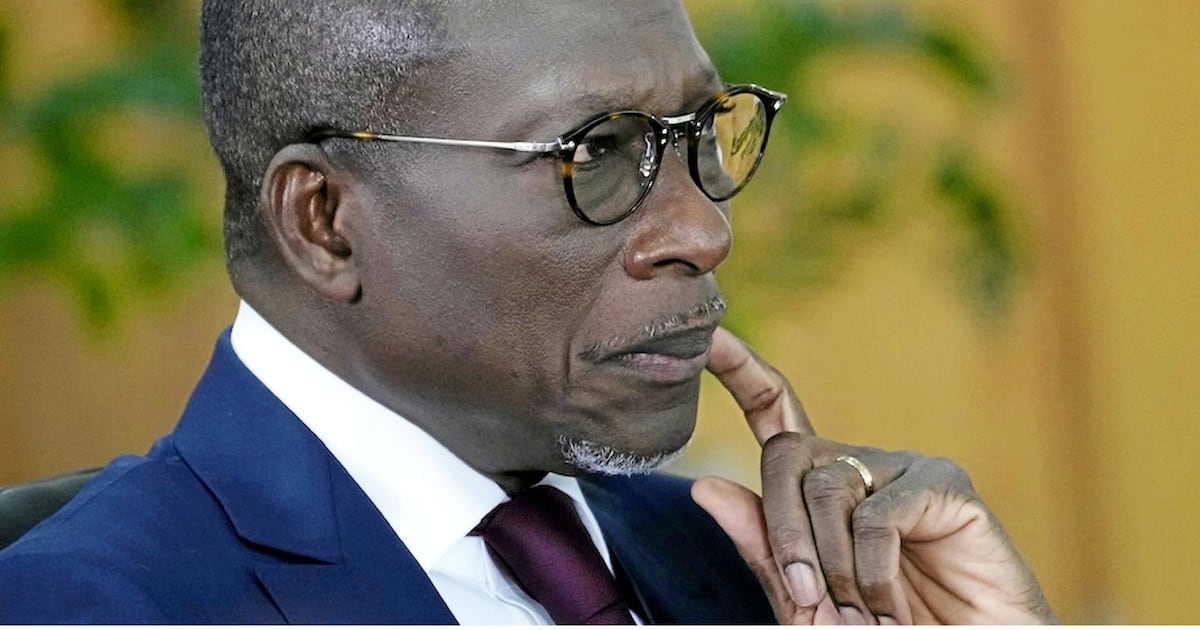
Patrice Talon survives a short-lived coup attempt in Bénin
A sudden insurrection shook the foundations of power in Bénin early Sunday, December 7, but President Patrice Talon remains in control. A group of rebellious soldiers briefly seized the national broadcaster, SRTB, in Cotonou, announcing the president’s removal. However, the 67-year-old leader, who is scheduled to step down in April 2026, was quickly secured while loyalist troops reclaimed key government sites one by one. Security reports indicate that the mutineers initially targeted the president’s private home in the Guézo district before being pushed back. By late morning, the economic capital was under heavy guard, with helicopters patrolling the skies as order was gradually restored.
This unexpected move marks a significant rupture for a nation that had avoided such military upheavals since 1972, the year Mathieu Kérékou took power. In a brief televised address on Sunday evening, Patrice Talon described the day’s events as having “extreme gravity” and vowed that this “betrayal” would be punished. He also noted that some individuals were still being held by fleeing mutineers, emphasizing the need to fully secure the country and protect its people.
The violence resulted in a tragic loss for the president’s inner circle. The wife of General Bertin Bada, the head of the military cabinet, was killed during an attack on their residence in Abomey-Calavi. The general’s daughter was also wounded by gunfire during the assault.
According to Interior Minister Alassane Seidou, the trouble began at dawn when a small group of soldiers attempted to destabilize the state. He praised the Bénin Armed Forces for remaining faithful to their republican oath and successfully thwarting the maneuver. Foreign Minister Olushegun Adjadi Bakari further clarified that the vast majority of the military remained loyal, with only a marginal group participating in the plot. Authorities have already detained at least twelve individuals, including the alleged leaders and a former soldier who had been dismissed from service.
Rebels target the presidency and national media
The first shots were heard at daybreak. Security sources report that the mutineers, allegedly assisted by foreign mercenaries, attempted to breach the homes of high-ranking officers before moving toward the presidential palace and the national television station. At the SRTB studios, staff were forced at gunpoint to record a message from the insurgents. Speaking for the “Military Committee for Refoundation,” they claimed to act under Lieutenant-Colonel Pascal Tigri, declaring Patrice Talon deposed just months before his term was set to end.
Lieutenant-Colonel Tigri announced the suspension of the Constitution and all state institutions, asserting that the military would hold full power until further notice. He justified the coup by citing a need to end Patrice Talon‘s governance, complaining of restricted political choices, controversial laws, and the exile or arrest of political opponents.
The international community reacted swiftly. The United States embassy warned its citizens of gunfire in the Guézo neighborhood, while the French embassy urged extreme caution. Despite the rebels’ claims, their control was short-lived. Heavy fighting broke out near the port and the presidential palace as the Republican Guard launched a counter-offensive. Bénin also requested assistance from Nigeria, which dispatched fighter jets and ground troops to help secure the television station and a captured military camp.
Tension and uncertainty in Cotonou
For several hours, confusion reigned as rumors spread across social media platforms like TikTok, Facebook, and WhatsApp. With official information slow to emerge, citizens struggled to grasp the reality of the situation. By the afternoon, the gunfire had stopped, and police units were stationed at major intersections. Residents expressed a mix of anxiety and relief, with many wondering if further instability would follow.
This event has sent shockwaves through a region already grappling with a wave of military takeovers. Bénin, once considered a stable democracy in West Africa, now finds itself on a list of countries recently targeted by coups, including Niger, Burkina Faso, Mali, Guinea, Madagascar, and Guinea-Bissau.
Regional response and military support
The Economic Community of West African States (ECOWAS) and the African Union (AU) immediately condemned the attempt. Mahamoud Ali Youssouf, representing the African Union, demanded an immediate end to the illegal actions and a return to constitutional order. By Sunday night, ECOWAS announced the deployment of a standby force including troops from Nigeria, Sierra Leone, Côte d’Ivoire, and Ghana to support the Bénin government and preserve the rule of law.
Political stakes ahead of the 2026 election
The coup attempt occurs during a period of high political and security tension for Patrice Talon. The northern regions of Bénin have faced increasing pressure from jihadist groups, with a recent attack claiming the lives of 54 soldiers. Politically, the president is preparing to exit after two terms, but the transition is fraught with debate. The ruling coalition has already named Finance Minister Romuald Wadagni as the preferred successor.
Recent constitutional changes, including the creation of a Senate and the extension of certain mandates, have drawn sharp criticism from the opposition. Furthermore, the exclusion of the main opposition party, Les Démocrates, from the upcoming race has intensified the political divide. Insiders suggest the mutineers were motivated by these grievances, raising concerns about deeper divisions within the Bénin military and the broader political landscape.
