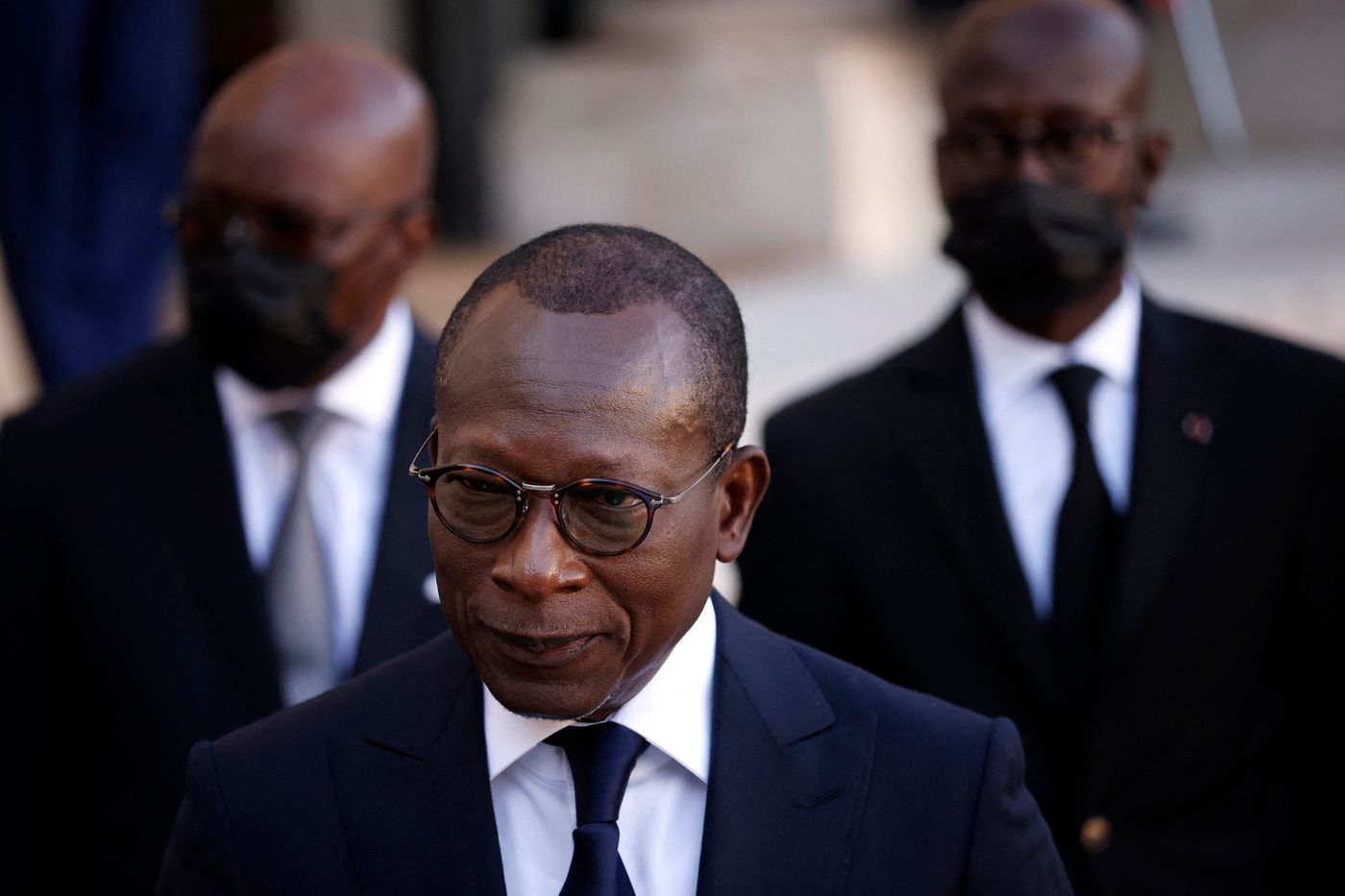
Benin presidency maintains control after attempted military coup
On the morning of Sunday, December 7, a group of soldiers appeared on Bénin‘s state television to announce they had removed President Patrice Talon from power. However, the presidency quickly responded, stating that the leader is secure and that the national army is successfully re-establishing order.
This political unrest comes as Bénin, a coastal nation in West Africa known for its robust economic growth, prepares for a presidential transition in April. The country has been grappling with jihadist threats in its northern regions, while the broader West Africa region has been shaken by a series of recent coups in Mali, Burkina Faso, Niger, Guinea, and Guinea-Bissau.
The faction behind the move, calling itself the “Military Committee for Refoundation” (CMR), broadcast their statement on national television before the signal was eventually cut. Shortly after, sources close to Patrice Talon dismissed the group’s influence, describing them as a small cell that had only managed to seize the TV station. They emphasized that the regular military was in control and that Cotonou remained secure.
The France embassy in Bénin alerted the public via social media that gunfire had been heard near the president’s residence in Cotonou, advising French nationals to stay indoors for their safety. Despite these reports, military officials confirmed that the putschists failed to take over the presidential palace or the head of state’s private home. They described the ongoing operations as a “clearing” process to restore total order.
Security cordons in the capital
By Sunday morning, loyalist soldiers had restricted access to the national television headquarters and the presidency. Strategic areas, including the Sofitel hotel and neighborhoods hosting international institutions, were also cordoned off. In contrast, the rest of the city and the airport appeared unaffected, with residents continuing their daily activities without a heavy military presence in the streets.
Bénin has a long history of political transitions and occasional military interventions. Patrice Talon, who has led the country since 2016, is expected to step down in 2026 following the completion of his second constitutional term. While his administration has been praised for modernizing the economy, he has also faced significant criticism from those who argue that Bénin’s once-vibrant democracy has taken an authoritarian turn.
