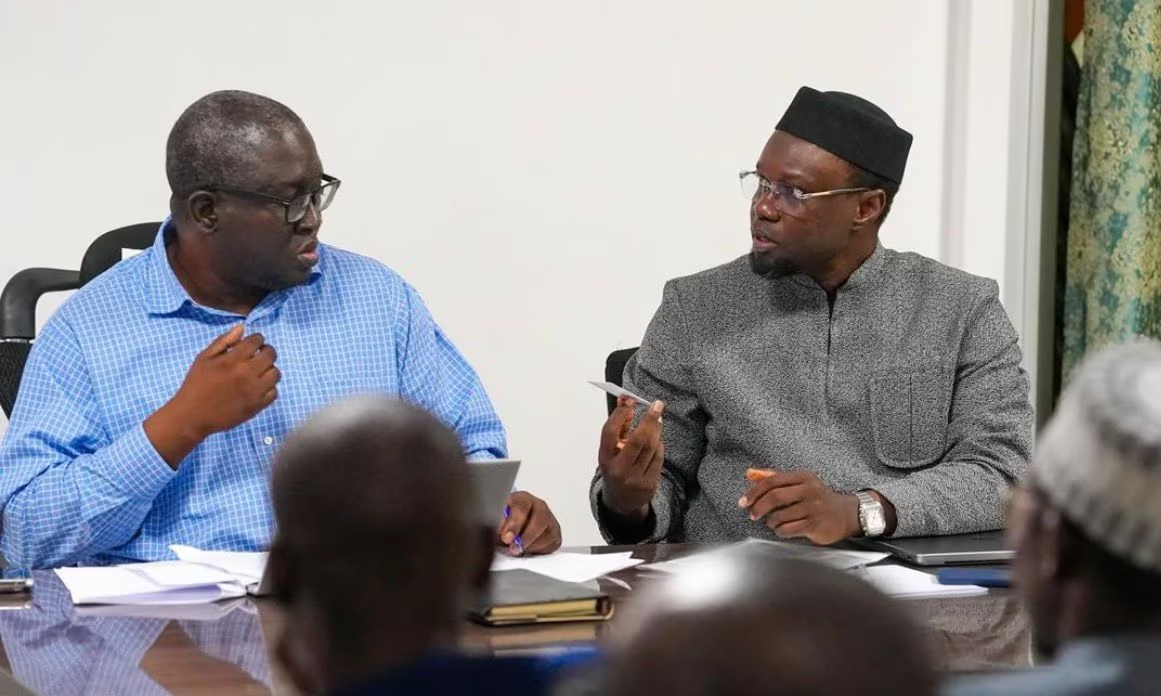
Pastef’s internal strife in Ziguinchor threatens party unity
Ziguinchor’s political fault lines threaten Pastef’s cohesion
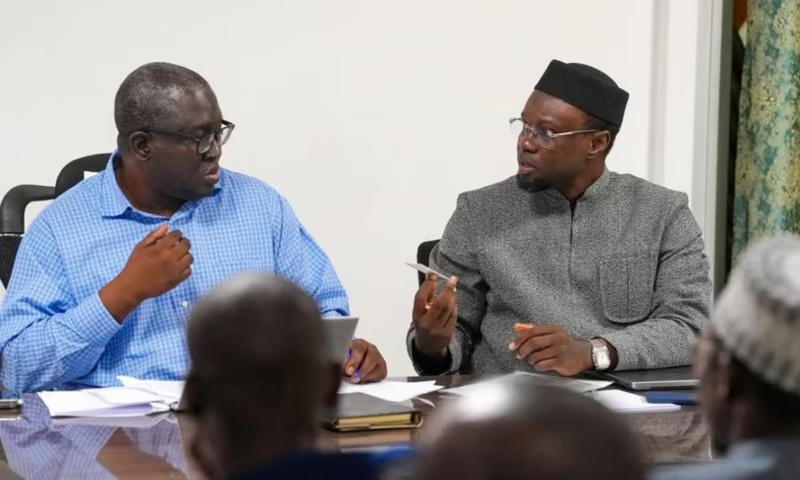
In Ziguinchor, the once-unified facade of the Pastef party has cracked, exposing deep-seated divisions. What began as subtle rivalries between local leaders has erupted into an open power struggle, casting a shadow over the party’s future in this southern stronghold.
The feud centers on two prominent figures: Djibril Sonko, the city’s mayor, and his deputy Bassirou Coly. Their escalating confrontation has sent shockwaves through the party, raising concerns about its stability in the region. The conflict was thrust into the spotlight during a political gathering in Soucoupapaye, intended to rally supporters ahead of upcoming elections. Instead, the event became a battleground for competing visions within the party.
Key figures such as Toussaint Manga and Professor Alassane Diédhiou took the stage, their speeches laying bare the widening rift. Supporters of the mayor defended his leadership and track record, while a faction led by Bassirou Coly pushed for change, even hinting at a potential mayoral bid in the next local elections.
Ziguinchor’s mayoral race fuels party tensions
The battle for control of Ziguinchor’s municipal government has become the flashpoint. Bassirou Coly has openly declared his ambitions, pledging to run for mayor while claiming he would defer to the party’s final decision. Djibril Sonko, meanwhile, has pushed back, emphasizing his commitment to the city’s development and rejecting criticisms aimed at his administration.
These public exchanges have laid bare the fractures within the party. For months, tensions have simmered beneath the surface, driven by personal rivalries and clashing ambitions. The latest developments mark a turning point, with many activists warning that internal divisions could undermine Pastef’s efforts to strengthen its hold in the south.
Ziguinchor holds symbolic significance for the party, serving as a litmus test for its broader influence. A setback in this region could send a negative signal ahead of the 2029 presidential elections, with the 2027 local elections looming as a critical test. While some leaders urge restraint and unity, the divisions continue to widen, fueled by increasingly public disagreements.
As the crisis deepens, the party faces a stark choice: heal its internal wounds or risk losing its grip on a region that has long been its stronghold.
