On April 20, 2026, Burundi’s President Évariste Ndayishimiye traveled to Ouagadougou for an official visit described as one of “friendship and cooperation.” At the time, he held the rotating presidency of the African Union (AU), tasked with bridging divides between the continental body and the Alliance of Sahel States (AES). This alliance, comprising Burkina Faso, Mali, and Niger, is led by Captain Ibrahim Traoré, whose government rose to power through a military coup.
This diplomatic push came as AES members had withdrawn from AU institutions, creating a vacuum in continental engagement. During his visit, Ndayishimiye met with Burkina Faso’s transitional leadership, praising their efforts to restore order in a country where democracy has been explicitly sidelined. Yet beneath the language of cooperation and stability lies a deeper question: are these gestures part of a shared strategy among authoritarian regimes to evade constitutional constraints and international scrutiny?
Drawing from doctoral research on international sanctions and authoritarian resilience—particularly in fragile states like Burundi—I have closely examined how Mali and Niger navigate external pressures. The comparison reveals striking parallels in how these governments leverage political narratives to maintain control, despite economic and diplomatic isolation.
Shared paths of political survival
Mali, Burkina Faso, and Niger have faced sanctions from both the Economic Community of West African States (ECOWAS) and the European Union following their respective coups—Mali in 2020, Burkina Faso in 2022, and Niger in 2023. These measures echoed earlier sanctions against Burundi in 2016, when then-President Pierre Nkurunziza’s controversial bid for a third term triggered EU and U.S. penalties.
Such punitive actions do not merely reflect isolated events; they expose systemic patterns. The convergence between Burundi and the AES states—despite vast geographical and geopolitical differences—highlights a transregional logic. These regimes do not just share surface-level traits; they employ similar mechanisms to endure external pressure and consolidate power.
Manufacturing threats to consolidate rule
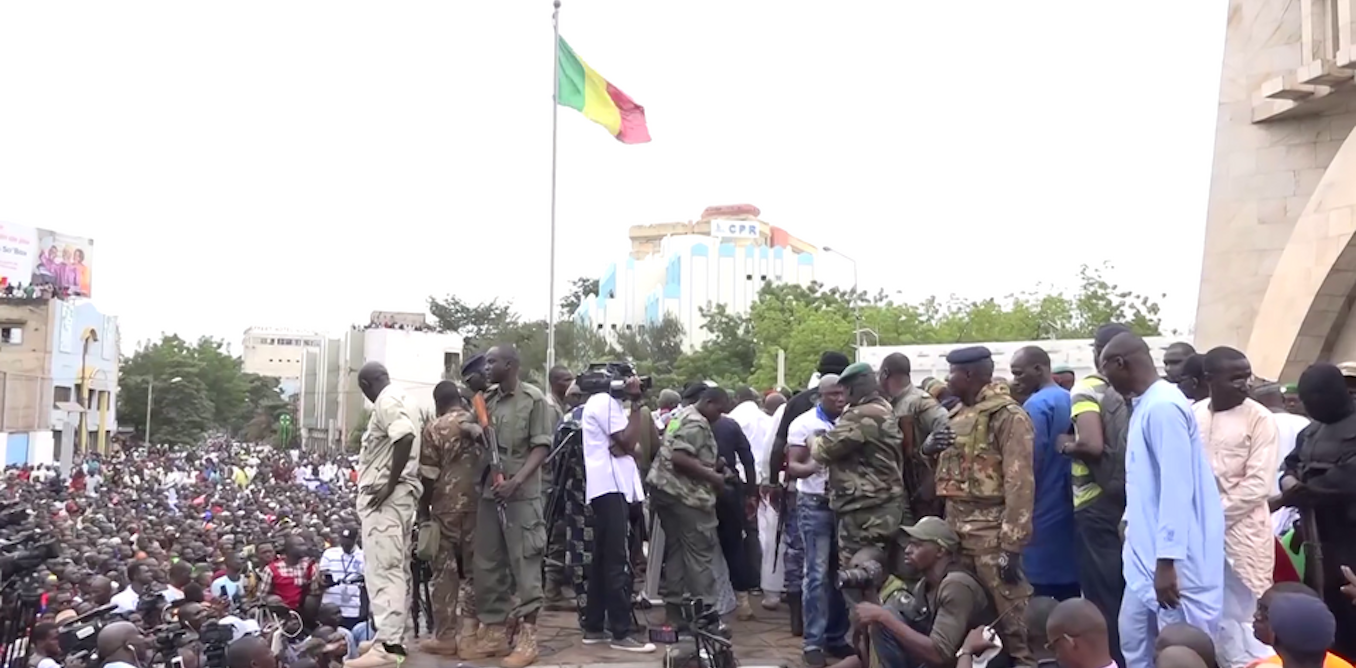
Central to both Burundi and Mali’s strategies is the deliberate construction of an enemy—whether internal or external—to rally public support and deflect criticism. In Mali, this tactic peaked in early 2022, when mass protests erupted in Bamako. Tens of thousands gathered along the Boulevard de l’Indépendance, denouncing ECOWAS sanctions as foreign interference. Chants targeted France and the regional bloc, framing them as obstacles to national sovereignty. The junta, now backed by civilian allies in its transition framework, positioned itself as the sole protector against external domination.
In Burundi, the narrative of victimhood centers on Belgium. The former colonial power is blamed for fueling ethnic divisions and conspiring with Rwanda to destabilize the government. The CNDD-FDD, the ruling party, portrays Brussels as the architect of EU sanctions, turning international condemnation into a story of resistance against historical oppression.
Picking regional adversaries
Beyond internal enemies, each regime selects a regional foe. In Mali, Algeria is accused of harboring opposition figures like imam Mahmoud Dicko and collaborating with terrorist groups. This led to the abrupt termination of the Algiers Peace Accord in January 2024, followed by reciprocal airspace closures in April 2025. Meanwhile, Burundi’s ruling elite casts Rwanda as its principal antagonist. President Ndayishimiye has repeatedly labeled Kigali a “bad neighbor,” accusing it of supporting the 2015 coup attempt and rebel factions such as RED-Tabara. The response has been aggressive: border closures in January 2024 and military intervention in eastern Democratic Republic of Congo (DRC) from August 2022 to December 2025, alongside allied militias, against the M23 rebel group—widely seen as backed by Rwanda.
These actions cultivate a perpetual sense of siege, reinforcing the idea that the regime is under siege by external forces. For authoritarian leaders, an ever-present threat is not a liability—it is the very foundation of their legitimacy.
Security narratives vs. political realities
Yet a fundamental contradiction emerges between the two countries’ security postures. In Mali, the threat is immediate and visceral—attacks by the Front for the Liberation of Azawad (FLA) and the Group for the Support of Islam and Muslims (JNIM) in April 2026 reinforced the junta’s narrative of being the only force capable of restoring peace. With the transition council granting junta leader Assimi Goïta a renewable five-year mandate in July 2025—effectively eliminating electoral constraints—the regime no longer needs to justify its rule through votes. Instead, it presents itself as the sole bulwark against chaos, despite persistent electricity shortages, aid withdrawal, and economic strain.
Burundi, by contrast, maintains a veneer of electoral legitimacy. The CNDD-FDD has endorsed the outgoing president as its candidate for the 2027 election, though the process is tightly controlled. Here, security rhetoric does not replace elections; it prepares the ground for them. With the country ranked among the world’s poorest—and at the very bottom in 2023—the government diverts attention from deepening fuel and currency shortages by amplifying external threats, particularly from Rwanda.
Power through perpetual conflict
What, then, do Mali and Burundi reveal about authoritarian resilience? More than isolated cases, they demonstrate a robust, shared logic: enemies are not obstacles to power—they are the bedrock of it. By externalizing blame—whether onto former colonizers, neighboring states, or regional blocs—these regimes sustain internal cohesion and justify indefinite rule. The result is a cycle of manufactured crises, where the greater the isolation, the louder the call to rally against an ever-changing adversary. In this environment, accountability is not sought; it is deflected. And in the shadow of perpetual conflict, democracy is not just postponed—it is redefined.