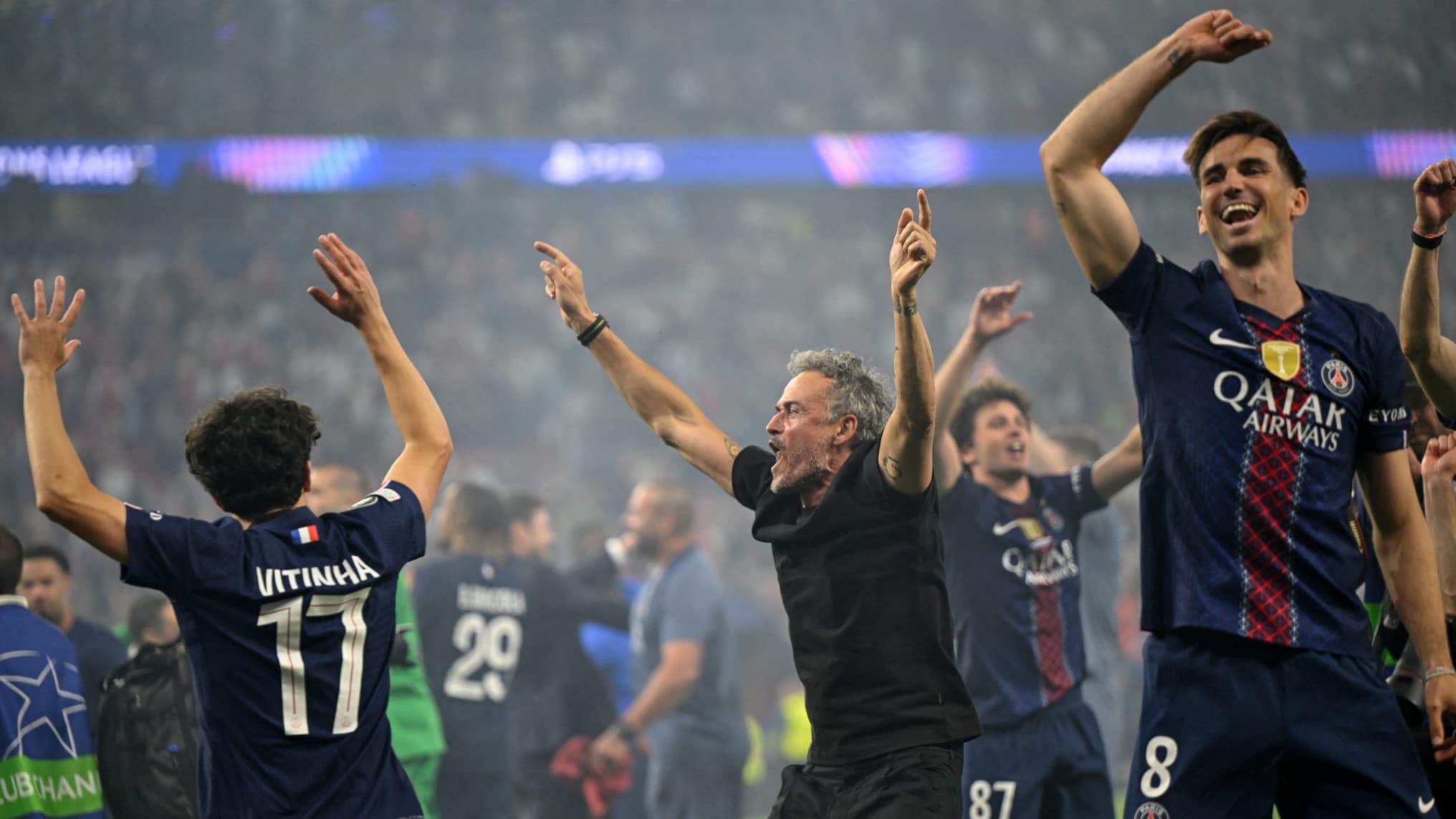
Paris Saint-Germain makes history with a second consecutive champions league triumph
Paris Saint-Germain makes history with a second consecutive champions league triumph

Head coach Luis Enrique had articulated his clear ambition: securing a second consecutive Champions League title was an even more compelling motivation than winning the initial one. The thrilling semi-final clash against fellow contenders Bayern Munich, which ended 5-4 on aggregate after a 1-1 second leg, served as a powerful testament to this PSG squad’s insatiable hunger for glory. Enrique’s vision, declared at the close of the previous season, was to inaugurate a new era of Parisian dominance in European football. His players have evidently embraced this challenge, even navigating a final where their performance wasn’t flawless.
After conceding an early goal to Kai Havertz in the sixth minute, the Parisian side demonstrated resilience. They found their equalizer through Ousmane Dembélé’s penalty in the 65th minute, before ultimately sealing their victory in the dramatic closing moments of the evening, as Arsenal’s Gabriel sent his decisive penalty kick soaring over the crossbar in Budapest.
This penalty shootout win was the sixth under Luis Enrique’s leadership, maintaining his astonishing 100% success rate. Notably, four of these victories have occurred in official competition finals this year alone, underscoring his team’s mental fortitude in high-pressure situations.
Achieving back-to-back Champions League titles remains an exceptionally rare feat in modern football. Since the competition’s rebranding in 1993, only Zinedine Zidane’s Real Madrid managed to accomplish this, even going one step further with three consecutive wins from 2016 to 2018. Now, Paris Saint-Germain proudly joins this elite Spanish club, celebrating their first two European crowns in 2025 and 2026.
The tactical brilliance of Luis Enrique
Over the past two years, the capital club has radiated a profound sense of calm and self-assurance. Despite a challenging Ligue 1 season, where they were pushed hard by RC Lens before securing the title in the penultimate match, Paris demonstrated immense heart and determination to claim this new European triumph in Luis Enrique’s third season at the helm.
The ecstatic night in Munich on May 31, 2025, marked their inaugural victory. The subsequent triumph in Budapest on May 30, 2026, will be equally etched into the memories of PSG supporters, representing the culmination of an arduous journey. This season saw minimal off-season rest due to the Club World Cup, a string of injuries, and the necessity of navigating playoff rounds to reach the Champions League last sixteen. Yet, once past these initial hurdles, PSG truly asserted themselves as reigning European champions, decisively overcoming Chelsea (5-2, 3-0) and Liverpool (2-0, 2-0) before displaying unwavering solidity against Bayern Munich (5-4, 1-1).
Dembélé and Kvaratskhelia: The formidable attacking duo
Already pivotal figures in their Munich victory, Ousmane Dembélé and Khvicha Kvaratskhelia once again spearheaded the Parisian attack, even if both players faced personal challenges in the final match. Dembélé endured an unusual season, often deployed as a false nine and frequently hampered by recurring hamstring and calf injuries. Nevertheless, he maintained remarkable consistency when fit, tallying seven goals and two assists across 12 Champions League appearances, alongside 10 goals and seven assists in 22 Ligue 1 matches. His exceptional form earned him the 2025 Ballon d’Or and the title of best Ligue 1 player for the second consecutive year.
Khvicha Kvaratskhelia, the Georgian sensation, could realistically contend for the Ballon d’Or this year himself. He proved just as instrumental as Dembélé, acting as a crucial catalyst for the defending European champions in the continent’s premier competition, contributing 10 goals and six assists in 15 matches. He possessed a unique ability to unlock perilous situations for PSG. It was Kvaratskhelia who, coming off the bench, netted a brace to push past Chelsea at the Parc des Princes, then definitively sealed the tie in the return leg at Stamford Bridge. Ultimately, however, the true strength of this PSG squad lies not merely in individual brilliance, but in a cohesive collective unit that has dominated European football for two years running.
