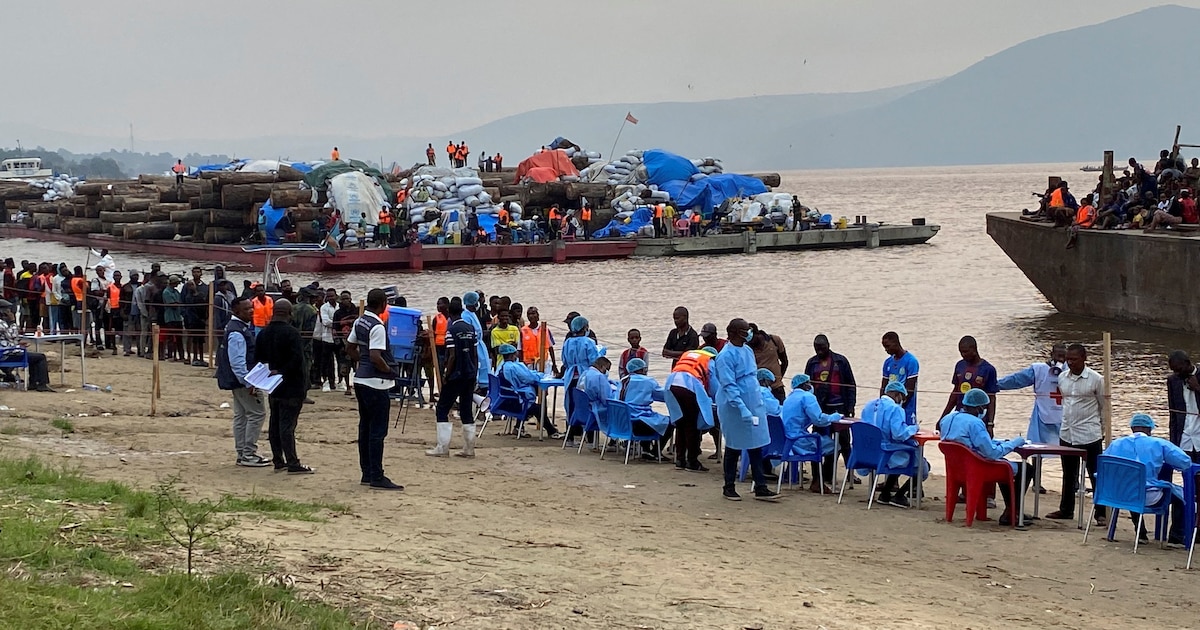
Outbreak of ebola in democratic republic of Congo reaches critical levels
Despite relentless efforts, the Ebola virus in the Democratic Republic of Congo (DRC) shows no signs of slowing down. Confirmed during an official visit by the World Health Organization’s director-general to the eastern region, this outbreak has become the second-deadliest on record. Since its declaration on May 15, the epidemic has claimed 1,850 lives out of nearly 4,000 confirmed cases, with a lethality rate exceeding 40%.
The Bundibugyo strain, responsible for this devastation, has already claimed more lives in a fraction of the time compared to previous outbreaks. During the last major episode in 2018-2020, it took over ten months to reach a similar death toll. “We are not in a position to say we have full control over this outbreak today,” admitted Jean Kaseya, Director-General of the Africa Centres for Disease Control and Prevention (Africa CDC), in late July.
Violent conflict hampers disease tracking in eastern DRC
The eastern provinces of Ituri and North Kivu, the epicenters of the outbreak, are trapped in a cycle of violence that severely undermines medical coordination. The Ituri region faces relentless attacks by the Allied Democratic Forces (ADF), a militant group originating from Uganda, while numerous militias vie for control over land, minerals, and local influence. Meanwhile, North Kivu has seen large areas fall under the control of the M23 rebel group, backed by neighboring Rwanda, following intense clashes with the Congolese army.
Years of conflict have displaced millions, creating precarious living conditions and poor hygiene standards that exacerbate the spread of the virus. Early detection was further delayed by insufficient epidemiological surveillance and testing capabilities, leaving authorities unable to promptly identify and confirm cases.
Contact tracing remains critically under-resourced. In Bunia, the outbreak’s epicenter, 90% of admitted patients were not tracked contacts, while only 59% of contacts were traced across Ituri province. The Africa CDC estimates that for every confirmed urban case, approximately 40 contacts should be monitored, suggesting a need for 134,400 individuals to be tracked—yet only 17,500 are currently being followed, just 13% of the target. Additionally, about one-fifth of recorded individuals receive irregular follow-ups due to staffing shortages or ongoing violence. Another alarming trend: 60% of fatalities occurred within communities rather than healthcare facilities.
Experimental treatments and delayed international aid
Despite these challenges, progress is being made. A clinical trial for a Bundibugyo Ebola vaccine began this month at the University of Oxford, with the first volunteer receiving the dose. The trial aims to enroll 50 adults to assess vaccine safety. The Coalition for Epidemic Preparedness Innovations (CEPI) is also funding another vaccine candidate developed by Hilleman Laboratories in Singapore, with plans to rapidly produce and test doses in the DRC.
In the absence of a licensed vaccine for this strain, the Africa CDC announced on August 6 that it would administer the vaccine for the Zaire Ebola strain to affected populations. While not a perfect match, early data suggests it reduces severe symptoms and prevents fatalities. More than 40 patients are also participating in a trial evaluating a combination of treatments.
Jean Kaseya highlighted the potential of remdesivir, an antiviral, which contributed to Uganda’s success in containing a spillover outbreak. “Uganda’s 10% lethality rate is largely due to their use of remdesivir for all confirmed cases and contacts,” he noted. International health authorities warn that this outbreak could surpass the West African epidemic of 2014-2016, the deadliest on record, which resulted in over 11,000 deaths.
Delayed global response exacerbates crisis
Another critical factor fueling the epidemic’s spread has been the tardy international response. Early in 2025, USAID, the U.S. government’s international development agency, suspended decades of health and medical aid to the DRC, leaving the country vulnerable. On August 5, the U.S. State Department announced a new $242 million allocation, bringing total U.S. funding for Ebola response to $512 million. This finally enables the WHO and CDC to secure the necessary resources for their six-month response plan, estimated at $518 million. However, critics argue this amount falls short of past U.S. contributions to humanitarian and health crises. The U.S. remains the leading contributor to Ebola response efforts, outpacing the European Union.
