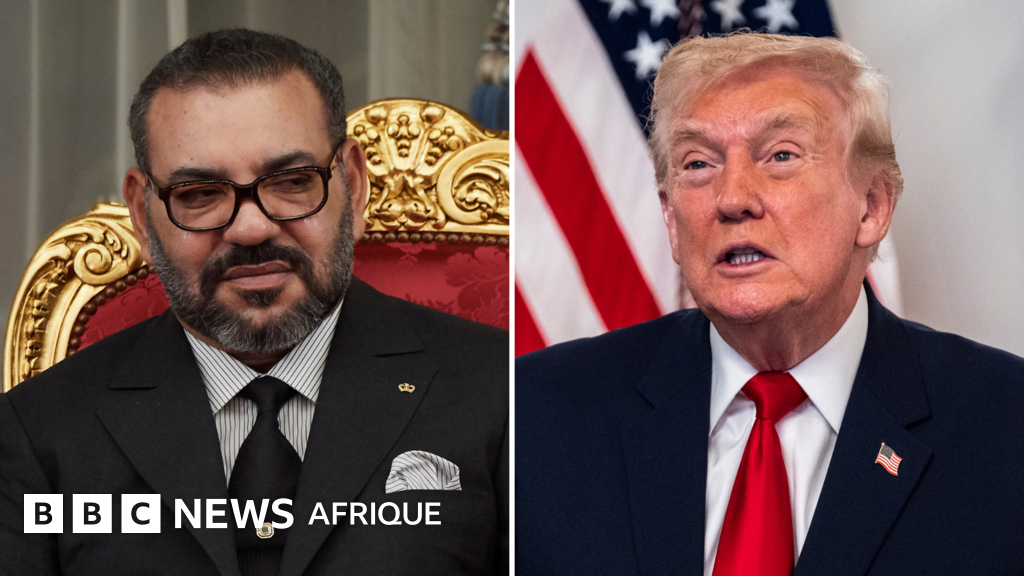
Us Morocco alliance roots and ceuta migration impact
The enduring partnership between the United States and Morocco stretches back over two centuries, rooted in mutual trust and strategic interests. This alliance has recently taken center stage amid the migration surge toward the Spanish enclave of Ceuta, highlighting Washington’s unwavering support for Rabat.
Historical ties that shaped modern diplomacy
The friendship between the two nations traces its origins to a pivotal moment in 1777, when Morocco’s Alaouite dynasty—still ruling today—opened its ports to the fledgling American republic. Just a year and a half after the United States declared independence from Britain, Sultan Mohammed III granted American ships unrestricted access to Moroccan harbors, a move Rabat proudly cites as the first international recognition of the U.S.
While the Moroccan government marks this gesture as historic, U.S. diplomatic records confirm the Treaty of Peace and Friendship, signed in Marrakech on June 23, 1786, as the official starting point. For the young American nation, the treaty was more than symbolic—it provided critical protection against Barbary corsairs who routinely seized vessels and held crews for ransom after Britain withdrew naval support.
The agreement ensured safe passage for American ships through Moroccan waters, unlocked commercial opportunities, and bolstered the U.S.’s global legitimacy. “Morocco’s strategic position at the Mediterranean’s gateway offered Washington unparalleled access to European, African, and Islamic markets,” explained Timothy W. Kneeland, a historian and political science professor at Nazareth University in New York.
Renewed in 1836, the treaty remains in force today, making it the longest-standing agreement still active in U.S. diplomatic history. “Moroccans are right to point out that this treaty is the oldest still in effect for the United States,” noted Sarah Yerkes, a Middle East scholar at the Carnegie Endowment for International Peace.
From colonial shifts to Cold War alliances
When France and Spain divided Morocco in 1912, the U.S. initially hesitated to endorse the colonial order but ultimately recognized it in 1917. Upon Morocco’s independence in 1956, Washington swiftly acknowledged the new state and opened its embassy in Rabat within months.
Security cooperation began even earlier. In 1950, while Morocco was still under French rule, the U.S. secured agreements with Paris to develop and use air bases across the country. By the mid-1970s, as Spain’s dictator Francisco Franco lay dying, Moroccan King Hassan II orchestrated the Green March—a mass civilian mobilization of 350,000 people—to pressure Madrid into relinquishing control of Western Sahara. Spain eventually transferred administration to Morocco and Mauritania, though Washington publicly advocated for a negotiated solution while privately aligning with Rabat’s stance.
“If I were in your position, I’d do the same,” U.S. Secretary of State Henry Kissinger reportedly told Hassan II in 1974. By early 1976, declassified documents revealed that Washington had placed “no major obstacles” in Morocco’s path, with a State Department report later describing U.S. policy as “essentially pro-Moroccan.”
Counterterrorism and military ties in the 21st century
The 9/11 attacks reshaped U.S.-Morocco relations, cementing Rabat’s role as a key ally in the global fight against extremism. In 2004, the U.S. designated Morocco a Major Non-NATO Ally, a status that streamlines military cooperation and arms transfers. The kingdom hosts African Lion, the U.S. Africa Command’s largest annual military exercise, and co-chairs the Africa Working Group of the international coalition against ISIS.
According to the Stockholm International Peace Research Institute, the U.S. accounted for 60% of Morocco’s major arms imports between 2021 and 2025—far outpacing Israel (24%) and France (10%).
Trade and economic engagement
The 2006 U.S.-Morocco Free Trade Agreement was the first such pact Washington signed with an African nation. By 2025, bilateral trade had surged to $7.4 billion—nearly eight times the $927 million recorded in 2005 before the agreement took effect. While modest compared to overall U.S. trade, the deal has significantly expanded market access and economic ties.
Diplomatic breakthroughs under Trump
In December 2020, the Trump administration recognized Morocco’s sovereignty over Western Sahara in exchange for Rabat’s normalization of relations with Israel—a milestone under the “Abraham Accords.” Washington continues to view Morocco’s autonomy plan as the only viable path to resolving the decades-old conflict. “Morocco has been the most successful participant in the Abraham Accords, and its normalization with Israel has endured despite the Gaza war,” Yerkes observed.
Ceuta crisis exposes shifting alliances
The sudden influx of over 70,000 migrants into Ceuta—with at least 140 deaths reported—has strained relations between Spain, Morocco, and the U.S. While the Spanish government blamed human traffickers and social media for the surge, critics accused Morocco of deliberately loosening border controls. Madrid, a NATO ally hosting U.S. military bases in Rota and Morón, has faced criticism from Washington over its NATO spending and opposition to using Spanish airspace for potential strikes against Iran.
In contrast to its silence on Morocco’s role, the Trump administration condemned Spain’s migration policies, calling the crisis a “catastrophe” akin to an “invasion.” The White House also criticized what it termed “far-left globalist policies,” while avoiding any direct reproach of Rabat.
“Washington does not appear to view Ceuta as a Moroccan-led initiative. Instead, the administration has directed its strongest criticism at Spain, blaming its border management for the escalation,” Yerkes noted. This stance underscored the depth of U.S.-Morocco ties, even as transatlantic frictions with Madrid intensified.
The Moroccan monarchy responded by renaming a 1,000-kilometer highway in the Western Sahara after Trump—a gesture of gratitude for U.S. support. In a message marking Morocco’s Throne Day, the U.S. president celebrated “250 years of American history and unbreakable friendship with Morocco, built on trust and mutual respect.” He reiterated Morocco’s claim to Western Sahara and expressed hope for continued cooperation over the next 250 years.
As the migration crisis unfolds, the U.S.-Morocco alliance emerges as a cornerstone of stability in North Africa, with Washington increasingly viewing Rabat as a vital partner in counterterrorism, logistics, and regional security—especially as tensions with Spain complicate NATO operations.
