Ousmane sonko’s shifting political rhetoric: from confrontation to consensus
From Firebrand to Statesman: Ousmane Sonko’s Strategic Communication Shift
Since departing his role as Prime Minister, Ousmane Sonko has undergone a marked transformation in his public discourse. Gone are the fiery declarations and confrontational tone that once defined his political persona. Today, the Pastef leader presents himself as a measured, conciliatory figure, carefully calibrating his words to reflect a new image of political maturity.
The shift was most evident during Pastef’s recent congress in Diamniadio, where Sonko urged his supporters to abandon aggressive rhetoric in public spaces. « As a party, we must set the standard for responsible behavior, » he told a receptive audience. « Our conduct—whether in speech or action—reflects not just on us, but on the nation as a whole. Insults and provocations serve no purpose; they only undermine our credibility. »
A Calculated Evolution in Leadership Style
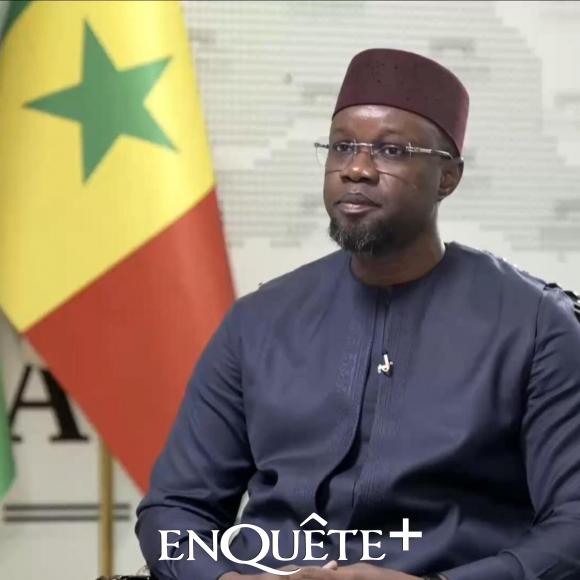
Observers note that Sonko’s recent interviews, including those with international media, reveal a deliberate attempt to redefine his political identity. No longer just a fiery orator, he now positions himself as a pragmatic leader capable of navigating complex governance challenges from his new role as Speaker of the National Assembly. His post-Prime Ministership interviews suggest a strategic pivot: from opposition firebrand to institutional architect.
This evolution raises questions: Is this a genuine political maturation, or a calculated move ahead of the 2029 elections? While some argue that his newfound composure reflects growth, others wonder whether it’s a temporary facade designed to soften his image for broader appeal.
Contradictions and Strategic Ambiguity
Despite his more measured tone, Sonko’s statements often contain layers of nuance and contradiction. On the issue of debt restructuring, for instance, his position appears fluid. While he previously rejected any restructuring outright, he now adopts a more flexible stance: « We are not bound by absolute positions. Every decision must be examined with clarity and pragmatism. »
His comments on « odious debt »—a term he once used with fervor—now come with caveats. « The concept of odious debt has been raised, but its implementation requires courage and strategy, » he explained. « As Prime Minister, I opposed reckless restructuring, but as a national leader, I recognize the need to assess all options carefully. » His responses to direct questions often veer between justification and deflection, revealing the tension between his past rhetoric and present reality.
Similarly, on the contentious issue of homosexuality, Sonko’s remarks have shifted. He now acknowledges the legal framework established long before Pastef’s rise, while emphasizing public health concerns as a justification for enforcement. « The arrests began before the 2024 law was passed, » he stated, « driven by the need to curb HIV transmission—a dimension often overlooked by Western media. » Yet, only weeks earlier, he was quoted urging ministers to « break the chain of transmission » of the virus, a statement seized upon by critics as evidence of ongoing hardline policies.
From Division to Diplomacy: A New Political Persona
Sonko’s relationship with President Bassirou Diomaye Faye has also evolved. Gone are the accusations of betrayal that once dominated his rhetoric. Today, he frames their differences as « political divergences, not personal conflicts. » He portrays himself as a unifying force within the party, urging Pastef to embody « intellectual rigor, civic responsibility, and programmatic clarity. »
« Our opponents lack legitimacy, » he warned at the Diamniadio congress. « They seek to provoke us, to push us into the streets, so they can label us as a party of conflict. We must not fall into their trap. » His message is clear: Pastef must project discipline, foresight, and a commitment to constructive governance—qualities that contrast sharply with the turbulence of previous years.
Is This a Permanent Transformation?
The central question remains: Is Sonko’s shift a permanent evolution or a temporary adaptation? His ability to toggle between militant rhetoric and statesmanlike moderation suggests a leader who prioritizes pragmatism over dogma. Whether this reflects genuine conviction or strategic calculation may only become clear in the years ahead. One thing, however, is certain: Ousmane Sonko is no longer the same politician who once dominated headlines with bold, uncompromising declarations. Today, he speaks with a caution that speaks volumes about the weight of responsibility—and the allure of power.
