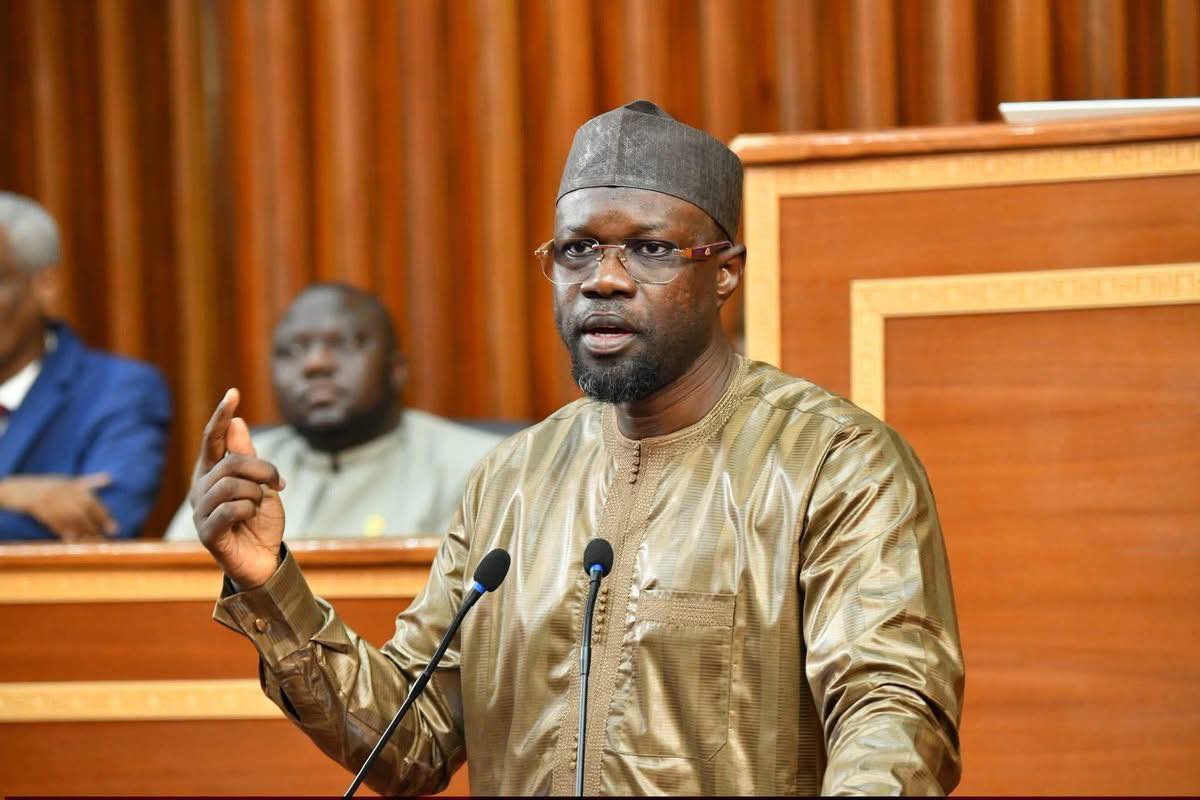
Ousmane Sonko’s ascendance to the national assembly presidency: implications for senegalese governance
Through a rapid institutional realignment, the leader of the patriots has seized the presidency of the National Assembly, thereby confirming his far-reaching political ambitions. This development raises crucial questions regarding a potential deadlock at the apex of the Senegalese state.
The sequence of events appears so meticulously orchestrated that it leaves minimal room for mere chronological coincidence. Following his removal from prior responsibilities, Ousmane Sonko spent little time in political wilderness. He has now been unexpectedly propelled into leadership of the National Assembly, a bewildering turn of events that has prompted scrutiny from observers of the Senegalese political landscape.
The timing itself is a source of considerable bewilderment: immediately after Ousmane Sonko’s official disbarment, the then-incumbent President of the National Assembly tendered a surprising resignation. Just days later, with no discernible interim, the former opposition figure assumed the Speaker’s chair, becoming the new President of the National Assembly (PAN). For his detractors, the maneuver is unmistakably clear: the new head of the legislative body now holds critical control over the parliamentary apparatus.
A strategy for absolute counter-power
With this newly acquired status, Ousmane Sonko positions himself as a direct challenger to the executive branch. All indications suggest that the groundwork has been laid for a potentially contentious cohabitation, threatening to impede the actions of the President of the Republic. By commanding the legislative agenda, the passage of laws, and the national budget, the new PAN wields formidable tools for obstruction.
This is seen by many as transcending traditional politics, evolving into a calculated strategy of institutional suffocation. The battle for control between the branches of government has, to all appearances, now openly commenced.
Legitimate ambition or calculated opportunism?
Among his adversaries, criticisms abound, portraying an individual described as intensely driven by power, whose rhetoric of systemic change masks deeper personal aspirations. For many, the image of a selfless tribune has been supplanted by that of a pragmatic and perhaps disingenuous tactician, adept at manipulating crises to advance his own objectives.
Today, echoing the very leaders he once challenged, Ousmane Sonko has secured a significant, institutional, and strategically vital share of power, a goal he has seemingly pursued since the outset of his career.
A fundamental question persists: will this ascension to the Speaker’s chair ultimately serve the interests of the Senegalese populace, or does it merely represent the initial phase of a comprehensive confrontation designed to undermine the highest levels of the state? One certainty remains: the reconfiguration of political forces is undeniably underway, and the struggle for institutional dominance has only just begun.
