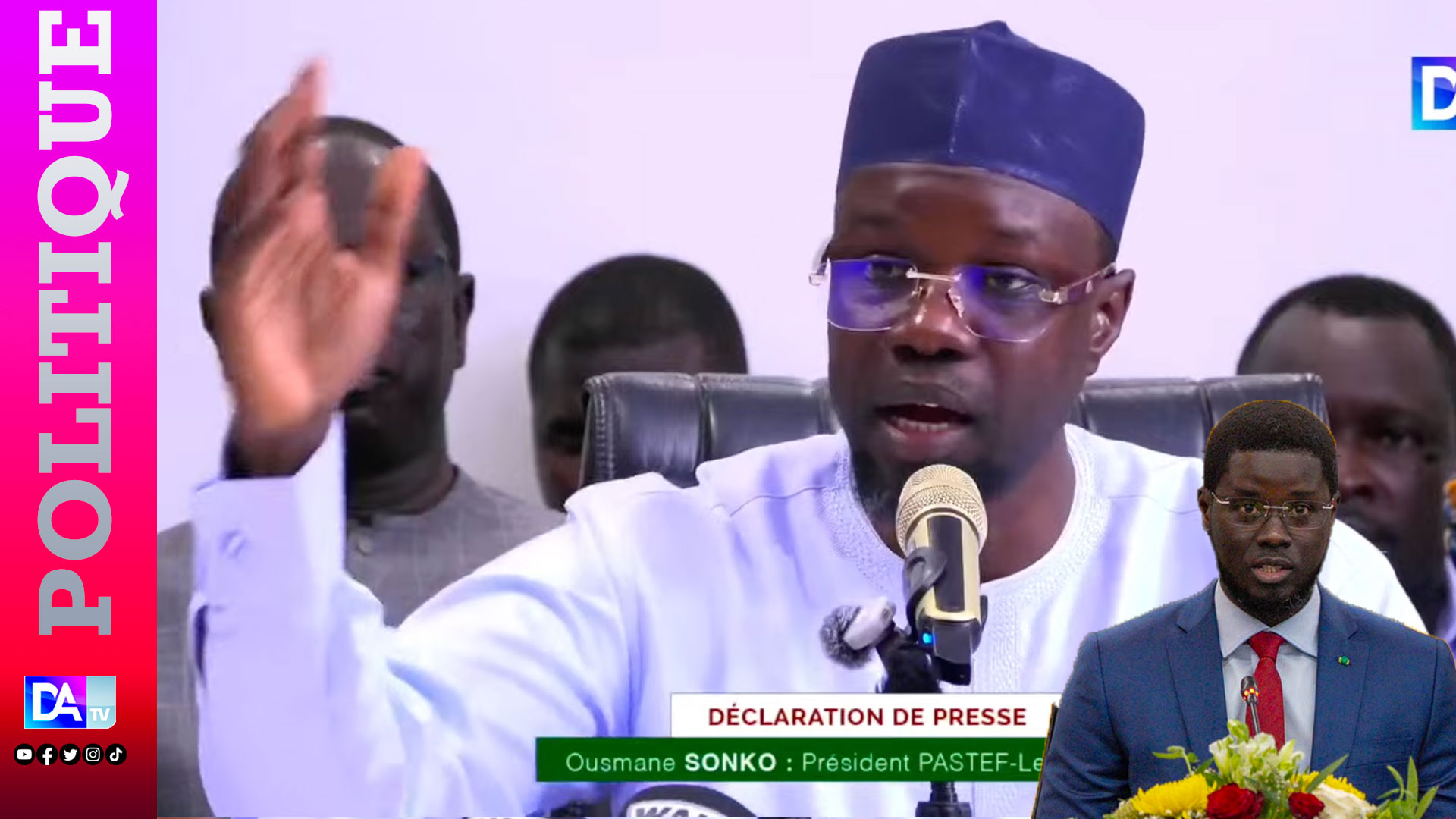
Ousmane sonko unveils pastéf’s withdrawal from Senegal’s new government
Read aloud2 min listen
During the most revealing segment of his press briefing this Tuesday, Ousmane Sonko shed light on the intricate negotiations that preceded the formation of the new Senegalese government. He painted a picture of an increasingly untenable cohabitation between his party, PASTEF, and the presidential office.
The leader of the Patriots declared he observed, throughout his discussions with President Bassirou Diomaye Faye, a clear inclination by the latter to “turn away from PASTEF” in favor of other political actors. Sonko immediately challenged this direction, firmly reminding the Head of State of a fundamental democratic principle: “In any government system, the majority must govern. It is our prerogative to select a Prime Minister.”
The two prominent figures reportedly engaged in extensive dialogues covering a broad array of critical issues, including public debt, strategies to boost purchasing power, renegotiation of contracts, and matters of justice and accountability. Despite these exchanges, a complete consensus proved elusive across all fronts. “Regarding justice, we reached no agreement whatsoever,” Sonko asserted, highlighting this as one of the most significant points of contention.
Concerning the cabinet’s composition, Sonko stated he presented a non-negotiable condition to the President, who had outlined an executive body of 30 ministers: PASTEF must hold the majority. This crucial demand, however, went unheeded. “We realized that, at this pace, we would possess no meaningful influence over the administration’s actions,” he concluded, thereby justifying PASTEF’s decision to abstain from participating in the government led by Prime Minister Al Amine Lô.
The leader of the Patriots declared he observed, throughout his discussions with President Bassirou Diomaye Faye, a clear inclination by the latter to “turn away from PASTEF” in favor of other political actors. Sonko immediately challenged this direction, firmly reminding the Head of State of a fundamental democratic principle: “In any government system, the majority must govern. It is our prerogative to select a Prime Minister.”
The two prominent figures reportedly engaged in extensive dialogues covering a broad array of critical issues, including public debt, strategies to boost purchasing power, renegotiation of contracts, and matters of justice and accountability. Despite these exchanges, a complete consensus proved elusive across all fronts. “Regarding justice, we reached no agreement whatsoever,” Sonko asserted, highlighting this as one of the most significant points of contention.
Concerning the cabinet’s composition, Sonko stated he presented a non-negotiable condition to the President, who had outlined an executive body of 30 ministers: PASTEF must hold the majority. This crucial demand, however, went unheeded. “We realized that, at this pace, we would possess no meaningful influence over the administration’s actions,” he concluded, thereby justifying PASTEF’s decision to abstain from participating in the government led by Prime Minister Al Amine Lô.
Content syndicationOpen public syndication feed accessible via RSS / XML
