
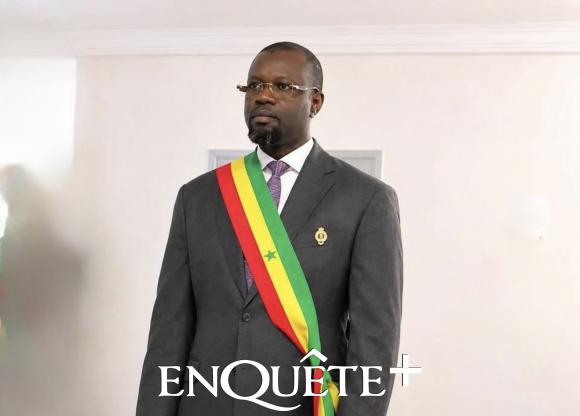
The opposition refers the matter to the Constitutional Council
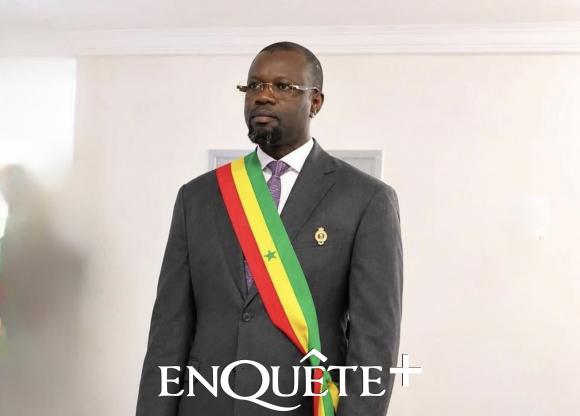
In a public statement released yesterday, approximately twenty opposition deputies declared their formal submission of a petition to the Constitutional Council. Their objective is to invalidate Ousmane Sonko’s reinstatement as a deputy, a prerequisite for his subsequent election to the presidency of the National Assembly. The deputies cite Article 54 of the Constitution as grounds for their challenge and further denounce the parliamentary administration’s refusal to provide requested documents.
The parliamentary opposition has initiated a significant new institutional challenge. A communiqué dated June 1, 2026, signed by unaligned and opposition deputies, announced their appeal to the Constitutional Council. This petition seeks to have the National Assembly Bureau’s decision of May 24, which reintegrated Ousmane Sonko as a deputy, declared unconstitutional. The appeal was lodged yesterday with the esteemed ‘sages’ of the Council, thereby opening a new institutional battlefront with potentially profound implications. Central to the petitioners’ argument is Article 54 of the Constitution. They contend that Mr. Sonko, who was appointed Prime Minister and subsequently elected deputy in 2024, was in a position of incompatibility from the moment of his election.
By choosing to retain his governmental responsibilities, he would have, in effect, relinquished his parliamentary mandate according to the Constitution and the internal regulations then in force. Consequently, his reintegration, followed by his ascent to the speaker’s chair, constitutes, in their view, a blatant and clear violation of the Constitution and the principle of separation of powers. The signatories position the Constitutional Council as the sole body empowered to prevent such an act from escaping scrutiny, given its role as the arbiter of parliamentary mandate validity and the regulator of state institutions.
The communiqué also highlights a second grievance, procedural in nature. The deputies assert that they were compelled to resort to bailiff’s summons to obtain the documentation essential for their appeal – specifically, the act of Mr. Sonko’s reintegration and the minutes from the plenary session of May 26, 2026. When approached on June 1 by Maître Abou Sall, both the Secretary-General and the First Vice-President of the National Assembly reportedly declined to provide these documents. This refusal, according to the signatories, represents a serious obstruction to deputies’ rights and to democratic transparency, particularly as these are inherently public records. They therefore call upon the Constitutional Council to put an end to this perceived ‘misappropriation,’ which they argue undermines the proper functioning of the parliamentary institution, while reaffirming their commitment to acting solely through legal and peaceful means.
This legal action unfolds amidst a period of intense political activity. Ousmane Sonko, removed from his post as Prime Minister on May 22, 2026, by President Bassirou Diomaye Faye, made a dramatic return by being elected President of the National Assembly on May 26, securing 132 votes out of 133 cast. He succeeded El Malick Ndiaye, who had resigned, thereby becoming the second most powerful figure in the state. The opposition had boycotted the vote, already condemning it as a ‘constitutional coup d’état.’
The legal interpretation of the situation remains fiercely debated. Some legal experts argue that Article 54 neither mentions suspension nor preservation of mandate, nor an automatic right to reintegration; it merely establishes a principle of incompatibility, which inherently carries concrete institutional consequences. Other analyses, more supportive of Mr. Sonko’s return, refer to Article 123 of the internal regulations, which provides for the replacement of a deputy appointed as a government member.
A significant uncertainty persists: the very admissibility of the petition. Several opposition figures, including Aïssata Tall Sall, had previously pointed out that parliamentarians do not possess the authority to directly refer such a matter to the Constitutional Council; this prerogative rests solely with the President of the Republic. Furthermore, the presidency has denied any referral to the ‘seven sages’ by the head of state. Thus, the admissibility of the deputies’ appeal will be the initial hurdle the Council must address.