
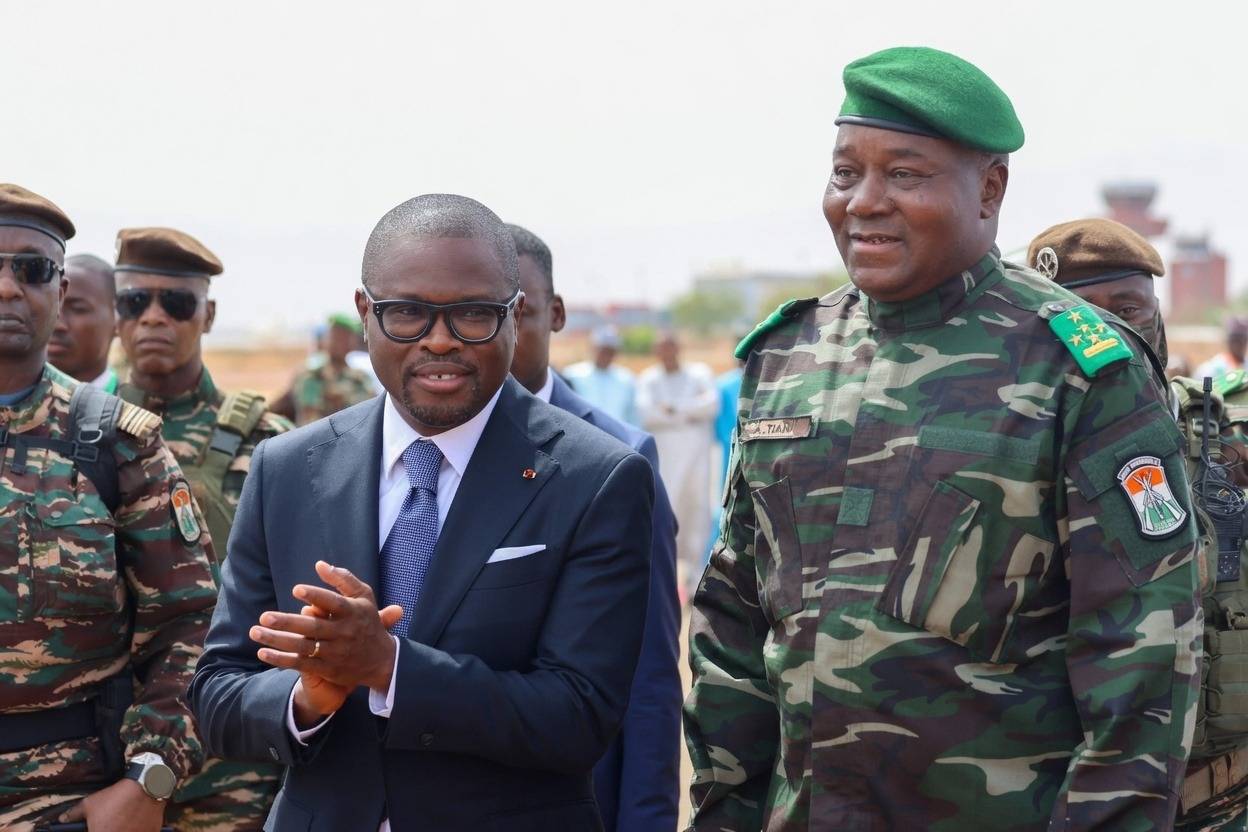
Following the July 2023 coup d’état in Niger and the imposition of severe regional sanctions, the Cotonou-Niamey axis experienced a profound crisis. This period was characterized by hermetically sealed borders and persistent accusations from Nigerien authorities. However, a closer examination of events reveals a more nuanced reality: despite the firm stance of the Alliance of Sahel States (AES), Bénin consistently sought avenues for conciliation. The recent official visit by Bénin’s new president, Romuald Wadagni, to Niamey stands as the pinnacle of this outstretched hand diplomacy, providing undeniable proof of Cotonou’s good faith.
A consistent drive for de-escalation despite obstacles
While the crisis escalated over several months, Bénin took concrete steps early on to initiate de-escalation:
- Prompt lifting of economic sanctions: By late 2023, Bénin had already lifted suspensions on goods transiting to Niger via the autonomous port of Cotonou. Cotonou thus attempted to reopen Niger’s economic lifeline but encountered Niamey’s decision to maintain border closures, citing “security reasons.”
- Diplomacy through emissaries: Faced with the stalemate, Bénin’s authorities encouraged and facilitated high-level mediations. Efforts undertaken in Niamey by former Béninois presidents Nicéphore Soglo and Thomas Boni Yayi in summer 2024 demonstrated Cotonou’s unwavering commitment to re-establishing dialogue, transcending political divides.
- Safeguarding shared interests: Despite intense friction surrounding the WAPCO Niger-Bénin crude oil export pipeline terminal, Bénin consistently ensured the preservation of this vital infrastructure. This pragmatic management prevented an irreversible rupture and maintained the sole technical umbilical cord connecting the two nations.
Romuald Wadagni’s arrival: an opportunity for a fresh start
The election and inauguration of Romuald Wadagni as Bénin’s president in May 2026 opened a significant window of opportunity. A respected technocrat and former Minister of Finance, the new head of state possesses invaluable political neutrality, as he is not associated with the most divisive decisions made during the post-2023 coup period.
The first strong signal emanated from Niamey, with Nigerien Prime Minister Ali Mahamane Lamine Zeine traveling to Cotonou to attend Wadagni’s inauguration, thereby breaking a prolonged diplomatic isolation.
The ultimate pledge of good faith
By choosing to dedicate one of his very first official trips to Niamey, Romuald Wadagni delivered the “pledge of goodwill” long demanded by the AES regimes. This presidential visit underscores Bénin’s commitment to placing regional reconciliation at the forefront of its priorities. By directly meeting General Abdourahamane Tiani and Captain Ibrahim Traoré, Romuald Wadagni demonstrates his government’s readiness for frank, pragmatic, and unreserved dialogue.
Interdependencies dictating pragmatism
This thaw is not merely symbolic; it addresses concrete and shared urgent needs:
- The security imperative: Armed violence in the shared cross-border area (the W-Arly-Pendjari complex) surged by nearly 86% between 2024 and 2025. Neither country can individually overcome the jihadist threat. The re-establishment of bilateral military cooperation is a matter of survival for border populations.
- Economic asphyxiation: Niger desperately requires the Béninois corridor to reduce the cost of living and secure its supplies. For its part, Bénin aims to increase revenues from the Autonomous Port of Cotonou.
By venturing into the heart of the AES, Romuald Wadagni definitively turns the page on past misunderstandings. Bénin demonstrates its respect for the sovereignty of its neighbors and its full commitment to the stability and shared prosperity of the sub-region. The onus is now on Niamey to transform this diplomatic success into a complete reopening of the borders.