
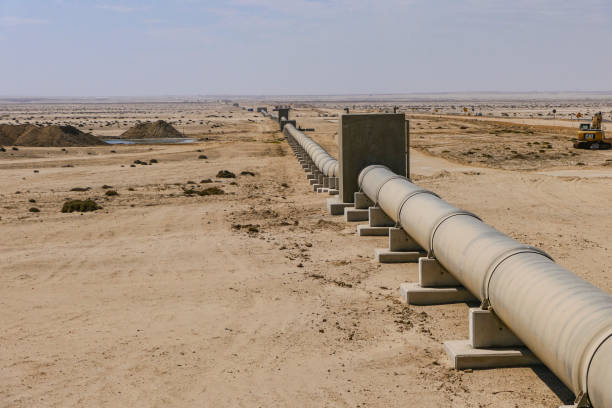
The Trans-Saharan Gas Pipeline: A transformative venture for Niger
An unprecedented shift is unfolding in Africa’s energy landscape, with the Republic of Niger emerging as a pivotal player. The Trans-Saharan Gas Pipeline (TSGP) project, officially inaugurated in early June, marks a landmark advancement in collaboration with Algeria and Nigeria. Stretching over 4,000 kilometers, this ambitious infrastructure aims to transport Nigerian natural gas to European markets, traversing Niger’s territory as a critical transit corridor.
For Niamey, the implications extend far beyond infrastructure development. The project underscores Niger’s growing economic sovereignty and its elevated geopolitical standing on the global stage.
The Niger corridor: Bridging Africa’s energy divide
The TSGP will connect Nigeria’s prolific gas fields in the Niger Delta to Algeria’s established pipeline network—including the Medgaz and Transmed systems—which link directly to European consumers. At the heart of this complex transit equation lies Niger.
Key project metrics
- Total length: Over 4,000 km, with a substantial segment crossing Niger from south to north.
- Annual capacity: Approximately 30 billion cubic meters of natural gas earmarked for export.
- Estimated investment: More than $13 billion.
By providing a secure and efficient transit route, Niger positions itself as the indispensable facilitator of the Abuja–Algiers energy axis. Far from being a passive participant, the country is poised to leverage this strategic geography to invigorate its national economy.
Local dividends: A catalyst for national growth
The TSGP is set to deliver transformative benefits for Niger beyond macroeconomic gains and transit royalties. Preliminary agreements include provisions for local supply commitments.
Energy access and electrification: A portion of the transported gas will be diverted to power local thermal plants, addressing the country’s persistent energy deficit.
Employment and skills development: The construction and operation of compression stations within Niger will generate thousands of direct and indirect jobs, fostering the growth of domestic expertise in gas engineering.
Europe’s strategic response to energy diversification
The timing of the project’s launch is deliberate. The European Union, pursuing an aggressive diversification strategy to reduce dependence on Russian gas, views the TSGP as a cornerstone alternative.
By ensuring the reliable flow of energy to European markets, Niger significantly enhances its diplomatic leverage with Western partners. The initiative demonstrates the country’s capacity to engage in sophisticated, large-scale international industrial partnerships.
Navigating challenges: Security and financing
While optimism prevails in Niamey, Algiers, and Abuja, significant hurdles remain. The primary challenge involves securing a 4,000 km route through Sahelian regions plagued by persistent security threats. The three partner countries must forge unprecedented levels of defense coordination to safeguard the infrastructure.
Additionally, finalizing financing and attracting international investors will demand unwavering political stability and transparent regulatory frameworks—signals Niger’s government is actively cultivating for global markets.
The June inauguration heralds a new era. By positioning itself as the indispensable link between Nigeria’s gas wealth and Algeria’s distribution networks, Niger is no longer a bystander to regional geopolitics—it is reshaping it. The successful realization of the TSGP could cement Niger’s status as an indispensable energy hub, connecting Sub-Saharan Africa to the European continent for decades to come.