Niger’s secret diplomacy: leveraging faith to bypass parisian channels
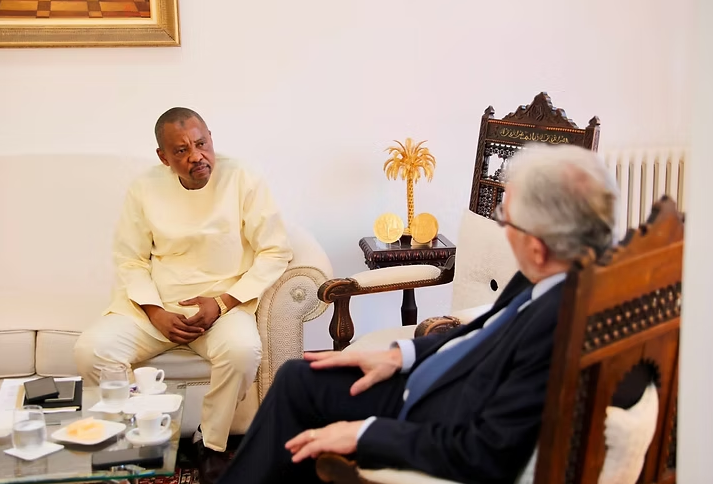
The recent meeting between Hamadou Saley, chargé d’affaires of the Nigerien embassy in France, and Chems-eddine Hafiz, rector of the Grand Mosque of Paris, has sparked widespread speculation. Beneath the surface of proposed cultural or religious collaborations lies a far more intricate political maneuver: a regime in Niamey, facing diplomatic isolation, is turning to France’s Muslim networks as a last resort to reopen channels with Paris, after being locked out of official avenues.
Institutional bypass: the art of indirect diplomacy
Since the political upheavals in Niamey and the sharp deterioration of bilateral ties with France, formal communication channels between the two states have ground to a halt. Diplomatic expulsions, fiery sovereignty rhetoric, and the suspension of cooperation agreements have frozen the Paris-Niamey axis. Yet, economic, migration, and geopolitical realities inevitably resurface, even for the most radical positions. Niger knows it cannot afford a complete rupture with France. But with the traditional diplomatic door slammed shut, what options remain?
Faith as a political lever
This is where backchannel diplomacy comes into play—specifically, religious diplomacy. By sending its chargé d’affaires to one of France’s most influential and symbolically significant institutions, the Grand Mosque of Paris, Niger is making a calculated shift. Without the prospect of a ministerial reception at the Quai d’Orsay, Niamey seeks not just an audience but legitimacy within a cornerstone of France’s Muslim community.
The move is far from a mere spiritual gesture. Using religious networks to convey messages or test political waters is a deliberate attempt to bypass institutional boycotts. The Grand Mosque of Paris, with its deep-rooted ties to the French state, offers a backdoor into the public and political sphere—one that Niamey has been forced to abandon at the front door.
The contradiction of religious instrumentalization
This strategy exposes a glaring inconsistency. On one hand, official discourse in Niamey condemns interference and champions a complete break from its former partner. On the other, its own diplomats are quietly leveraging religious structures in a third country to soften its image and restore indirect dialogue. Such tactics risk undermining the very principles it claims to uphold.
If Niger truly seeks to rebuild constructive relations with France, it must do so transparently, through established state channels and international protocols—not by exploiting the religious sensitivities of another nation.
