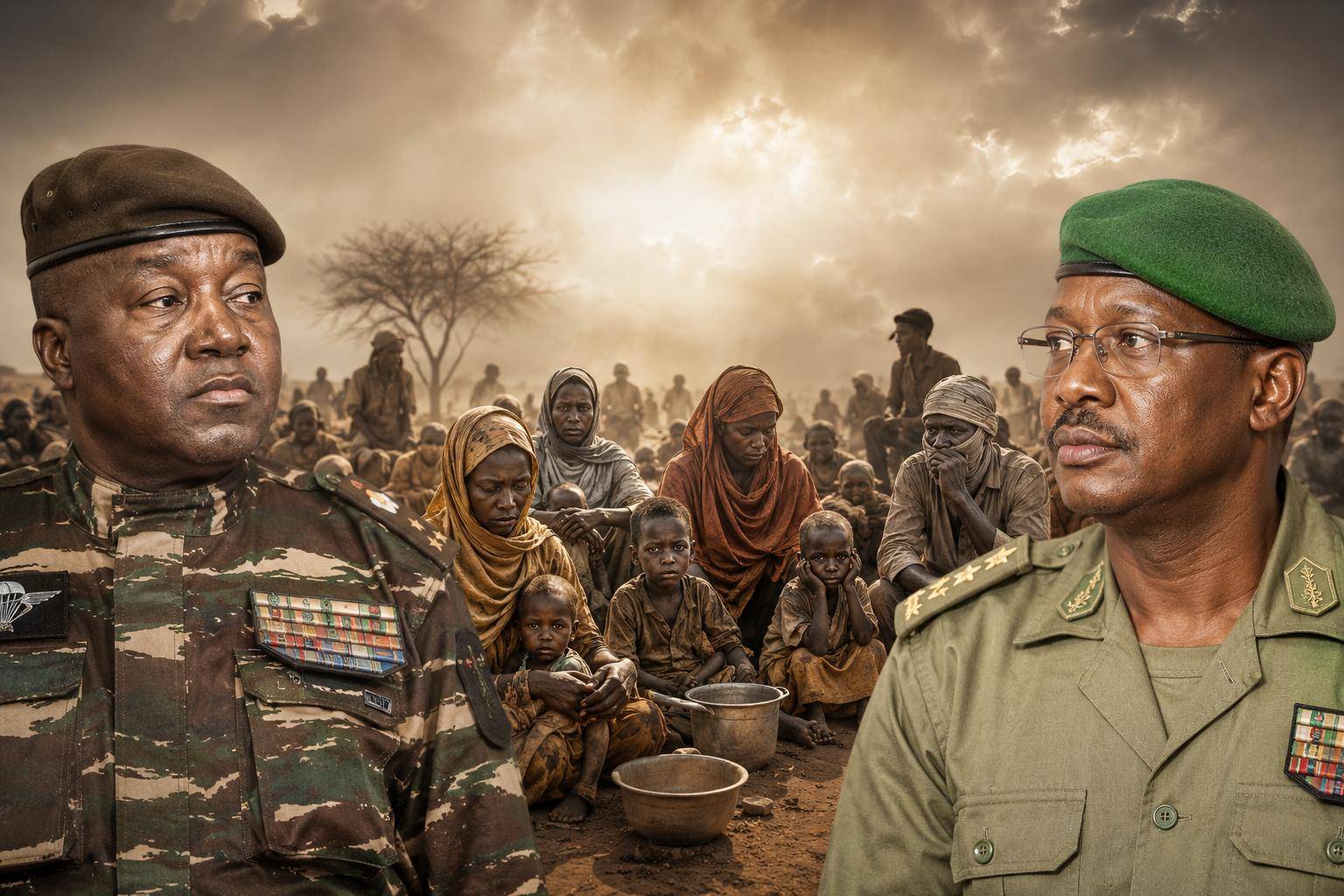
Niger military restructure sparks financial and security concerns
The Nigerien military’s latest strategic overhaul—dividing the existing Garkoi operation into two separate tactical headquarters—has ignited sharp criticism from governance and security analysts across the Sahel. Officially framed as an efficiency-driven initiative to enhance coordination, the new Akarasse operation at the Algerian border and Klafoki operation at the Chad border are increasingly viewed as a costly bureaucratic maneuver rather than a solution to pressing security challenges.
Questionable spending amid deepening social crisis
Critics argue that the creation of two parallel command structures comes at a steep price, one that the nation can ill afford. The deployment of additional high-ranking officers, detachment leaders, and an entire secondary chain of command means substantial financial outlays for salaries, logistics, and infrastructure—all while public funds are stretched thin by widespread hardship.
In Bilma and Arlit, where the new headquarters are set to operate, the contrast between military privilege and civilian suffering is glaring. Teachers hired on temporary contracts have gone months without pay, plunging countless families into financial despair. Meanwhile, the state appears willing to fund lavish command centers and inflated military hierarchies, a move condemned as reckless misuse of public resources when essential services like education are being neglected.
Security reality: a military overwhelmed by threats
The reorganization also reveals a troubling truth: Niger’s armed forces are struggling to contain the escalating threat from armed groups. If stability were truly within reach, a single, consolidated command would have sufficed. Instead, the decision to split forces into two highly specialized, simultaneous operations signals a widening crisis. The military is now stretched thin, forced to divide its attention between two distant fronts—Algeria to the north and Chad to the east—where Al-Qaeda, Islamic State, and Boko Haram continue to intensify their activities.
This fragmentation underscores a harsh reality: Niger’s security apparatus is being squeezed from multiple angles. The move to establish Akarasse and Klafoki is less a strategic masterstroke and more a desperate attempt to plug widening gaps. For taxpayers, it represents an expensive stopgap measure. For the population, it is yet another sign of a state prioritizing military bureaucracy over the welfare of its people. Most alarmingly, it reflects a deepening security quagmire that shows no signs of easing.
