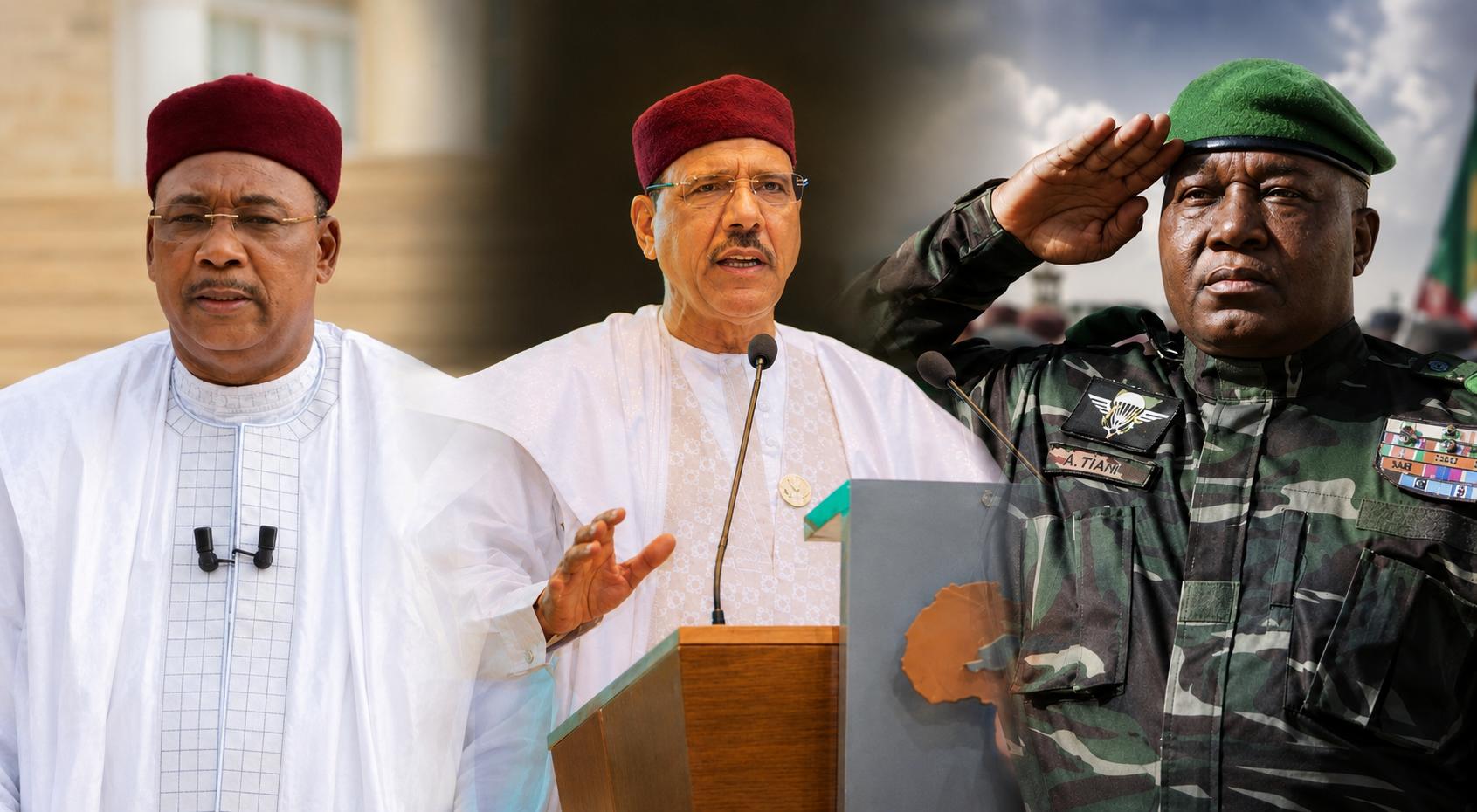
Niger faces endless conflict amid shifting power struggles
Niamey remains trapped in a grinding war despite dramatic shifts in leadership and geopolitical realignments. From the Western-backed policies of Mahamadou Issoufou to the sovereignist stance of Abdourahamane Tiani, one grim constant persists: the unrelenting advance of jihadist violence across the “three borders” region and Lake Chad basin.
Three administrations, two democratic transitions, and a single military coup have failed to alter a single reality: the Islamic State in the Greater Sahara (EIGS) and the Support Group for Islam and Muslims (GSIM) continue to expand their grip. The National Council for the Safeguard of the Homeland (CNSP), which seized power in July 2023, vowed to restore security by severing ties with Western partners—yet the toll of terrorism has only deepened.
The Issoufou-Bazoum era: the limits of Western backing
Under Mahamadou Issoufou’s presidency (2011–2021), Niger positioned itself as the cornerstone of Western security strategy in the Sahel. As Mali descended into chaos, Niamey emerged as France’s military stronghold (Operation Barkhane) and Washington’s drone operations hub in Agadez.
His successor, Mohamed Bazoum, pursued a dual approach: engaging with repentant fighters while heavily investing in elite military training. The strategy delayed outright collapse but never neutralized the threat. Worse, it fueled widespread resentment over perceived foreign overreach—many Nigeriens viewed Western troops as occupying forces delivering meager results.
The Tiani gamble: sovereignty tested by relentless violence
The July 26, 2023 coup that removed Bazoum was framed as a desperate bid to stem the security crisis. The CNSP’s gambit included severing ties with Paris and Washington, forming the Alliance of Sahel States (AES) with Mali and Burkina Faso, and pivoting toward Russia (via the Africa Corps) and Turkey.
Propaganda now glorifies national sovereignty, rejecting past reliance on Western powers. Yet on the ground, the consequences are stark. The sudden withdrawal of foreign forces left critical gaps in aerial intelligence and surveillance, enabling sophisticated attacks that have overwhelmed Nigerien troops, inflicting heavy casualties.
Economic blockades in insurgent-held areas and diplomatic isolation have further strained a war that costs millions daily. The CNSP’s gamble—eschewing Western support for a purely sovereignist military response—has yet to yield tangible security dividends.
Why Niger’s war drags on: a cycle of failed strategies
The fatal flaw shared by every regime—civilian or military—is the exclusive reliance on military solutions to a crisis rooted in governance and social fragmentation. Two competing visions have collided:
- The Issoufou-Bazoum doctrine bet on integration into Western security frameworks. Its fatal flaw? Overdependence on foreign actors, whose presence alienated local populations and sapped domestic legitimacy.
- The Tiani doctrine champions radical geopolitical rupture and martial sovereignty. Yet its early outcomes reveal a stark paradox: losing critical intelligence capabilities, facing financial strangulation, and watching armed groups exploit the chaos to escalate attacks.
The underlying drivers of conflict remain unchanged: state absence in marginalized regions, economic despair among rural youth, and deadly intercommunal clashes—particularly between herders and farmers—that jihadist groups weaponize for recruitment.
For General Tiani, the challenge is no longer simply condemning past failures but proving his current approach can protect Nigeriens. Without restoring essential services—schools, courts, clinics—in insecure zones, the war’s outcome may already be decided: not on the battlefield, but in the void left by absent governance.
