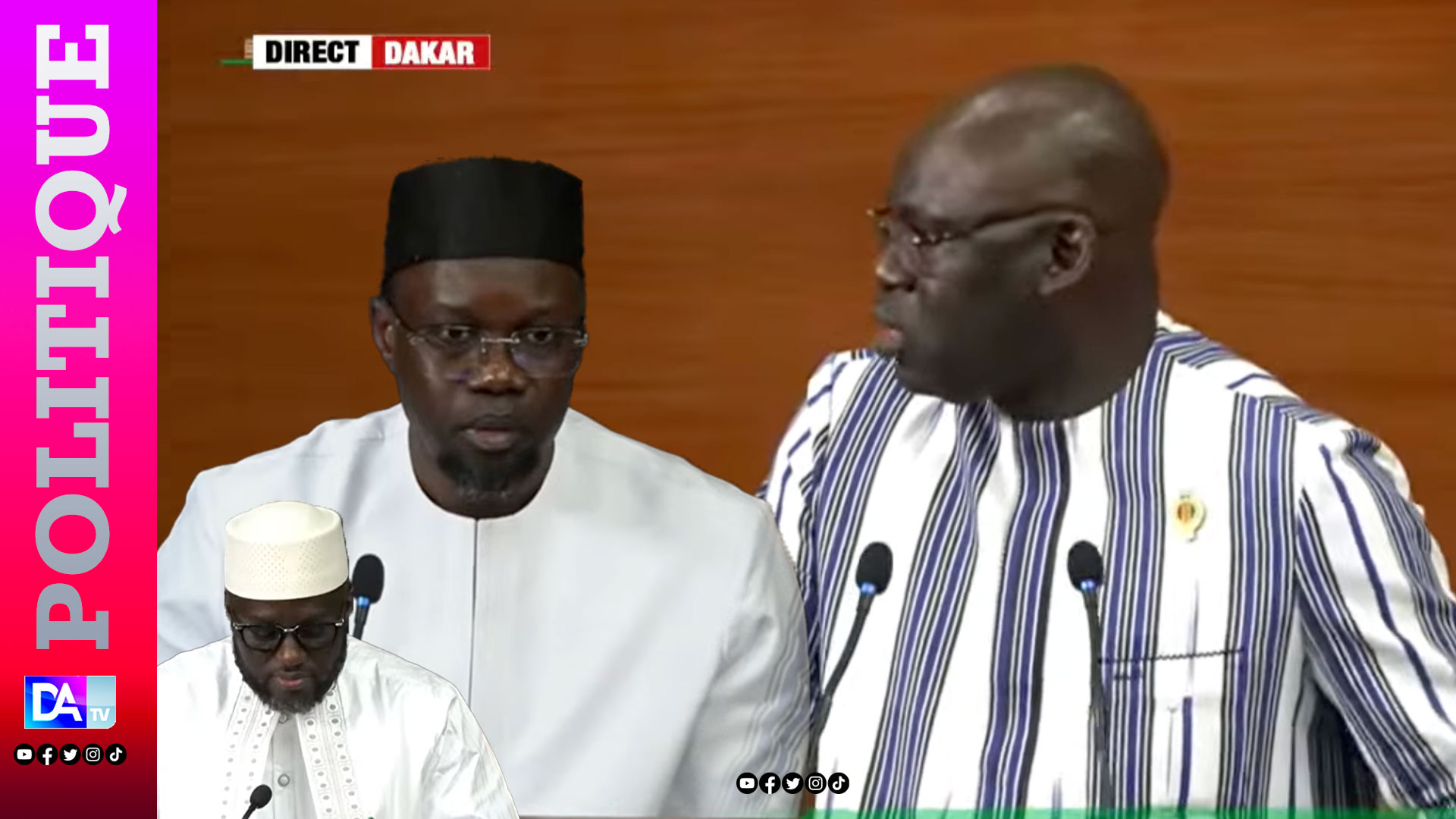
National assembly deputy clarifies opposition stance to sonko
Mbaye Dione’s parliamentary address: a call for political maturity
During a key address at the National Assembly, deputy Mbaye Dione delivered a message that transcended economic debates to address the nation’s political climate. His speech, delivered from the floor of the hemicycle, took a deliberate turn toward the delicate balance between governance and opposition in the Republic.
The parliamentarian’s remarks came at a time when political tensions have intensified, prompting calls for greater discernment in public discourse. Dione chose to focus part of his intervention on a direct message to Ousmane Sonko, conveyed through the Assembly’s president, in an effort to restore clarity to the ongoing dialogue between parties.
Defining the role of opposition in democracy
In a powerful statement that resonated across the chamber, Mbaye Dione declared: « We are not his enemies. We are his opponents. » His words were not merely rhetorical—they served as a deliberate distinction between political disagreement and personal hostility. The deputy emphasized that opposing government policies or majority decisions does not equate to opposing the nation itself.
He underscored the Senegalese opposition’s commitment to republican values, positioning it as a constructive force within the democratic process. According to Dione, the opposition’s role is not one of obstruction, but of vigilant oversight—supporting measures aligned with national interest while firmly contesting those that fall short.
Historical consistency in political dissent
The deputy drew a parallel between Sonko’s own political journey and the current expectations placed on him as a leader. Having previously served as a prominent opposition figure, Sonko had utilized institutional platforms to voice dissent. Dione argued that this history obligates him to accept the legitimacy of opposing viewpoints today.
« Those who once opposed must now accept opposition, » Dione asserted, framing political consistency as a cornerstone of democratic governance. His message was clear: the rules of engagement must apply equally to all parties, regardless of their current position in power.
Preserving the Assembly’s dignity
Beyond personal exchanges, Mbaye Dione issued a broader warning about the future of the National Assembly. He cautioned against allowing the institution to devolve into a venue for personal score-settling or partisan clashes. Instead, he insisted, the Assembly must uphold its constitutional role as a space for debate, oversight, and national service.
« The hemicycle is not a battleground for vendettas—it is the heart of the Republic’s democratic functioning, » he stated. His words reflected a concern shared by many: that the quality of democratic debate must not be sacrificed in the name of political rivalry.
An opposition rooted in responsibility
In closing, Dione reaffirmed the opposition’s commitment to republican responsibility. He rejected the notion that opposition politics is inherently destructive, instead portraying it as a necessary pillar of governance. « We will act as responsible republicans, » he declared, « courageous opponents who support what is right and challenge what is not. »
His address concluded with an unmistakable appeal for political calm. By framing opposition as a legitimate and essential component of democracy, Mbaye Dione invited both sides to recognize that governance and dissent are not incompatible—but rather, two sides of the same republican coin.
