Mali’s touareg conflict: addressing unmet demands for lasting peace
Security conditions in Mali have deteriorated sharply since late April 2026, marked by well-coordinated assaults on multiple cities that resulted in the deaths of the Defense Minister, Sadio Camara, and numerous Malian soldiers.
These incidents reflect a wider surge in violence against state institutions and military forces throughout Mali over recent years.
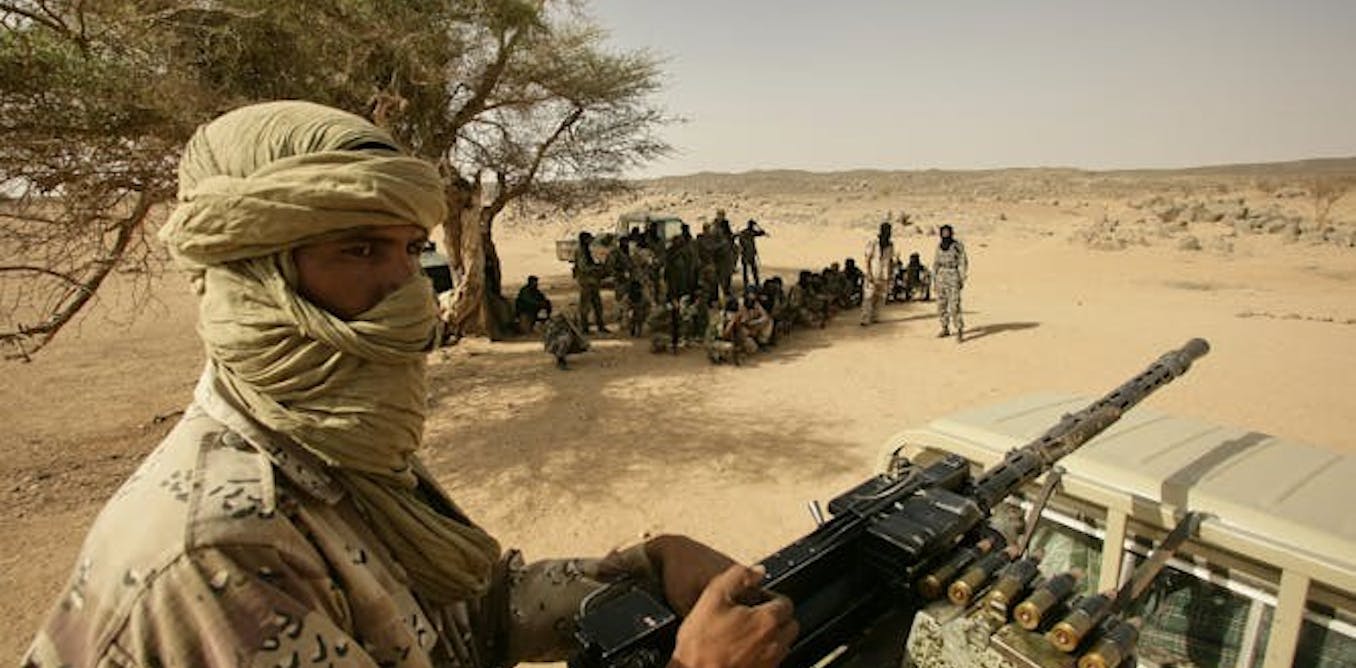
Having studied West Africa and the Sahel for over a decade, our research indicates that the latest attacks stem from unresolved grievances among the Touareg people—grievances that the current military administration has yet to address. The Touareg are a Berber nomadic community native to northern Mali.
Root causes of the crisis
Three interconnected factors underpin the Touareg insurgency:
1. Persistent marginalization and unaddressed demands
The primary driver is the failure of successive governments to meet Touareg demands for political autonomy, cultural recognition, economic inclusion, and equitable access to resources. The state’s neglect has fostered deep resentment, particularly over issues of governance, security, and resource control in the north.
2. Heavy-handed military responses
The military’s continued reliance on force, rather than dialogue, to suppress rebel movements in the north has exacerbated civilian harm. Touareg communities have long opposed the militarization of their regions, viewing it as a form of systemic oppression rather than protection.
3. Unequal resource distribution
The concentration of state revenue—derived from gold deposits, salt mines, grazing lands, and key trade routes—in the southern regions has left the north economically marginalized. This imbalance reinforces feelings of exclusion and fuels resentment toward the central government.
Addressing these structural inequalities could help calm Touareg grievances, rebuild trust in the Malian state, and shift the conflict from violent rebellion toward inclusive governance, stability, and sustainable peace in northern Mali.
Escalation in 2026
In April 2026, the Jamaat Nusrat al-Islam wal Muslimin (JNIM) joined forces with the Front de Libération de l’Azawad (FLA), a Touareg separatist group, to launch coordinated attacks across several cities. This pattern mirrors a similar uprising in 2012, when Touareg rebels, allied with Al-Qaeda, launched an offensive against the state.
The Movement for the National Liberation of Azawad (MNLA), a Touareg-led separatist movement founded in 2011, played a central role in the 2012 rebellion. Composed largely of former fighters returning from Libya and Touareg communities from northern Mali, the MNLA peaked with approximately 10,000 fighters but lacked the military capacity to hold territory. It soon aligned with Islamist factions such as Ansar Dine, Al-Qaeda in the Islamic Maghreb (AQIM), and the Movement for Oneness and Jihad in West Africa (MUJAO).
By late 2012, the rebel coalition had pushed back Malian forces, only to collapse as the Islamist groups—better armed and financed—seized control of key cities like Gao, Tombouctou, and Kidal. The French-led Operation Barkhane intervened in 2013, helping the Malian government reclaim most lost territories.
AQIM and its affiliates retreated into remote desert and mountainous regions, adopting guerrilla tactics such as suicide bombings and landmine use. Following France’s withdrawal in 2022, the militant groups regained momentum, exploiting a weakened counterterrorism presence, disrupted intelligence networks, and a growing security void in a state with limited capacity.
Missed opportunities for peace
The current military regime under Assimi Goïta has failed to address the Touareg quest for inclusion. Since Mali’s independence in 1960, Touareg leaders have argued that the state’s governance structure does not reflect their political identity, economic interests, or traditional systems of rule. Demands for autonomy or self-determination have consistently been met with repression.
The worsening effects of drought, desertification, and climate variability have further devastated the livelihoods of pastoralist Touareg communities—grievances that predate the rise of Islamist insurgencies and remain central to their demands.
Another unaddressed issue is the use of force in counterterrorism operations, which has led to civilian casualties, mass displacement, and collective punishment, including arbitrary arrests and massacres. These actions have fueled local grievances and provided fertile ground for Islamist recruitment and territorial control.
Critics attribute much of the crisis to successive Malian governments and the legacy of French military interventions. Many view these operations as failures, citing their inability to address underlying governance and social inequities.
The third major driver of conflict is the unequal distribution of resources. Since independence, public investment, infrastructure, and social services have overwhelmingly favored southern Mali. Past peace accords promised decentralization, funding, and integration of northern elites and ex-combatants—but implementation has stalled, exacerbating tensions.
Is there a path to peace?
Resolving the Touareg question is essential to reducing national tensions. While Touareg leaders have twice entered alliances with jihadist groups—with negative consequences—this does not negate the urgent need to tackle long-standing structural inequalities and unmet demands.
The experience of neighboring Niger offers a potential model. Under President Mahamadou Issoufou, who took office in 2011, Niger made significant progress by:
Integrating Touareg elites and former rebels into state institutions
Decentralizing state authority through regional administrative and budgetary control
Implementing disarmament, demobilization, and reintegration programs
Issoufou also invested in critical infrastructure—water access, pastoral support, education, and road connectivity—directly addressing the needs of Touareg communities in arid zones. These measures helped reduce tensions and foster dialogue.
By learning from such models, Mali could take meaningful steps toward addressing Touareg grievances, restoring stability, and building a durable peace.
