Mali’s shadow diplomacy: how private actors challenge state authority
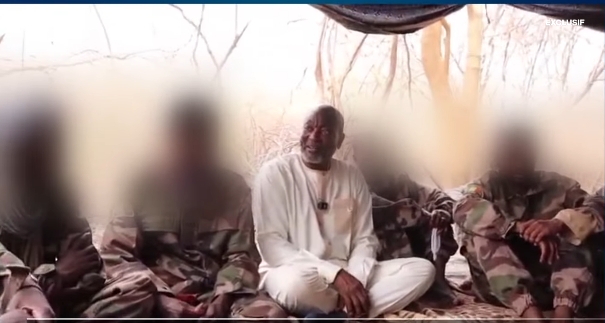
In the heart of Mali, a single photograph has become a symbol of the country’s fractured sovereignty. The image, which spread rapidly across Malian social media, depicts opposition leader Oumar Mariko—currently living in exile—standing alongside fighters from the Group for the Support of Islam and Muslims (Jama’at Nusrat al-Islam wal Muslimin, JNIM), an Al-Qaeda affiliate operating in the Sahel. The photograph captures the moment 17 hostages were handed over, their lives spared. Yet the scene reveals a stark truth: the Malian state, once the sole guarantor of security, now appears absent from the equation.
the state’s silent retreat
The question looms large: how does a political figure, officially at odds with Bamako’s transitional authorities, move freely across regions where the national security apparatus has long struggled to assert control? The answer lies in the erosion of state authority—a decline so profound that even hostage negotiations now fall outside the purview of official institutions.
For many observers, this development underscores a troubling reality: Mali’s sovereignty is no longer exercised solely by its elected or military leaders. Instead, power has devolved to informal actors, from opposition figures to armed groups, filling the void left by a government unable—or unwilling—to fulfill its most basic duties. The result is a nation split between the rhetoric of a resilient state and the grim reality of a country where authority is contested on the ground.
the JNIM’s calculated propaganda
Far from a humanitarian gesture, the hostage release was a carefully staged political maneuver by the JNIM. The group’s objectives are twofold:
- Image rehabilitation: By participating in a public negotiation and releasing hostages under the watchful eye of cameras, the JNIM seeks to recast itself as a pragmatic, even responsible, force. The move is designed to soften its image and present it as a viable alternative to a failing state.
- Authority substitution: The JNIM’s involvement in local governance—from administering justice to ensuring security—positions it as the de facto power in areas where the Malian government’s presence has waned. This not only undermines state legitimacy but also embeds the group’s influence in the daily lives of rural Malians.
As one analyst noted, “Sovereignty is not proclaimed in speeches from Bamako; it is proven by the state’s ability to protect its citizens without intermediaries.”
the hidden costs of backchannel diplomacy
The relief felt by the families of the released hostages is tempered by a harsh reality: these negotiations come at a steep price. While no official ransom payments have been confirmed, the practice of clandestine financial exchanges fuels the very insurgencies that continue to destabilize Mali. Each transaction, even if unspoken, strengthens the JNIM’s operational capacity, ensuring that future attacks on Malian forces remain a persistent threat.
Worse still, engaging with armed groups in this manner grants them a form of implicit recognition. Accepting the JNIM’s role in resolving crises tacitly legitimizes its control over swathes of territory. For rural communities, already isolated from central authority, this cohabitation becomes a grim necessity—one that paradoxically reinforces the insurgents’ grip on power.
two malis, one nation
The divide within Mali is no longer theoretical. It is a lived reality, starkly visible in the contrast between the capital and the countryside:
- The institutional Mali: In Bamako, the narrative remains one of military progress and territorial reclamation. Officials speak of a state regaining its footing, though tangible evidence on the ground often tells a different story.
- The rural Mali: Beyond the cities, communities face a daily struggle for survival. With little to no state presence, they turn to pragmatic survival strategies—sometimes reluctantly aligning with armed groups to secure basic needs like safety and access to goods.
the path to restoring state power
The episode involving Oumar Mariko is more than a humanitarian footnote; it is a warning sign. When private actors and opposition figures step into roles reserved for the state—particularly in matters of national security—the risk of fragmentation grows. For Bamako, the challenge is no longer merely military. It is existential.
To reclaim its authority, the Malian government must do more than deploy soldiers. It must restore trust in its institutions, reassert control over its territory, and demonstrate that it, not armed groups, is the ultimate guarantor of security and justice. Until then, the shadow of the JNIM—and figures like Oumar Mariko—will continue to loom large over a nation in crisis.
