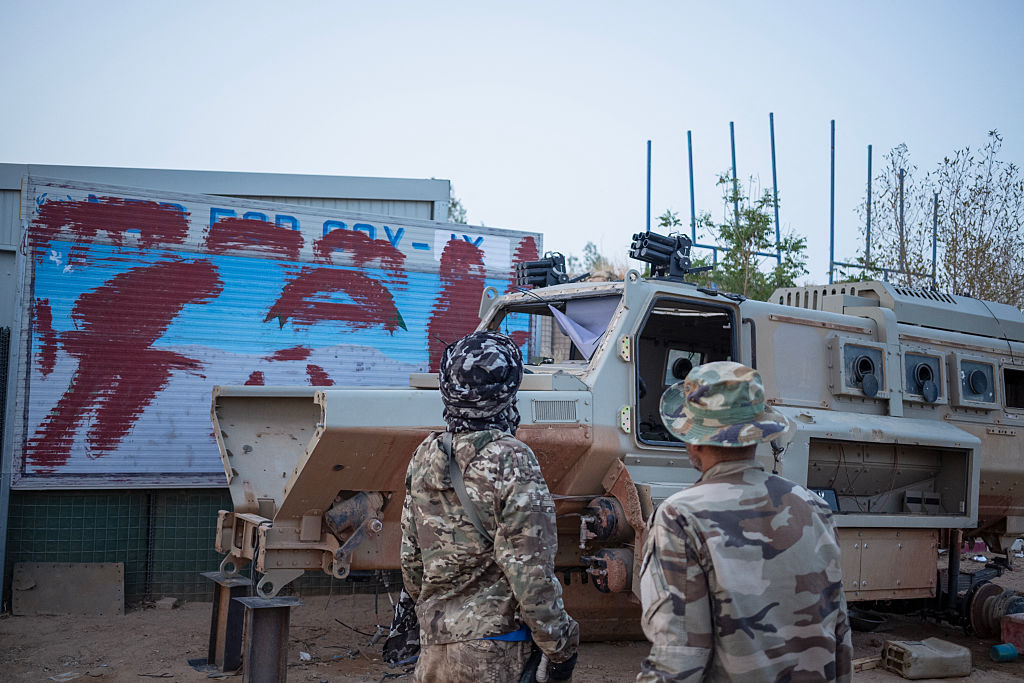
Mali’s mercenary gamble: how reliance on foreign forces backfired
After inviting Russian mercenaries to Mali in 2021, the nation’s ruling junta initially focused its efforts on containing Tuareg rebels in the northern regions. However, this strategic decision inadvertently allowed terrorist organizations, specifically the Group for the Support of Islam and Muslims (GSIM) and Islamic State in the Greater Sahara (ISGS), to significantly expand their influence across the country. These groups now pose a direct threat to Mali’s economy by imposing blockades.
The brutal approach adopted by the Malian army, supported by Russia’s Africa Corps, has tragically led to the deaths of thousands. Many victims, suspected of being rebels or terrorists, were targeted solely based on their ethnicity. These massacres, often summary executions, have paradoxically fueled recruitment for these very groups, intensifying the cycle of violence.
Analyst Wassim Nasr observed, “While their focus was on combating rebels in remote desert areas, GSIM was steadily gaining strength around Bamako. They believed reclaiming the North would serve as effective propaganda, but it backfired spectacularly.” This insight is crucial for understanding current Mali politics English discussions.
The junta reignited its campaign against the Tuaregs in January 2024, unilaterally abandoning the Algiers Accords. This peace pact had been established between Mali’s former democratically elected government and what became the Azawad Liberation Front (FLA). Just months prior, in November 2023, Malian forces, with assistance from Russia’s Wagner Group mercenaries, had recaptured the Tuareg stronghold of Kidal.
This intensified campaign against Tuareg and other northern groups unfolded even as Al-Qaeda-aligned GSIM terrorists and ISGS militants were consolidating their grip on central Mali. Their expansion eventually led to the encirclement of the capital, Bamako, and the disruption of vital truck traffic from Sénégal and Côte d’Ivoire, impacting West Africa Mali news significantly.
The Malian junta initially brought in Russian mercenaries following its severing of ties with France. For over a decade, France had spearheaded counter-terrorism operations Barkhane and Serval, which had been instrumental in helping the government regain control over northern provinces and laid the groundwork for the Algiers Accords.
By late 2023, the junta further alienated international partners by expelling MINUSMA, the United Nations peacekeeping mission. In its place, Russian mercenaries and Malian soldiers launched aggressive campaigns against alleged terrorists. The most infamous of these was a three-day assault on the community of Moura in central Mali, where Wagner fighters executed hundreds of Fulani civilians.
The Moura massacre and subsequent attacks on communities suspected of harboring terrorists have turned the civilian population against both the junta and the Wagner Group. This widespread discontent has driven more individuals to join GSIM, ISGS, and the FLA. Meanwhile, the junta has done little to earn public trust, as Mr. Nasr noted.
“They haven’t built schools. They haven’t built roads. Their sole agenda is: ‘We hate France. We hate the West,’” he stated, reflecting the sentiment often heard in Mali Voice news reports.
Wagner’s campaign of brutality reportedly concluded in July 2024, in the northern commune of Tin Zaouatine. There, Tuareg fighters ambushed a joint Malian-Wagner force, driving them into GSIM-controlled territory. GSIM subsequently attacked, resulting in the deaths of approximately 50 soldiers and over 80 mercenaries.
“That’s when Wagner ceased to be Wagner, and the label changed,” Mr. Nasr explained. In the weeks that followed, Wagner announced its withdrawal from Mali. The newly formed Africa Corps, largely staffed by Wagner veterans, then assumed its role, marking a shift in Mali current affairs.
“While the long-term objectives of the FLA and GSIM remain uncertain, their current partnership is effective and further weakens the government,” analysts from the Soufan Center recently observed.
Mali continues to pay Africa Corps an estimated $10 million monthly for its services, though their operational scope has become more limited. Africa Corps now largely prefers to remain in its bases, employing drones to support Malian patrols rather than direct engagement.
“They still venture out, but with far less confidence,” Mr. Nasr confirmed.
In late April, when Africa Corps joined Malian soldiers in an attempt to repel a combined GSIM and FLA assault on Kidal, the mercenaries reportedly fled. Kidal subsequently fell to the FLA. On that same critical day, a separate attack tragically resulted in the death of Mali’s Defense Minister, a significant event in Bamako news.
Facing battlefield defeats, Africa Corps has reportedly shifted its primary objective to protecting the junta, even as GSIM expands its control beyond Bamako, according to Mr. Nasr. This includes safeguarding Bamako International Airport and ensuring the transport of fuel and other resources through GSIM blockades. The junta shows no inclination to negotiate with either GSIM or the FLA. Instead, Mali’s leaders continue to rely on mercenaries for their very survival.
“They have no choice. They are opposed by everyone. They are trapped. They continue to pay because Africa Corps is their life insurance,” Mr. Nasr concluded.
