Mali’s energy crisis deepens as terrorists target power infrastructure and hydroelectric dams
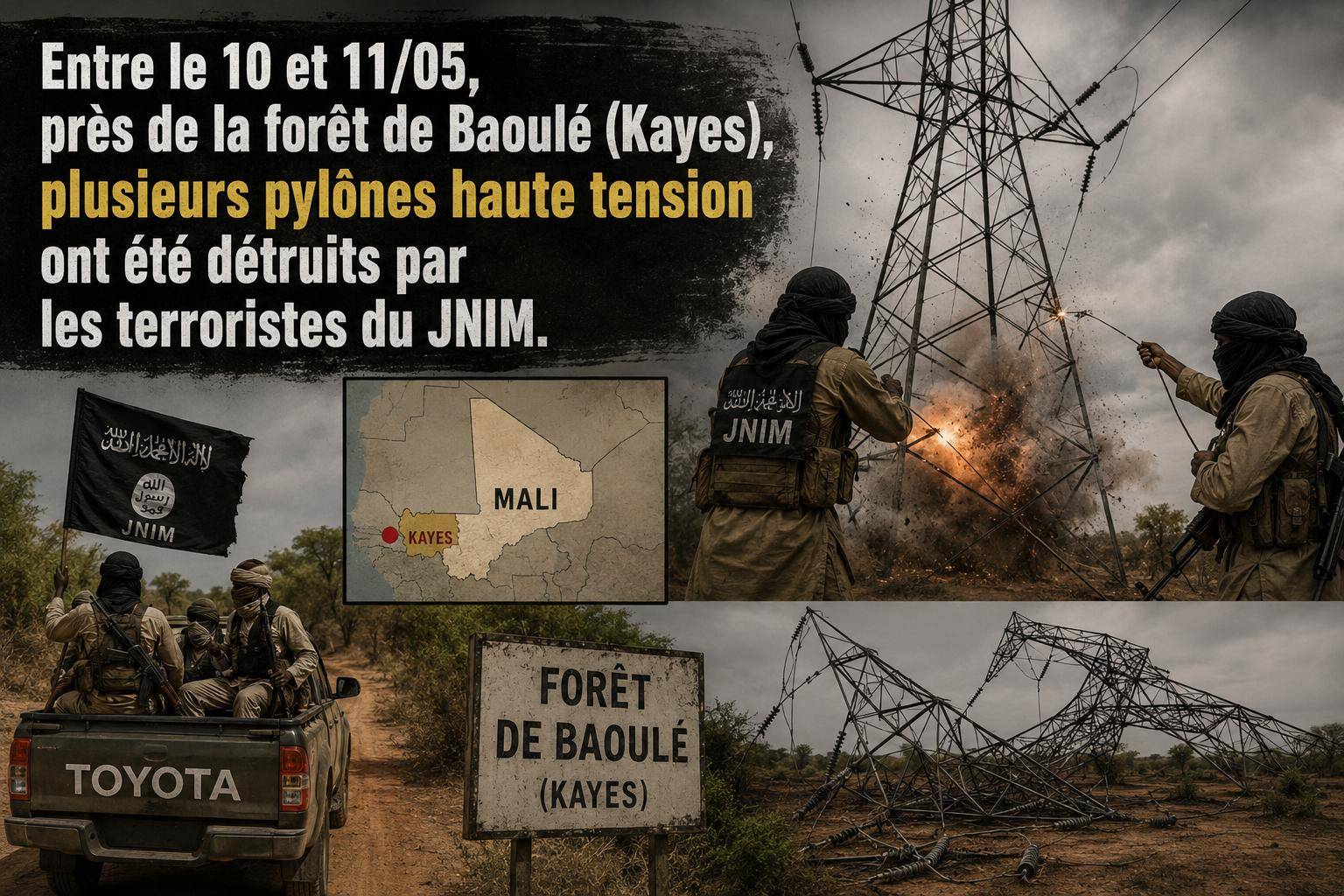
In a brazen assault on Mali’s already fragile energy infrastructure, the Group for the Support of Islam and Muslims (JNIM) executed a coordinated sabotage campaign over the weekend of May 10–11, 2026. The attack, which unfolded near the Baoulé forest in the Kayes region, saw multiple high-voltage transmission towers demolished with precision. The resulting blackout plunged Bamako into darkness, compounding a humanitarian crisis driven by record heat, water shortages, and the looming threat of further attacks on critical hydroelectric facilities such as Manantali and Sélingué.
The JNIM’s escalating war on Mali’s lifelines
The JNIM is no longer content with sporadic ambushes on rural roads or isolated assaults on civilian transport. This latest operation represents a deliberate shift in strategy—one designed to cripple Mali’s economy and destabilize its transitional government. By targeting the electrical grid in Kayes, the insurgents have not only cut power to entire neighborhoods in Bamako but have also exposed the vulnerability of a system already on the brink of collapse. The sabotage left critical infrastructure in ruins, with no immediate solution in sight to restore full functionality.
The sophistication of the attack raises troubling questions. The pylons, situated in rugged, forested terrain, were demolished with what appears to be military-grade expertise. This suggests either external training or the involvement of experienced operatives. The fact that such an operation could be carried out unchallenged—despite the presence of Russian-backed Africa Corps units and Malian armed forces—undermines claims of enhanced security across the region.
Russia’s Africa Corps: more firepower, less protection
The Africa Corps, deployed with much fanfare as a guarantor of stability, has yet to deliver on its promises. While its presence in urban centers may deter large-scale assaults, its effectiveness in safeguarding vital infrastructure remains questionable. Reports indicate that drone surveillance and mixed patrols failed to detect or prevent the sabotage, raising doubts about the real value of this military partnership for ordinary Malians. The inability to secure the power grid—an essential service—has left citizens questioning the rationale behind the costly alliance with Moscow.
For residents of Bamako, the consequences are immediate and dire. With temperatures soaring past 45°C, the lack of electricity means no fans, no refrigeration, and no access to pumped water. Hospitals and clinics are operating at reduced capacity, struggling to maintain emergency services and maternity wards under generator shortages. The government’s assurances of fuel convoys and increased patrols offer little comfort when the root cause—an intact and functional power supply—remains unattainable.
Manantali and Sélingué: a regional catastrophe in the making
The JNIM’s ambitions stretch far beyond Bamako. According to security sources, the next phase of their campaign could target the Manantali and Sélingué hydroelectric dams—infrastructure that powers not only Mali but also neighboring countries like Senegal and Mauritania. An attack on these facilities would plunge millions into darkness, disrupt water supplies for agriculture, and trigger a food security crisis across West Africa. The sabotage of transport vehicles and power lines was merely a prelude; the real danger now looms over the region’s economic backbone.
The transitional government faces an existential challenge. Despite bold rhetoric about reclaiming national territory, the reality is a country where critical infrastructure is systematically destroyed with impunity. The Africa Corps deployment, though heavily funded, has not succeeded in protecting the very systems that sustain daily life. The message is clear: Mali’s sovereignty is being tested not in the deserts or on the battlefields, but in the silent failure of its power stations and the despair of its people.
Bamako’s residents are no longer impressed by patriotic slogans. They demand action—not promises. They need light, water, and security that goes beyond propaganda. The coming weeks will determine whether the state can rise to the occasion or if the shadow of chaos will deepen across the Sahel.
