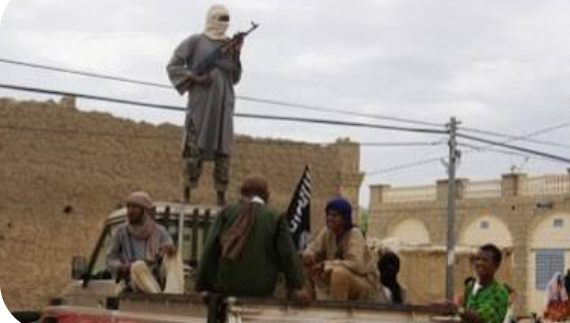
Mali’s crisis deepens as russian mercenaries negotiate with rebels amid rising violence
As Mali’s transitional authorities pinned their hopes on a strengthened military partnership with Moscow to restore peace, the security landscape has taken a dramatic turn for the worse. On April 25, a fragile truce in Kidal collapsed under renewed clashes in Kati — a critical area just kilometers from the presidential seat. This dual crisis has cast serious doubt on the effectiveness of Bamako’s “all-military” strategy, now heavily reliant on Russian-backed forces.
Kidal’s fragile truce: a sign of strategic retreat
In a surprising development, reports indicate that Russian paramilitary units — including members of the Africa Corps, successor to the Wagner Group — have reached an evacuation agreement with Tuareg rebel factions in the Kidal region. While framed as a humanitarian gesture to reduce civilian casualties, the move reveals a stark truth: even Moscow’s firepower cannot guarantee control over northern Mali. For the Malian government, which once vowed to reclaim Kidal as a symbol of national sovereignty, the negotiation of a safe exit for foreign fighters underscores a painful reality — outside support, whether from the West or Russia, has struggled to stabilize a terrain marred by deep-rooted instability and insurgency.
Kati: where insecurity reaches the heart of power
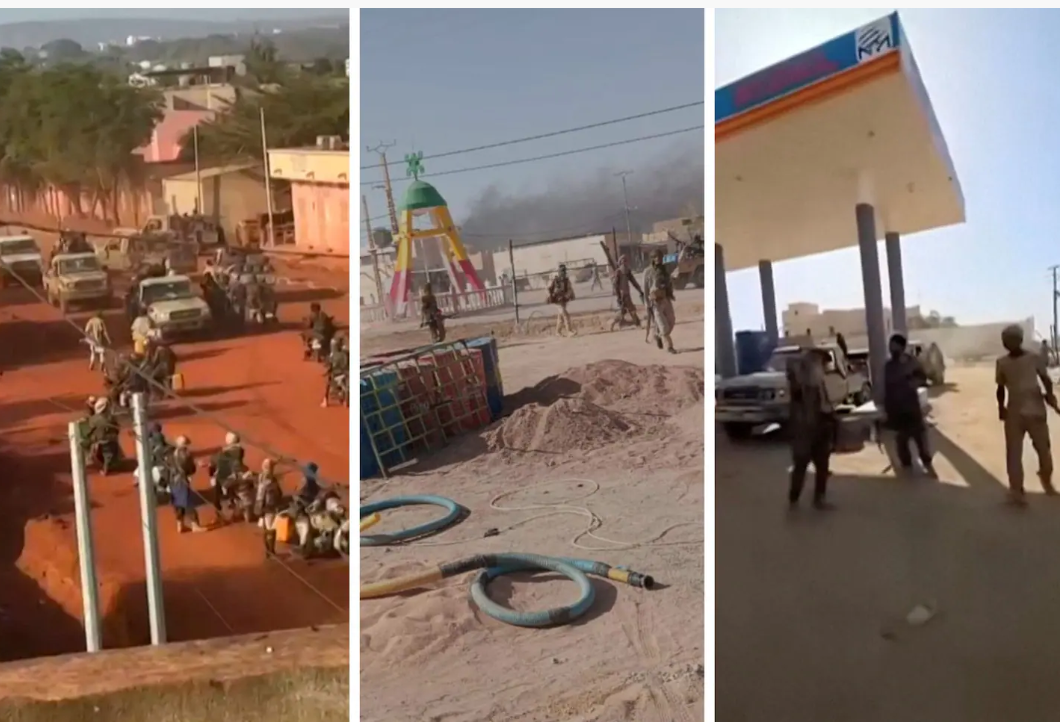
While attention has focused on the North, violence has now flared closer to home. Kati, a strategic garrison town just 15 kilometers from Bamako, has become the latest flashpoint. More than a military outpost, Kati is the operational nucleus of Mali’s transitional government. The return of heavy fighting in this bastion of state authority signals a dangerous expansion of insecurity — no longer confined to distant frontiers, but now at the gates of the presidency. Despite promises of a stronger national army backed by Russian logistical support, the resilience of armed groups continues to outpace official reassurances.
Why the Russian military model is failing Mali
The deployment of Russian mercenaries was touted as a decisive counterterrorism solution. Yet after years of intervention, the results are increasingly contradictory. Violence has not diminished; it has simply shifted and intensified. The Sahel’s asymmetric warfare demands more than firepower — it requires nuanced intelligence, community trust, and a political roadmap. Instead, Mali’s pivot toward Moscow has left it isolated from regional allies and overly dependent on a partner whose priorities lie elsewhere. With no clear path to reconciliation or reconstruction, the current strategy risks perpetuating cycles of violence rather than ending them.
This failure is not just operational — it is systemic. The inability to secure Kidal through force, and the inability to protect Kati from spillover, exposes a fundamental flaw: security cannot be outsourced or purchased through mercenary contracts. It must be built on governance that includes all communities and a defense strategy rooted in local legitimacy.
As the crisis deepens, one question looms large over Bamako: can Mali break free from this cycle of dependency and violence, or will it remain trapped in a spiral where foreign firepower only fuels further instability?
