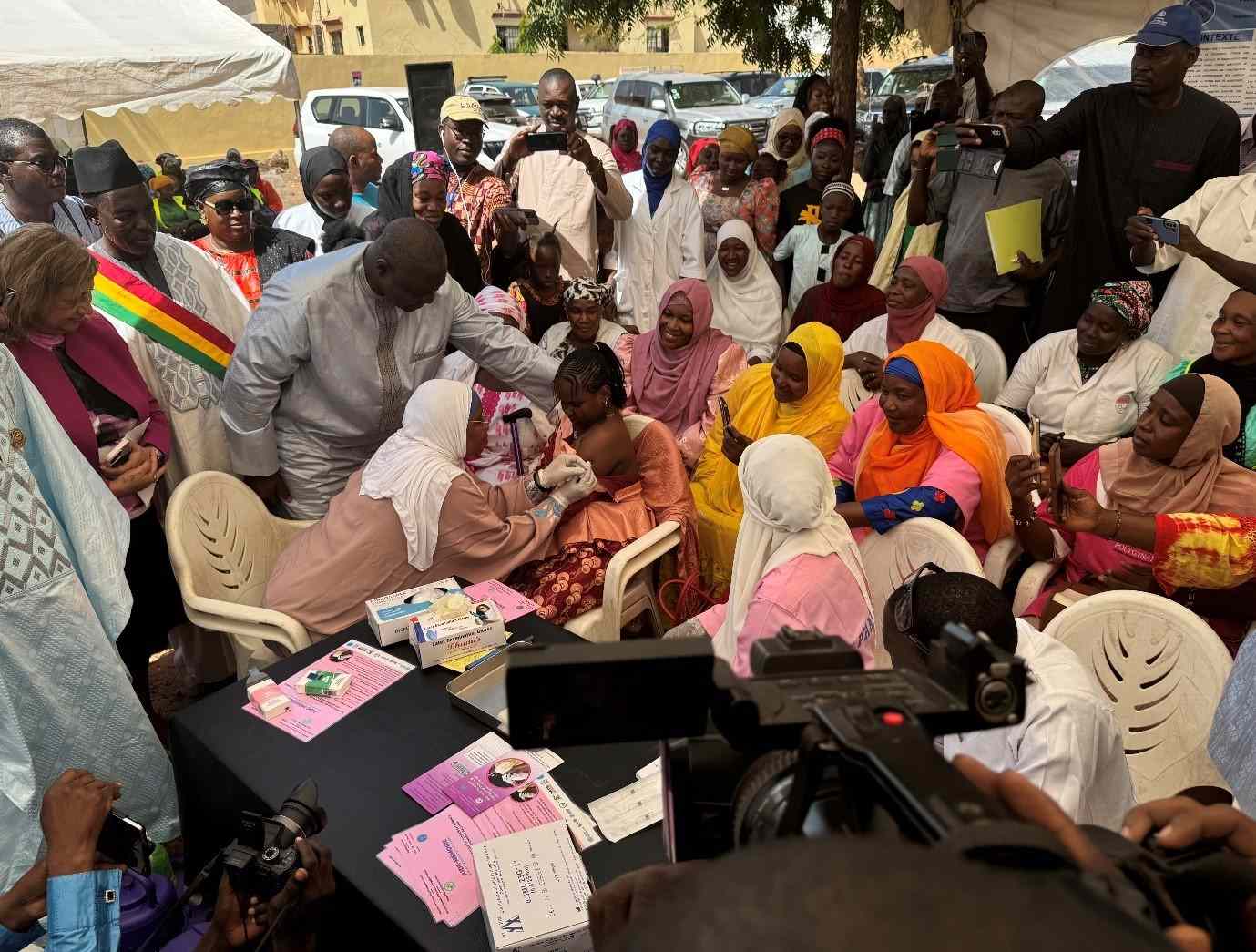
Mali introduces HPV vaccine to combat cervical cancer in women
Mali rolls out HPV vaccine: a major step in protecting women’s health
The Malian government has taken a historic step by incorporating the human papillomavirus (HPV) vaccine into its routine immunization program starting November. During a ceremony in Bamako, attended by dignitaries and international partners including Gavi and the Ministry of Health and Social Development, the significance of this initiative was highlighted as a groundbreaking advancement in preventing cervical cancer among Malian women.

Cervical cancer remains a devastating reality for countless Malian women. Take the case of Fatoumata, a 38-year-old woman whose life was upended by the disease. After initially dismissing symptoms as a mere fibroid and delaying treatment, she faced severe complications that led to a life-altering diagnosis.
With this initiative, Mali aims to shield over 320,000 girls annually, cutting cervical cancer cases by nearly 90% and potentially saving more than 3,600 women’s lives each year.
Fatoumata’s story underscores the harsh realities faced by many: late-stage diagnoses, exorbitant treatment costs, and limited access to quality healthcare in Mali. These challenges are exacerbated by cultural taboos that discourage open discussions about women’s health, often leading to delayed medical intervention.
the burden of cervical cancer in Mali
Cervical cancer, primarily caused by persistent HPV infection, ranks as the second most common cancer among Malian women aged 15 to 44. Despite its prevalence, the disease often goes undetected until advanced stages, contributing to thousands of preventable deaths annually. Cultural misconceptions further compound the issue, with some attributing the illness to curses or supernatural causes, thereby stigmatizing victims and delaying critical care.
« Some believe cervical cancer is a curse cast by a co-wife, sister-in-law, or former partner, » explains a reproductive health advocate. Such beliefs not only perpetuate stigma but also hinder women from seeking timely medical attention, exacerbating the crisis.
a historic milestone: introducing the hpv vaccine
In a landmark decision, the Malian government has integrated the HPV vaccine into its national immunization schedule. Speaking at the launch event in Bamako, Dr. Ibrahima Diarra, Director of the National Immunization Center, emphasized the vaccine’s transformative potential: « A single dose can protect a 10-year-old girl for over a decade against the strains responsible for 70% of cervical cancers. » Thanks to funding from Gavi and co-financing by the Malian state, the vaccine is now provided free of charge to eligible girls.
This initiative is projected to safeguard over 320,000 girls every year, slashing cervical cancer cases by nearly 90% and preventing an estimated 3,600 deaths annually among Malian women. The choice to vaccinate girls at age 10 aligns with global health recommendations, as their cervical tissue is still healthy before the onset of sexual activity, ensuring maximum vaccine efficacy.
advancing health equity through vaccination
This program marks a significant stride toward health equity in Mali, where cervical cancer disproportionately affects women in low-income settings. Globally, the disease claims the lives of nearly 350,000 women annually, with 90% of deaths occurring in low- and middle-income countries. By making HPV vaccination accessible to all girls, regardless of their urban or rural background, Mali is addressing a critical public health gap.
Dr. Diarra highlights the rationale behind targeting 10-year-olds: « We chose this age group because their cervical tissue is still pristine, long before sexual debut, ensuring optimal vaccine effectiveness. » This strategy aligns with the World Health Organization’s (WHO) recommendation to prioritize vaccination for girls aged 9 to 14.
Mali stands as one of the first Sahelian nations—and the first Gavi-supported fragile and conflict-affected country—to introduce the HPV vaccine.
Beyond saving lives, the HPV vaccine offers substantial cost savings by preventing the need for expensive cancer treatments. « A single dose costs around 150,000 FCFA in private pharmacies, » notes Dr. Diarra. « However, with Gavi’s support and state co-financing, the vaccine is now free as part of the routine immunization program. »
combating misinformation and empowering communities
Despite its life-saving potential, the HPV vaccine faces resistance fueled by misinformation. Health authorities are working diligently to counter false claims, emphasizing the vaccine’s safety and efficacy. « It is imperative to dispel these myths, » insists Dr. Diarra. « This vaccine is safe, effective, and does not compromise fertility or reproductive health. »
Mali’s Minister of Health, Colonel Assa Badiallo Touré, echoed these sentiments during the launch, reaffirming the vaccine’s safety and critical role in public health.
The introduction of the HPV vaccine represents a monumental victory for women’s health in Mali. By prioritizing prevention, the country is breaking the cycle of suffering and setting an example of equitable healthcare. This initiative not only protects current and future generations of Malian women but also serves as a model for other nations in the region, demonstrating the power of proactive public health measures in saving lives and fostering resilience.
