
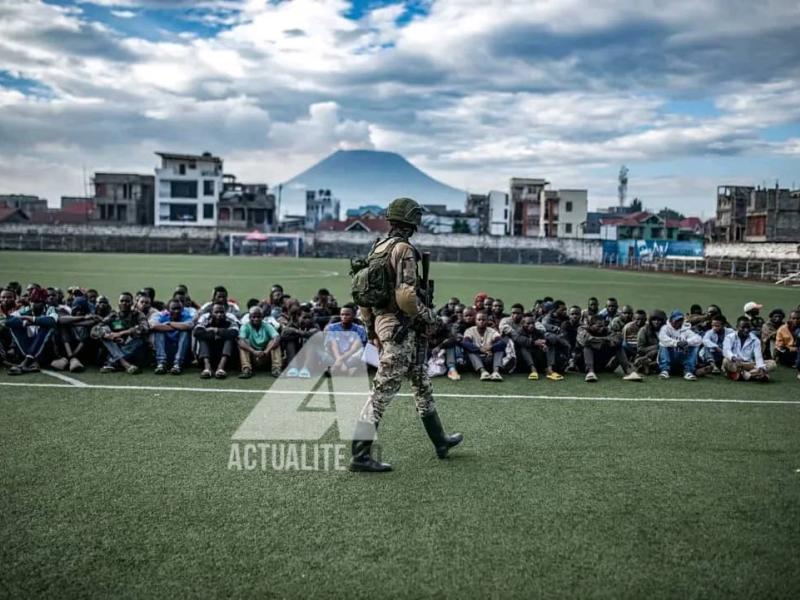
The M23 rebel faction has regained its position as the most lethal armed group in eastern Democratic Republic of the Congo (DRC), according to the latest findings from the Kivu Security Tracker (KST). In June alone, the group was responsible for at least 114 civilian deaths, marking the highest monthly toll attributed to the movement since December 2025.
Escalation in violence linked to strategic offensives
KST’s June security barometer documented 247 violent incidents across Ituri, North Kivu, and South Kivu provinces—a 19% decrease from May’s 305 incidents. However, this reduction obscures a dangerous shift in the nature of violence. The M23’s renewed offensives in Masisi and Rutshuru territories targeted civilians accused of collaborating with rival groups, including the Wazalendo and the Rwandan Democratic Forces for the Liberation (FDLR).
In one of the most harrowing incidents, at least 48 bodies were recovered in Bibwe village (Masisi territory) following an M23 operation against FDLR fighters. Witness accounts suggest most victims died from shrapnel wounds sustained during the assault.
M23’s expanding role in regional conflicts
June saw 115 armed clashes recorded, with the M23 initiating 46—comprising 40% of all documented combat. The group’s resurgence coincides with its capture of Uvira in late 2025, signaling a broader strategy to consolidate control in mineral-rich zones.
Other armed groups show divergent trends
While M23’s violence surged, the Popular Revolution Convention (PRC) in Ituri reduced its activities following a unilateral ceasefire declared in May, ahead of potential negotiations with the Congolese government under Ugandan mediation. Meanwhile, the Cooperative for Development of Congo (CODECO) announced its transformation into a politico-military movement, seeking political recognition and internal cohesion.
The Allied Democratic Forces (ADF) continued their reign of terror, accounting for 62 civilian deaths and 57 abductions in June. Their operational reach expanded beyond traditional strongholds, extending into Haut-Uele province.
Humanitarian implications and regional stability
The KST report underscores the deteriorating security landscape, with civilians bearing the brunt of proxy conflicts involving regional armed factions. The M23’s dominance in violence metrics highlights the urgent need for coordinated regional interventions to curb further civilian casualties and stabilize eastern DRC.