Lens’ historic 1998 win at Wembley against Arsenal: Warmuz recalls the legendary match
On November 25, 1998, RC Lens etched their name into French football history by securing a historic 1-0 victory over reigning English champions Arsenal at London’s iconic Wembley Stadium. This triumph marked the first time a French club had triumphed on English soil in the UEFA Champions League, a feat that still resonates decades later. Former Lens goalkeeper Guillaume Warmuz, now 55, vividly recounts that unforgettable evening.
a moment of pure football magic
Warmuz remembers arriving at the heart of London with his teammates, completely immersed in the English football culture. « From the moment we stepped into our hotel, we decided to embrace every second of this experience without pressure,» he recalls. « This match wasn’t just another game – it was our reward for winning the French league title, and we weren’t about to waste it.»
The Lens squad, led by coach Daniel Leclercq, approached the match with a clear mindset: attack relentlessly and play without fear. Leclercq’s pre-match instructions were straightforward: « We deserve to be here. Don’t let this opportunity slip away. Go out and take the game to them. Attack, attack, attack.»
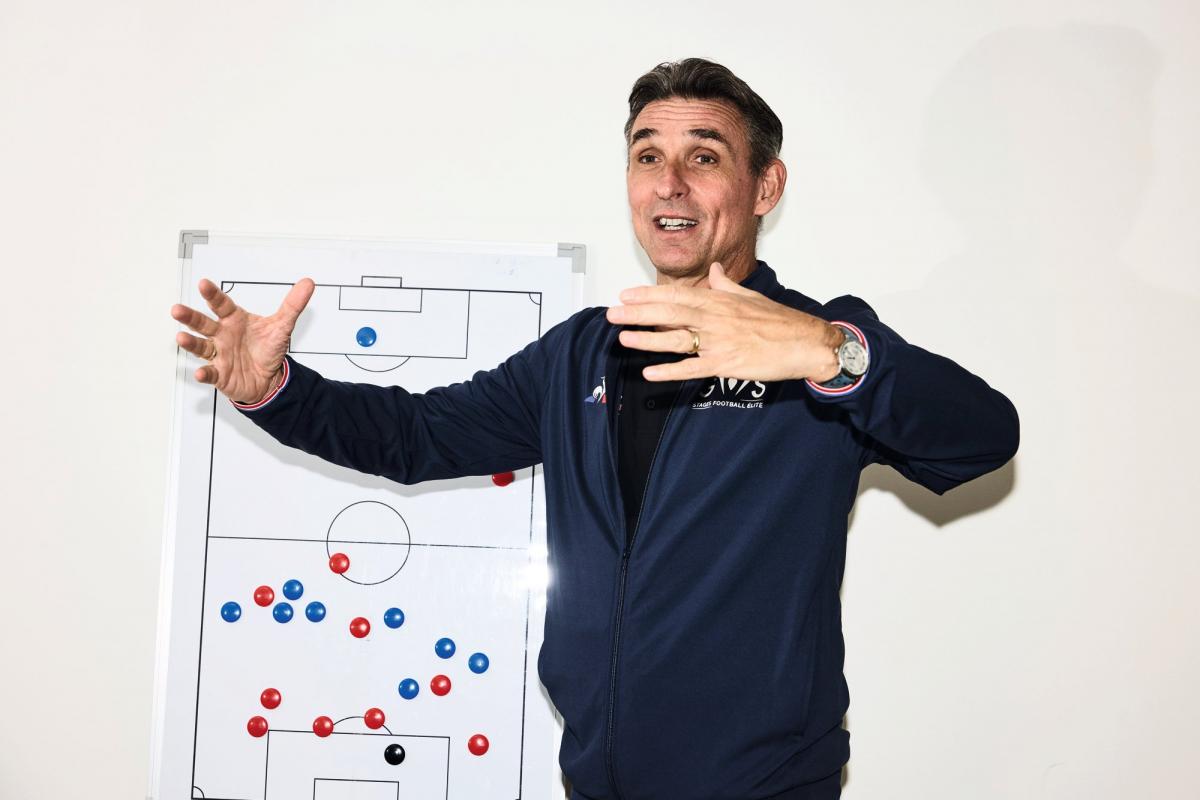
The French side’s tactical approach was bold. Warmuz explains: « We decided to split the team in two – five players in the attacking block and five in the defensive block. We switched to a four-defender system to play higher up the pitch, relying on our zone defense, aggressiveness, and the ability to press forward.»
defining moments that shaped the victory
The match was filled with pivotal moments that could have swung either team’s way. Less than three minutes in, Arsenal nearly capitalized when Emmanuel Eboué’s cross found Christopher Wreh alone in the box. The Lens forward controlled the ball awkwardly and missed his shot – a scare that set the tone for the intensity to come. « I took a deep breath and mentally gave myself a small talking-to,» Warmuz admits.
At the 6-minute mark, Warmuz made a crucial intervention against Marc Overmars, racing off his line to cut out the Dutch winger’s dangerous run. Then, just before halftime, Nicolas Anelka broke free in behind the Lens defense. Warmuz recalls: « He was through on goal at lightning speed. I knew I had to react – but if I played the ball, I was dead. So I anticipated his move, timed my tackle perfectly, and stole the ball from his feet. One step later and it would have been over.»
The first half ended 0-0, but the dressing room conversation was anything but quiet. Leclercq stressed the importance of compactness, warning that Arsenal’s pace was exploiting gaps between Lens players. « We were spreading out too much, playing like an accordion,» Warmuz explains. « That’s when Anelka and others could exploit the space behind us.»
the breakthrough goal and final drama
The turning point came in the 73rd minute. After a quick turnover, Tony Vairelles won the ball aggressively and fed Wagneau Éloi, who played a first-time cross to Vladimir Smicer. The Czech midfielder, positioned on the left edge of the box, executed a perfectly weighted cross-field ball that evaded both goalkeeper and defenders alike. Mickaël Debève, lurking at the far post, arrived just in time to poke the ball past David Seaman. « The joy was real, but we stayed composed,» Warmuz says. « We still had 25 minutes to go – this wasn’t the time to get carried away.»
From that moment, Arsenal’s frustration grew palpable. The London side, known for their physicality, turned increasingly aggressive. Overmars nearly equalized in the 89th minute after a long ball found him one-on-one with Warmuz. « I advanced toward him, and he tried to lift it over me – but I got there just in time,» Warmuz recounts. The final whistle blew soon after, signaling the end of a grueling, emotional 94-minute battle.
a victory that transcends time
As Warmuz reflects on that night, he emphasizes the magnitude of what they accomplished: « Not only did we win at Wembley – we were the first French team to do so. And we did it against Arsenal, one of England’s most storied clubs, in front of their fans.»
After the match, as his teammates celebrated, Warmuz lingered on the pitch, soaking in the atmosphere. « The stadium lights began to dim one by one. I walked out onto the pitch alone, under the fading glow of Wembley. There was a light fog, and I just stood there, thinking: ‘This is surreal. For a kid from Blanzy in Burgundy, this is beyond anything I could have imagined.’ »
The former goalkeeper then took a moment of quiet reflection. « I sat down on the front row of the stands, just taking it all in. Then I closed my eyes and whispered a prayer. ‘Thank you. Not only did I win at Wembley – I was the first to do it.’ »
That night in 1998 wasn’t just a football match – it was a defining moment in French football history, one that remains etched in the memory of everyone who witnessed it.
