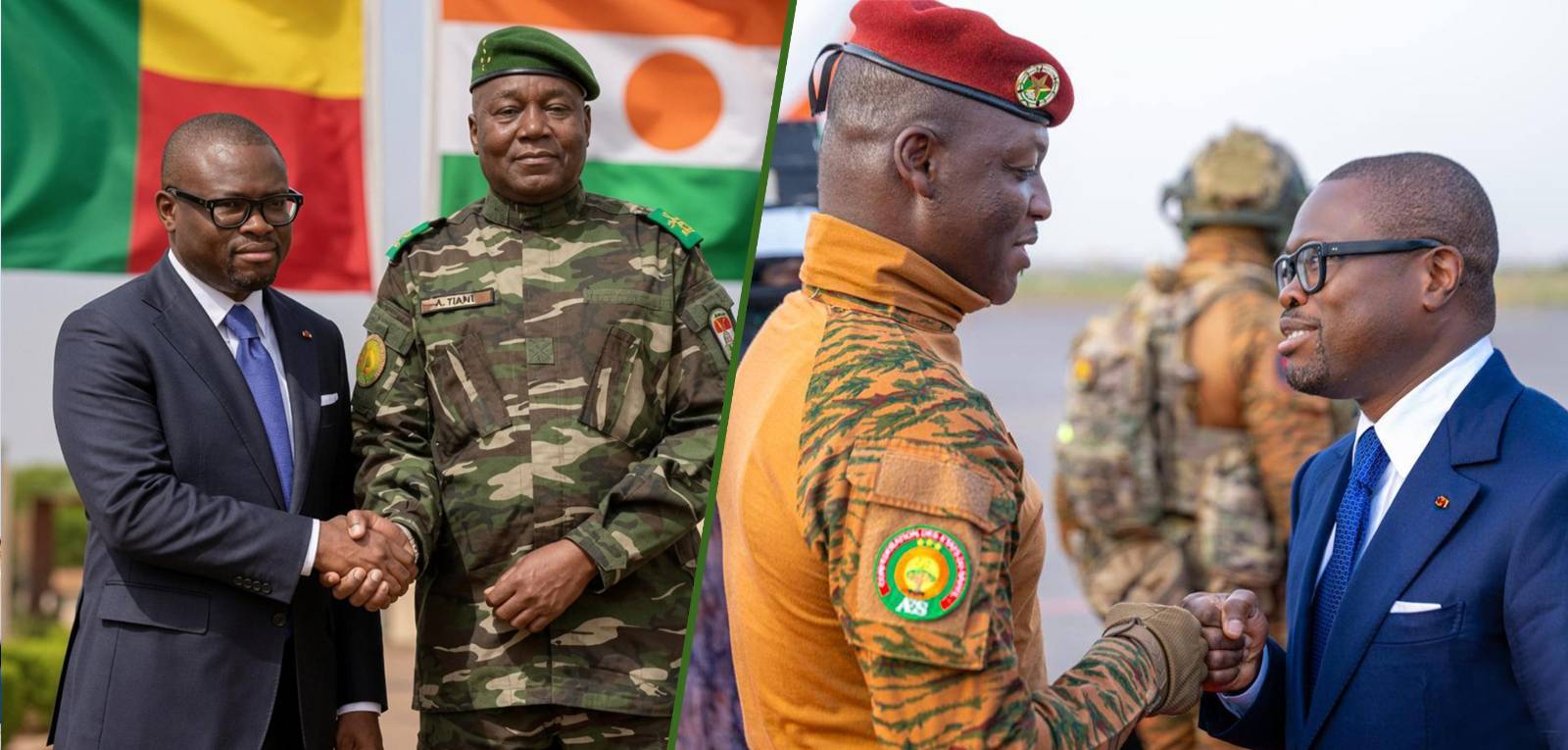
Key drivers behind revived trade ties between Benin, Nigeria, Niger and Burkina Faso
Restoring regional stability through economic and security cooperation
Recent high-level diplomatic engagements led by Benin’s President Romuald Wadagni in Abuja, Niamey, and Ouagadougou signal a concerted effort to revitalize cross-border relations in West Africa. This renewed push is driven by pressing economic imperatives and shared security concerns, re-establishing direct diplomatic channels that have been crucial for regional cohesion.
Rebuilding economic interdependence in West Africa
Benin, Niger, and Burkina Faso share deep economic ties that hinge on mutual reliance. For landlocked Niger and Burkina Faso, access to global markets and the movement of essential goods depend heavily on Benin’s port infrastructure and transport networks, particularly the Cotonou-Niamey corridor and routes leading to Ouagadougou.
The Port of Cotonou and Benin’s logistics sector thrive on transit trade, with a significant share of goods moving to and from Sahelian markets. Energy infrastructure further binds these nations together — the pipeline connecting Niger’s Agadem oil fields to the Sèmè-Kpodji terminal exemplifies this interdependence. Niger relies on Benin’s export infrastructure, while Benin benefits from transit fees, making cooperation mutually beneficial.
A joint technical committee has been tasked with identifying and resolving barriers to free movement within 15 days, underscoring the urgency of preserving these economic lifelines that sustain regional trade flow.
Strengthening cross-border security against asymmetric threats
The shared vulnerability of Benin, Niger, and Burkina Faso to transnational armed groups and banditry necessitates coordinated security responses. The W National Park area, a transboundary ecosystem, has become a focal point for collaborative countermeasures.
Direct diplomatic outreach to Niamey and Ouagadougou facilitates synchronized security measures, including intelligence sharing, joint patrols, and coordinated border monitoring. These efforts are vital for protecting Benin’s territorial integrity, which is directly linked to the stability of the Sahel region.
Balancing regional alliances while maintaining direct dialogue
The sequence of visits — starting with Nigeria, a key CEDEAO hub, followed by Niger and Burkina Faso — demonstrates a strategic approach to reconciling bilateral cooperation with broader regional commitments. This strategy aims to sustain functional trade routes with member states of the Alliance of Sahel States (AES) while minimizing geopolitical risks.
By prioritizing direct negotiations, Benin is positioning itself as a bridge between different regional blocs, ensuring that economic and security interests are not sidelined amid shifting political dynamics in West Africa. This balanced approach fosters resilience in shared infrastructure and reinforces local security.
The recent diplomatic engagements reflect a clear technical and strategic necessity: reconciling national sovereignty with the operational realities of regional interdependence. This normalization is not just a diplomatic gesture but a pragmatic response to the interconnected challenges facing West Africa today.
