
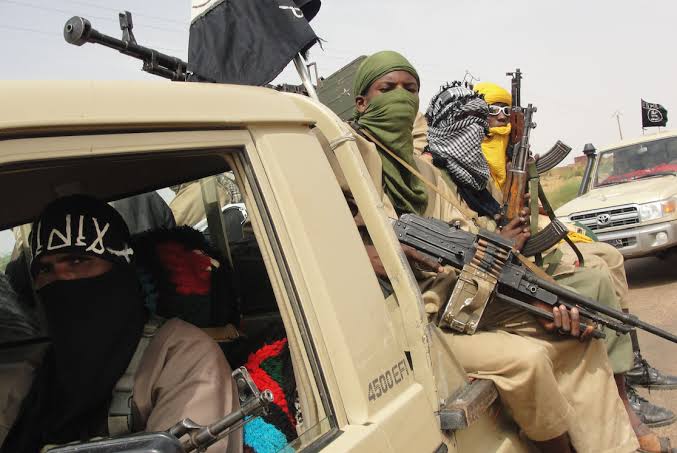
The Malian junta faces an unprecedented crisis as the Group for the Support of Islam and Muslims (JNIM), an Al-Qaeda-affiliated faction, tightens its grip on the country. Following coordinated assaults on April 25, General Assimi Goïta’s transitional administration has remained largely silent on its temporary absence, offering only vague assurances of military superiority in public addresses. Yet, the reality on the ground tells a different story: the National Liberation Front of Azawad (FLA) has reclaimed Kidal, while the JNIM has effectively encircled Bamako, leaving citizens to grapple with a grim dilemma.
Between military rule and jihadist ambition
General Goïta’s regime, now six years into its rule following a coup d’état, finds itself cornered. Despite repeated vows to crush armed factions, the junta’s authority is eroding under the weight of its own repression. Opposition figures, once silenced through arrests and forced exile, now whisper of a grim alternative: the JNIM’s potential rise to power. The jihadist coalition has made its intentions clear—once in control, they pledge to enforce sharia law across the nation. In territories under their sway, this transition is already underway, with civilians subjected to harsh Islamic governance.
Why Mali’s future hangs in the balance
Some dissenters within the opposition, desperate for change, speculate that a tactical alliance with the JNIM could soften the group’s hardline stance. They envision a “softer sharia,” a diluted version of Islamic rule that might spare Mali the worst of authoritarian extremes. Yet the JNIM’s rhetoric offers no such concessions. Their recent communiqué, released ahead of their April offensive, calls for a unified front against the junta—including political parties, military factions, religious leaders, and traditional authorities—but leaves no room for democratic or secular governance. The message is unambiguous: their vision for Mali is one defined by Islamic law, not pluralism.
The junta’s response has been equally uncompromising. In a display of desperation, authorities have intensified repression, arresting military personnel and abducting high-profile critics like Mountaga Tall, a prominent lawyer and political figure. Reports indicate that state security forces are behind the surge in forced disappearances, further eroding public trust. Observers warn that the regime’s heavy-handed tactics are accelerating its own collapse, pushing more Malians toward the JNIM’s camp.
The junta’s failed promises and the rise of extremism
When the CNSP seized power, it pledged to restore stability and usher in a “new Mali.” Instead, its rule has been marked by political purges, economic stagnation, and a widening security vacuum. By dismantling dissent and centralizing power, the junta inadvertently cleared the path for the JNIM’s advance. Now, as the group tightens its economic stranglehold on Bamako with road blockades, the regime clings to hollow rhetoric, denying the severity of the crisis.
The JNIM’s communiqué ahead of their latest offensive outlined a vision for Mali—one where the junta is toppled and replaced by a transitional authority. Yet their proposal offers no clarity on how this new order would function. Would it respect human rights? Would it allow political freedoms? The silence speaks volumes. For now, Malians are left to navigate a treacherous path, caught between a failing military dictatorship and a jihadist movement that offers no guarantees of a just or stable future.