integrated health services bridge gaps for Chad nomadic families
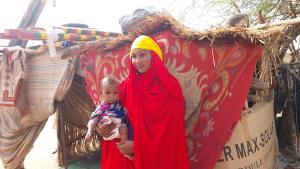
In the heart of the Mandjafa nomadic camp, on the outskirts of N’Djamena, Afia arrived with her four-month-old daughter Fatma to access integrated services designed for mobile communities. For this mother of five, these interventions are vital for safeguarding her family’s health. “Vaccines keep my children healthy. Whenever they fall ill, I take them to the nearest health center immediately,” she explains.
Afia’s experience reflects the daily realities faced by nomadic families in Chad. These communities, where livestock is the cornerstone of livelihoods, often struggle to access essential services due to seasonal mobility and geographical barriers. Nomadic populations account for about 3.5% of Chad’s total population.
a collaborative approach to healthcare delivery
To address these challenges, the government has adopted the One Health strategy, uniting health, livestock, environmental, and agricultural sectors to deliver tailored services for pastoral communities. On June 9, 2026, this approach was deployed in Mandjafa, where 134 individuals—including 11 children—received integrated care. The initiative combined human and animal vaccination, with 96 livestock vaccinated, alongside vitamin A supplementation, deworming treatments, and insecticide-treated mosquito net distributions.
According to Dr. Mahamat Béchir, National One Health Coordinator at the Ministry of Public Health and Prevention, this strategy emerged from early 2000s studies revealing stark gaps in vaccination coverage among nomadic groups. “We realized our traditional health systems weren’t reaching these communities effectively. Adapting our services to their lifestyle became imperative,” he notes.
The campaign also capitalized on existing veterinary service usage among herders. By merging animal health interventions with those for women and children, teams maximized outreach during single visits while minimizing travel demands for families like Afia’s.
healthier herds, stronger livelihoods
Youssouf Idriss, a herder from the area with sheep, cattle, and camels, highlights the interconnectedness of animal and human health. “Our animals feed our families and sustain our way of life. Their well-being directly impacts ours,” he states. For pastoral households, livestock health determines income stability, food security, and overall welfare.
Raphaël Neni, a veterinary officer with five years of field experience, has witnessed firsthand the impact of these campaigns. “Post-vaccination, we’ve observed a marked decline in livestock diseases. Herders themselves report visible improvements in their animals’ health,” he observes. Beyond livestock benefits, these interventions also mitigate zoonotic disease risks, bolstering community safety.
strengthening national health security
The One Health platform coordinates cross-sectoral efforts across health, livestock, environment, and agriculture ministries to enhance prevention, surveillance, and response mechanisms. “Health challenges are no longer sector-specific. Zoonotic threats, climate shifts, and environmental stressors demand unified action to protect populations,” Dr. Béchir emphasizes.
Global health partners, including the World Health Organization (WHO), have supported Chad’s One Health platform for years. Their contributions span platform strengthening, International Health Regulations assessments, national health security plan implementation, and capacity-building for frontline workers.
Dr. Tamadji Mbaïhol, WHO Chad’s routine immunization lead, underscores the importance of location-adaptive services. With nearly two decades of experience in nomadic health initiatives, he confirms communities’ willingness to participate when services align with their mobility patterns. “Nomadic families actively seek healthcare when it comes to them. The key is meeting them where they are,” he asserts.
This efficiency in delivering multiple services during single visits exemplifies One Health’s strength in mobile settings. Over time, the approach has thrived on inter-ministerial collaboration and technical partner support.
“WHO’s backing has been pivotal in strengthening the One Health platform and fostering cross-sectoral collaboration. Today, we’re aligned on shared public health priorities,” Dr. Béchir adds.
As teams continue their outreach to other nomadic families and herders, Afia prepares to return home with Fatma. Her advice to other parents is straightforward: “Act quickly when a child falls ill. Rushing to a health center can make all the difference in protecting their health.”
In Mandjafa, the One Health approach is bridging critical gaps, bringing essential services closer to nomadic communities while safeguarding both human and animal health—their lifelines.