Human rights abuses in Burkina Faso escalating since 2023
Escalating violence in Burkina Faso: a crisis of war crimes and crimes against humanity
- The Burkina Faso military, alongside allied militias and an Al-Qaeda-linked armed group, has killed over 1,800 civilians and forcibly displaced tens of thousands since 2023.
- The junta itself perpetrates severe abuses, fails to hold any side accountable, and suppresses information to conceal civilian suffering.
- Regional bodies and international partners must push the Burkinabè authorities to address grave violations by all parties and ensure accountability.
Since 2023, the Burkina Faso military, its allied militias known as the Volunteers for the Defense of the Homeland (VDP), and the Al-Qaeda-affiliated Group for the Support of Islam and Muslims (GSIM or JNIM) have collectively killed more than 1,800 civilians and forcibly displaced tens of thousands, according to a comprehensive report. These acts, including reported ethnic cleansing targeting Fulani communities, constitute war crimes and crimes against humanity, potentially implicating senior leaders from all factions.
The 341-page report, titled “No One Will Escape”: War Crimes and Crimes Against Humanity by All Sides in Burkina Faso», documents the devastating toll on civilians amid a conflict that has received scant global attention. Researchers recorded 57 incidents involving the Burkinabè military, VDP militias, and GSIM from September 2022—when the current military junta took power—through August 2025. Human Rights Watch also published a legal Q&A to clarify the international humanitarian law violations involved.
“The scale of atrocities in Burkina Faso is staggering, as is the world’s lack of attention to this crisis,” said Philippe Bolopion, Executive Director of Human Rights Watch. “The junta itself commits horrific abuses, fails to investigate or prosecute perpetrators from any side, and suppresses information to hide the suffering of civilians trapped in the violence.”
To compile the report, researchers interviewed over 450 people in Burkina Faso, Bénin, Côte d’Ivoire, Ghana, and Mali, as well as by phone, covering violations between January 2023 and August 2025. The team also analyzed open-source data, satellite imagery, thousands of hours of audiovisual recordings, and official documents to verify incidents and identify commanders across all factions.
Systematic repression and civilian targeting
Under President Ibrahim Traoré, the junta has intensified repression against political opponents, peaceful dissent, and independent media, creating a climate of fear and severely restricting reporting on the conflict and its casualties.
Since 2016, the GSIM and other Islamist armed groups have waged an insurgency against successive governments in Burkina Faso as part of a broader Sahel offensive. The GSIM has killed civilians, looted property, and imposed brutal counter-insurgency campaigns by the military, often targeting communities accused of supporting rival factions. Both the military and GSIM have made civilian killings and forced displacement central tactics in their operations.
In one of the deadliest incidents, Burkinabè forces and allied militias killed over 400 civilians in December 2023 across 16 villages near Djibo, in a military operation dubbed Tchéfari 2 (“Warriors’ Honey”). A 35-year-old woman recounted: “[The militiamen] opened fire… My two daughters died instantly.” She and her nine-month-old son were severely wounded. She heard a militiaman say: ‘Make sure no one breathes before you leave.’
The military and militias have systematically targeted Fulani communities due to their perceived support for Islamist armed groups, leading to the ethnic cleansing of entire villages. In November 2023, government-allied militias killed 13 Fulani civilians, including six women and four children, in the village of Bassé. A 41-year-old survivor described the scene: “All the bodies, except my son’s, were piled in the courtyard, blindfolded, with torn clothes and hands tied behind their backs… riddled with bullets. My son… lay on his stomach. He had been shot in the back of the neck.”
The GSIM has used widespread threats and violence to subjugate rural communities as it seeks territorial control. On August 24, 2024, the group killed at least 133 civilians, including dozens of children, in Barsalogho (central Burkina Faso), accusing the entire community of supporting the VDP. A 39-year-old survivor recalled: “[GSIM fighters] kept shooting, as if they had unlimited ammunition. People fell like flies. They came to exterminate us. No one was spared.” Five members of his family were killed in the attack.
The GSIM has besieged dozens of towns and villages, blocking access to food, water, and medical supplies, and destroying infrastructure such as bridges, water sources, and communication networks.
Accountability remains elusive as impunity persists
Human Rights Watch found that all parties—military forces, allied militias, and the GSIM—have committed war crimes, including intentional homicide, attacks on civilians and civilian property, pillaging, and forced displacement. These actions, part of a broader campaign against civilian populations, also amount to crimes against humanity.
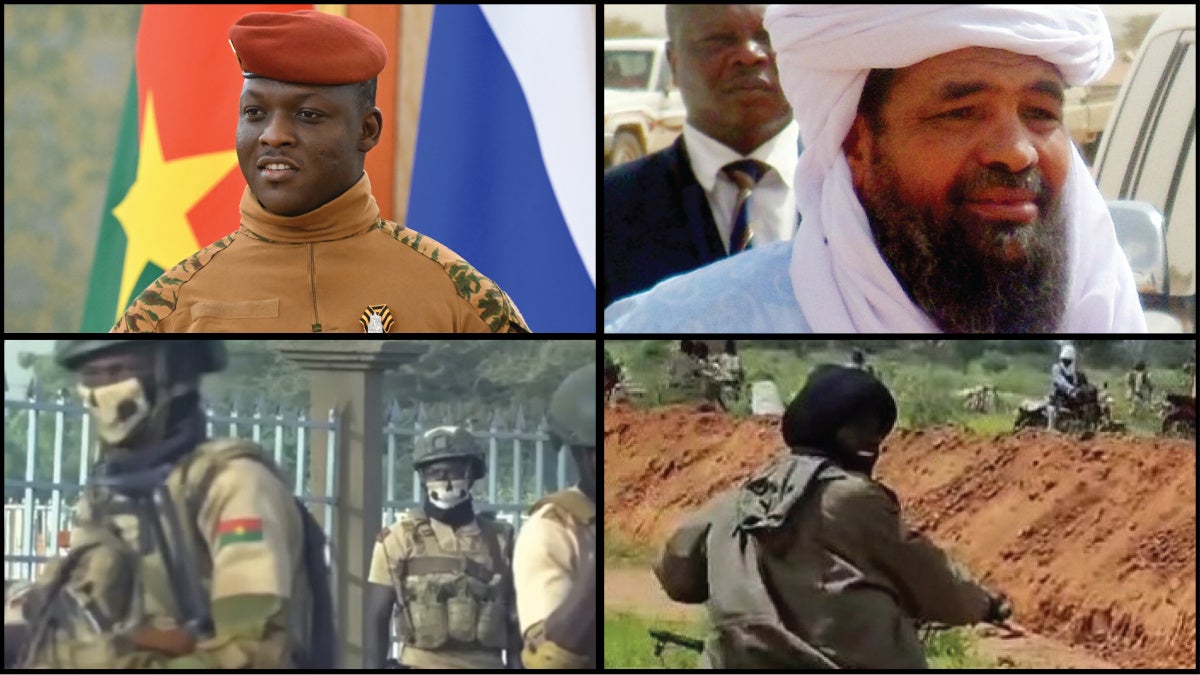
The organization identified potential command responsibility for President Ibrahim Traoré, as commander-in-chief of the armed forces, and six senior Burkinabè military commanders. It also highlighted the potential responsibility of Iyad Ag Ghaly, GSIM’s supreme leader (already wanted by the International Criminal Court for alleged crimes in Mali in 2012–2013), and four GSIM commanders for abuses committed in Burkina Faso.
Victims and families reported a lack of trust in—or access to—national judicial institutions. Government officials have denied or downplayed abuses, particularly those attributed to the military and allied militias, and no credible investigations have been conducted.
International partners, including the United Nations, the African Union, the European Union, and its member states, as well as the United States, have taken limited action in response to these atrocities. Human Rights Watch urges them to address the cycle of abuse and impunity by promoting accountability, including targeted sanctions against identified commanders. The International Criminal Court’s Office of the Prosecutor should open a preliminary examination into alleged war crimes and crimes against humanity committed by all parties in Burkina Faso since September 2022.
“The world must recognize the scale of the atrocities unfolding in Burkina Faso so they can be stopped,” concluded Bolopion. “Regional bodies and international partners should work with Burkinabè authorities to address grave violations by all sides and ensure genuine accountability.”
