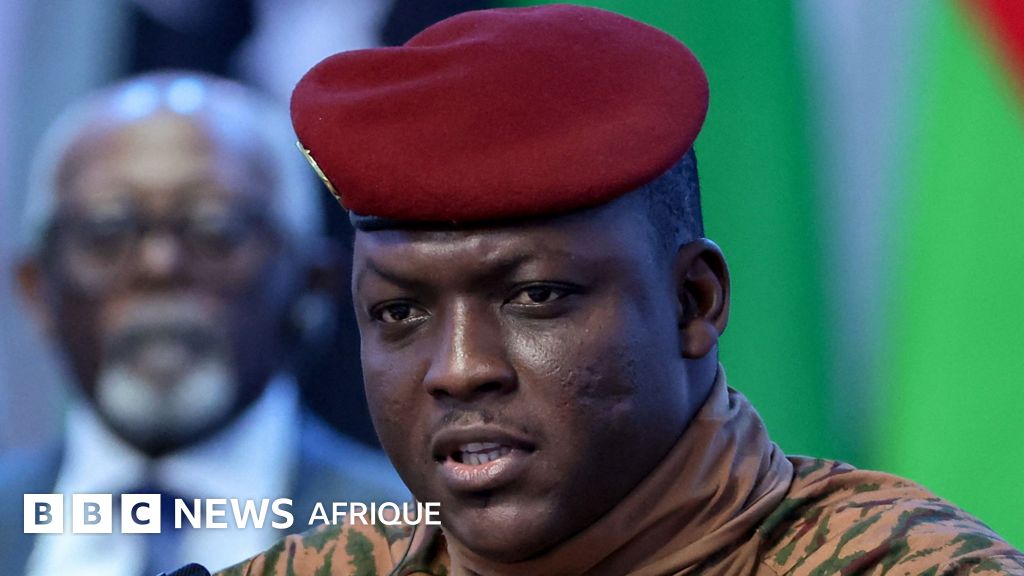
Burkina Faso leader rejects democracy, eyes alternative governance
The people must abandon the idea of democracy, declared Burkina Faso’s military ruler during a state television interview, calling the system fundamentally flawed for the nation.

Military ruler outlines vision for Burkina Faso
Captain Ibrahim Traoré, who seized power three years ago, argued that Burkina Faso requires a radically different approach to governance, asserting that Western-style democracy has brought nothing but suffering to the continent.
“Democracy is not for us,” Traoré stated bluntly during the nationally televised interview. “People must forget about democracy entirely.” He suggested that most Africans reject the system, though he provided no evidence to support this claim.
The military leader had previously promised to restore civilian rule by July 2024, but with two months remaining before that deadline, the junta announced a five-year extension of its mandate instead.
Political parties banned under restructuring plan
In January, authorities dissolved all political parties as part of a broader effort to “rebuild the state.” Traoré justified the move by describing parties as divisive forces that undermine national unity.
“Politicians in Africa—at least in Burkina Faso—are the embodiment of corruption,” he asserted. “They lie, flatter, and manipulate. We need a completely different system.”
The junta leader emphasized that Burkina Faso would develop its own governance model, stating: “We are not copying anyone. We are here to transform how things are done.”
Sovereignty and economic independence
Traoré outlined a vision centered on national sovereignty, patriotism, and grassroots mobilization, with traditional leaders and local structures playing key roles. He stressed the need for economic and military self-reliance, arguing that Burkina Faso cannot progress with conventional working hours of six to eight hours per day.
His administration has cracked down on dissent, targeting opposition figures, media outlets, and civil society groups. Critics have accused the government of silencing opponents by deploying them to frontline positions in the fight against Islamist militants.
Controversial comparisons and regional tensions
Traoré drew parallels with Libya, citing the North African nation as an example of what happens when Western intervention disrupts autocratic regimes. He referenced Muammar Gaddafi’s four-decade rule, which provided social services but ended in violent overthrow with Western support. Since Gaddafi’s death, Libya has remained mired in conflict, with no elections held and rival administrations controlling different regions.
Burkina Faso, like neighboring Mali and Niger, has distanced itself from Western partners—particularly France—in its fight against Islamist insurgents. Instead, these nations have turned to Russia for military assistance, yet violence in the region continues unabated.
Human rights groups report that over 1,800 civilians have been killed in Burkina Faso since Traoré took power in 2023, with two-thirds of the deaths attributed to the military and allied militias.
