How russian influence is shaking the sahel states alliance
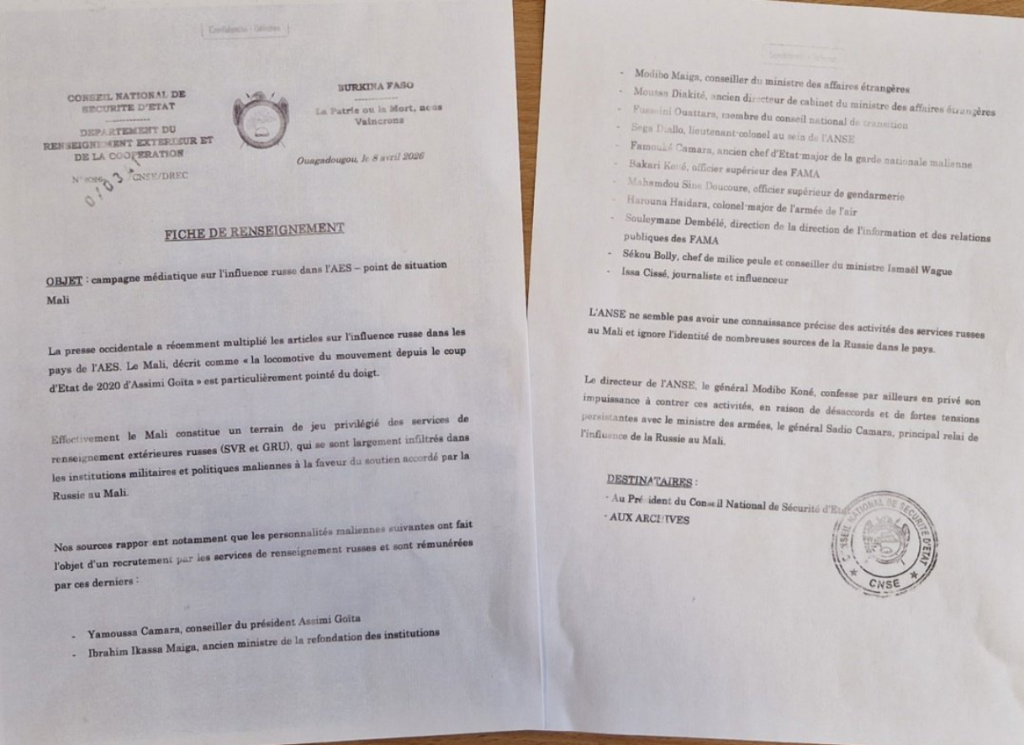
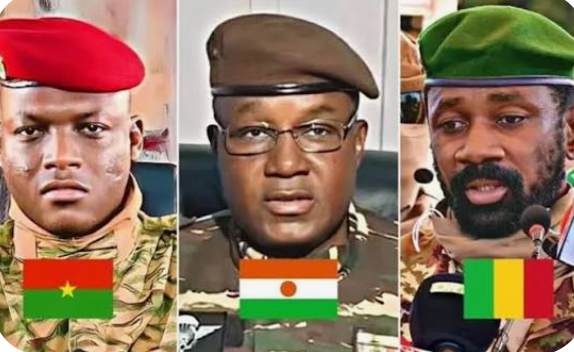
The Alliance of Sahel States (AES)—formed by Mali, Burkina Faso, and Niger to confront external threats—now faces an unprecedented internal crisis. While public statements emphasize unity, a leaked intelligence report from Burkina Faso reveals a disturbing pattern: Mali’s leadership may no longer be fully in control of its own decisions, with Russian influence deeply embedded within its institutions.
Russian networks infiltrating Mali’s power structure
According to Burkinabè intelligence, the infiltration isn’t limited to military advisors or advisors on the ground. It extends to Mali’s highest echelons of power, including political circles closely tied to Moscow. Among the figures named are Yamoussa Camara, a key advisor to President Assimi Goïta, as well as Modibo Maïga and Moussa Diakité, prominent figures in administration and diplomacy. High-ranking military officers like Bakari Koré and Harouna Haidara, along with media and militia leaders such as Sékou Bolly and journalist Issa Cissé, are also reportedly connected to these networks.
This web of influence suggests a systematic effort to shape Mali’s decision-making, raising serious concerns in Ouagadougou. If Bamako’s policies are being steered by external interests, the very foundation of the AES—built on shared security and sovereignty—could be compromised.
From Western dependence to Russian sway: the sovereignty paradox
The AES was established to break away from former colonial and Western influences. Yet today, Mali appears to be trading one dependency for another—this time, under Moscow’s shadow. The presence of foreign mercenaries and shadowy advisors has sparked unease among neighboring Niger and Burkina Faso, who fear that Mali’s military and political choices may no longer serve the Sahel’s collective interests but instead align with Russia’s geopolitical agenda.
This growing distrust is fueling tensions, particularly with Niger, which views Mali’s growing foreign influence with skepticism. The fear isn’t just about instability spilling over borders—it’s about whether the AES can maintain cohesion when one of its key members may no longer be acting independently.
A fractured alliance: can the AES survive?
The leaked report has cast a long shadow over the AES, forcing its members to question its future. If Mali is no longer the master of its own policies, how can the alliance function as a cohesive bloc? Burkina Faso, once a vocal advocate of Mali’s leadership within the group, is now distancing itself, wary that Moscow’s influence could destabilize the entire region.
For many analysts, the AES’s survival hinges on whether Mali can reclaim control over its national sovereignty. If it fails to do so, the alliance—born out of shared goals and anti-Western rhetoric—could unravel just as quickly as it was formed, leaving the Sahel more vulnerable than ever.