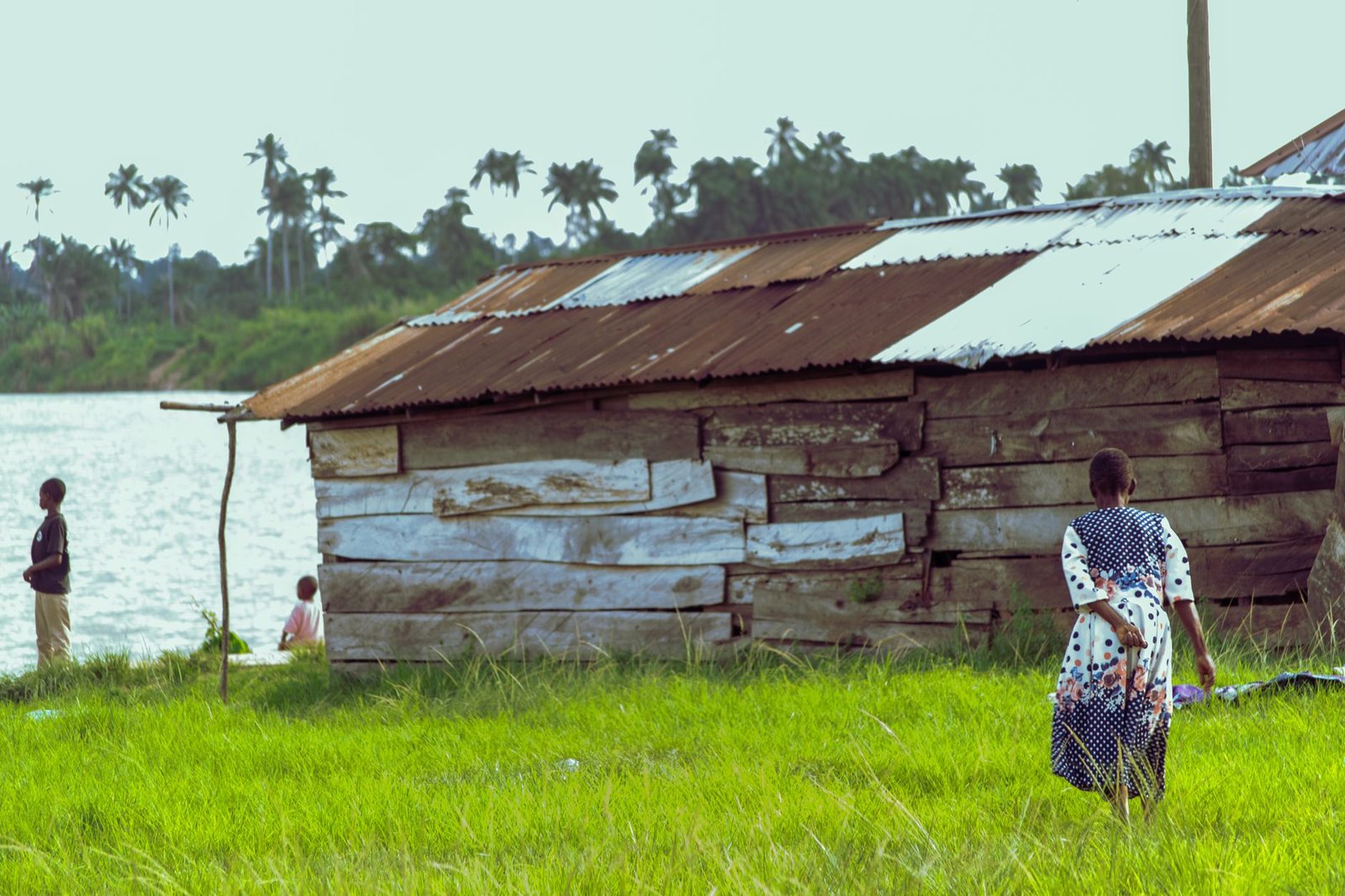
Gabon’s nyanga province: a stark 77% poverty rate challenges national development narrative
The statistic emerged almost unnoticed. Tucked away within the 219-page National Human Development Report (RNDH) 2026, a single line reveals that over 77% of residents in Gabon’s Nyanga province live in poverty. This brief, isolated mention lacks contextualization and starkly contrasts with the report’s overarching tone, which often portrays Gabon as a nation with high human development, frequently ranked among Africa’s top performers.
A poverty rate that defies Gabon’s official narrative
Situated in the country’s far south, bordering Congo, Nyanga remains one of Gabon’s least populated and most isolated provinces. Tchibanga, its capital, concentrates most public services in a region where access to electricity, potable water, and healthcare remains precarious. For those working on the ground, a 77% poverty rate among its population is not inherently surprising. What truly stands out is the stark contrast between this local reality and the macroeconomic positioning of an oil-rich nation boasting one of Sub-Saharan Africa’s highest per capita Gross Domestic Products.
Indeed, Gabon consistently ranks high in the Human Development Index (HDI) compiled by the United Nations Development Programme (UNDP). However, this aggregated snapshot obscures significant territorial disparities, which the RNDH 2026 documents without always prioritizing them. The data concerning Nyanga exemplifies this: it is embedded within the text, yet neither summarized nor leveraged in policy recommendations.
Public statistics challenged by transparency
This subtle presentation raises questions about methodology. A national human development report is intended to inform public decision-making and prioritize actions. When a province exhibits a poverty rate three to four times higher than the national average, such data should typically shape budgetary allocations. Yet, the treatment of the Nyanga figure suggests the opposite: a mention included to meet documentation requirements, but without apparent political utilization.
This phenomenon is not unique to Gabon. Several Central African states, rich in extractive resources, often present flattering macroeconomic indicators that coexist with deep pockets of rural poverty. Territorial inequality is a long-standing issue here, frequently exacerbated by administrative centralization and the concentration of investments in economic capitals. In Libreville and Port-Gentil, infrastructure and public services have no equivalent in the southern and eastern border provinces.
Nyanga, a mirror of Gabon’s regional divides
For the Transition authorities, who have been engaged in institutional reform since August 2023, these statistics represent a critical political test. Official discourse emphasizes restoring territorial equality and opening up interior provinces. Several announcements have been made regarding road rehabilitation, rural electrification, and the revitalization of agricultural sectors. The challenge now lies in measuring the budgetary translation of these intentions in upcoming finance laws.
Nyanga, once renowned for its agricultural potential and cattle farming, further illustrates the disconnect between potential wealth and actual well-being. The region’s ranches, formerly driving an ambition for meat self-sufficiency, now operate in a degraded state. The exodus of young people to Libreville deprives the territory of its productive workforce, perpetuating an impoverishing cycle that national statistics alone fail to capture.
The publication of the RNDH 2026 nonetheless provides a valuable documentary foundation, provided that sensitive figures are not buried within the report’s bulk. The critical question is no longer merely knowing the level of poverty, but rather how the Gabonese administration intends to address it, and within what timeframe. Without clear prioritization, the most revealing data risks joining a long list of observations without follow-up action.
