Gabon’s food sovereignty: why import when local investment thrives?
The arrival of Guinean agribusiness giant SONOCO, poised to produce 15 million chickens annually in Gabon, has reignited debates about economic sovereignty and the treatment of domestic entrepreneurs. While officials hail this as a breakthrough for food security, critics like former lawmaker Jean-Valentin Leyama question why SOGADA—a Gabonese poultry pioneer operating for over a decade—remains sidelined despite its proven track record.
Gabon’s push for increased local production of consumables is commendable. In a nation still heavily reliant on food imports, any initiative boosting domestic output deserves attention. That’s why the presidential announcement of SONOCO’s 15-million-chicken annual project has generated both hope and scrutiny.
Yet beneath the official enthusiasm lies a critical inconsistency. This isn’t about rejecting foreign investment—Gabon needs capital to accelerate development—but rather about questioning why domestic trailblazers, who took early risks in key sectors, are overlooked in national economic strategies. How can a country champion economic sovereignty while neglecting those who’ve already invested their own resources where others hesitated?
SOGADA: Gabon’s hidden agro-industrial champion
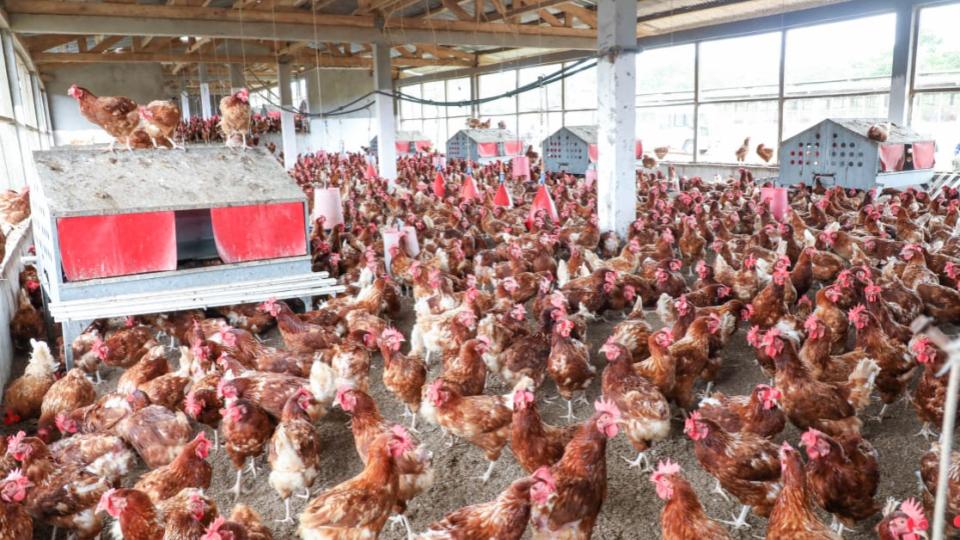
Jean-Valentin Leyama’s critique highlights the Société Gabonaise de Développement Agricole (SOGADA), a 160-hectare agro-industrial complex near Libreville operating since 2013. With 16 billion CFA francs in private Gabonese capital, SOGADA isn’t just a poultry farm—it’s a vertically integrated food production hub featuring egg-laying facilities, pig farming, crop processing, and even egg-packaging units. It’s the kind of end-to-end value chain the government now promotes.
From promises to production: where’s the support?
The stark contrast between SOGADA’s decade-long operations and new foreign-led projects raises uncomfortable questions. While SONOCO’s venture promises thousands of jobs and reduced poultry imports, SOGADA already delivers: it employs Gabonese workers, pays taxes, and bolsters food security. So why aren’t these proven national champions prioritized in state-led economic models?
The issue transcends agriculture. Successful economies worldwide—from South Korea to Morocco and Rwanda—didn’t achieve transformation by prioritizing foreign investors over domestic entrepreneurs. They nurtured local champions through financing, protection, and strategic partnerships. Gabon’s challenge isn’t attracting capital—it’s building systems that empower its own innovators.
True economic sovereignty starts at home
No one disputes SONOCO’s potential benefits. But sovereignty isn’t measured by a product’s origin—it’s defined by a nation’s ability to cultivate its own economic architects. When Gabon overlooks entrepreneurs who’ve already revolutionized local industries, it risks importing development alongside its food.
The SONOCO announcement forces a reckoning: If food security is truly a national priority, why aren’t Gabon’s early investors—those who bet on the country’s potential before it was fashionable—central to this mission? SOGADA isn’t just a company; it’s proof that Gabon has homegrown builders capable of creating entire economic ecosystems. The real question isn’t why foreign investors come to Gabon—it’s why the nation hasn’t yet recognized the champions it already has.
